What to Actually Check Before Choosing a Custom Chromoly Heim Joint Manufacturer
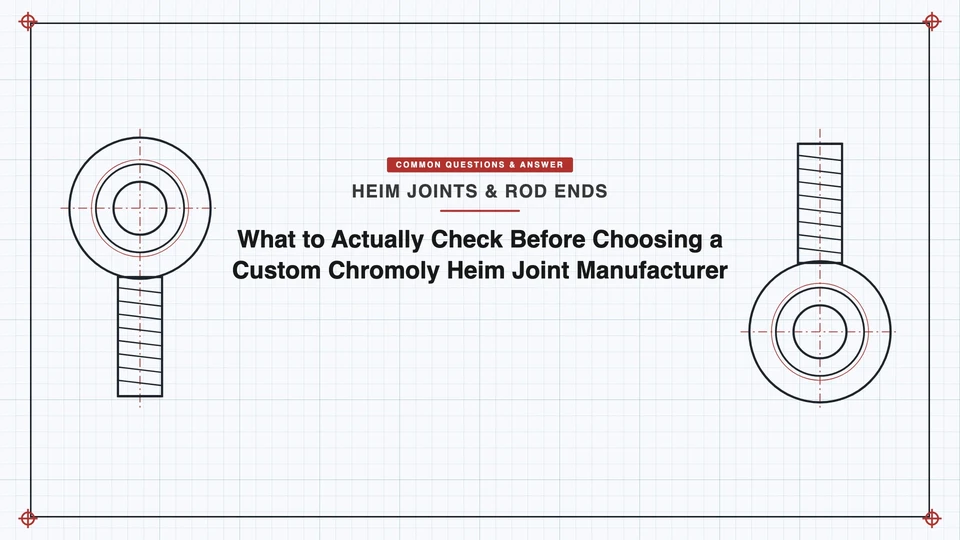
Choosing a custom chromoly heim joint manufacturer should start with material traceability, heat-treatment control, thread accuracy, liner choice, testing evidence, and communication around non-standard dimensions. A low quote is weak evidence unless the supplier can prove the process behind the part.
How to Remove a Rusted or Seized Rod End Thread
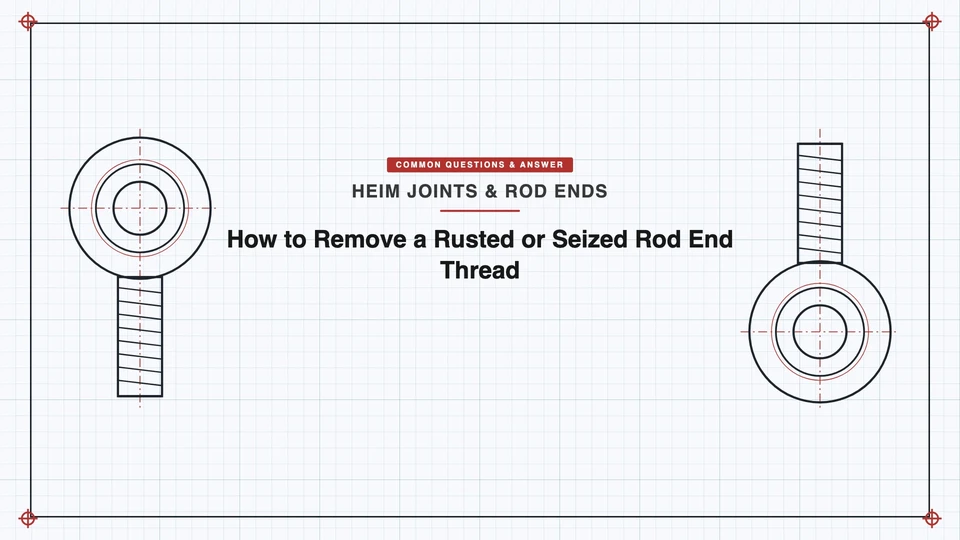
Remove a rusted or seized rod end thread by unloading the linkage, cleaning exposed threads, soaking with penetrant, applying controlled heat where safe, and using opposing wrenches to protect the link. If the shank twists, cracks, or remains locked, replacement is safer than forcing it.
Understanding “Dry-Start” Wear in Rod Ends
Dry-start wear happens when a rod end moves under load before a protective film or liner surface can separate the ball and race. It is most relevant to metal-to-metal joints after storage, washing, or poor lubrication, and shows up as early scoring, rough motion, or clearance growth.
Can Over-Greasing Damage Your Rod Ends?
Over-greasing can damage rod ends by pushing contaminants into the bearing, rupturing seals or boots, attracting abrasive grit, and masking wear that should be inspected. Metal-to-metal joints need controlled lubrication; PTFE-lined joints generally should not be greased at all.
Desert Racing Maintenance: Getting Fine Sand and Silt Out of Bearings
Desert racing exposes rod ends to fine sand and silt that work into open bearing gaps faster than mud. The priority is low-pressure cleaning, drying, inspection, and dry-film lubrication where appropriate, because sticky grease can hold abrasive particles against the ball and race.
Why Heim Joints Get Noisy in Cold Weather
Heim joints get noisier in cold weather because grease thickens, metal clearances change slightly, liners stiffen, and existing wear becomes easier to hear. A temporary cold squeak is different from a click with visible play, which should still be treated as a wear warning.
How Long Can a Heim Joint Actually Last on a Daily Driver?
Daily-driver heim joint life depends on exposure, sealing, liner type, load, and maintenance more than mileage alone. Clean pavement use can last far longer than salt, rain, and dirt exposure, while steering or suspension joints should be inspected regularly for noise, play, and corrosion.
Are Heim Joints Street Legal? Understanding the Regulatory Gray Zone
Heim joint street legality is a regulatory gray zone because rules vary by location, inspection practice, and installation position. Steering and primary suspension joints carry the highest risk because exposed spherical bearings lack OEM-style sealing, secondary retention, and standardized road-vehicle certification.
How to Clean Heim Joints and Rod Ends After a Muddy Off-Road Trip
After a muddy off-road trip, clean heim joints by rinsing loose mud, brushing around the ball and housing gap, drying the joint, inspecting for play or binding, and applying only the lubricant type appropriate to the liner. Pressure-washing directly into the bearing should be avoided.
Best Dry Lubricants for Open Heim Joints
The best dry lubricants for open heim joints are PTFE or moly-based sprays that leave a thin film without holding grit. They suit exposed joints better than sticky grease, but they still require cleaning first and should not be treated as a fix for worn bearing clearance.
Maintenance Interval: How Often to Grease Metal-to-Metal Joints
Metal-to-metal rod ends need lubrication based on use, not a universal mileage number. Clean dry street use may need longer intervals, while mud, water, racing, and high-cycle industrial service require inspection and re-lubrication after exposure or at short scheduled intervals.
The Lubrication Myth: Why You Should Never Grease PTFE-Lined Joints
PTFE-lined rod ends should not be greased because the liner is already the lubricating surface. Grease can block transfer-film behavior, hold abrasive dirt, swell or damage some liner systems, and turn an open bearing into a grinding compound instead of reducing wear.