Wholesale Aftermarket Parts & Accessories for ATV/UTV, Off-Road
Great rigidity and strength, a grip that stays comfortable through a long day, and steering that is easy to control. Three core designs, four wrapping materials, and the hub adapters, backing plates and push-to-talk plates that turn a wheel into a complete, sellable product, customized around your sizes, colours and branding.
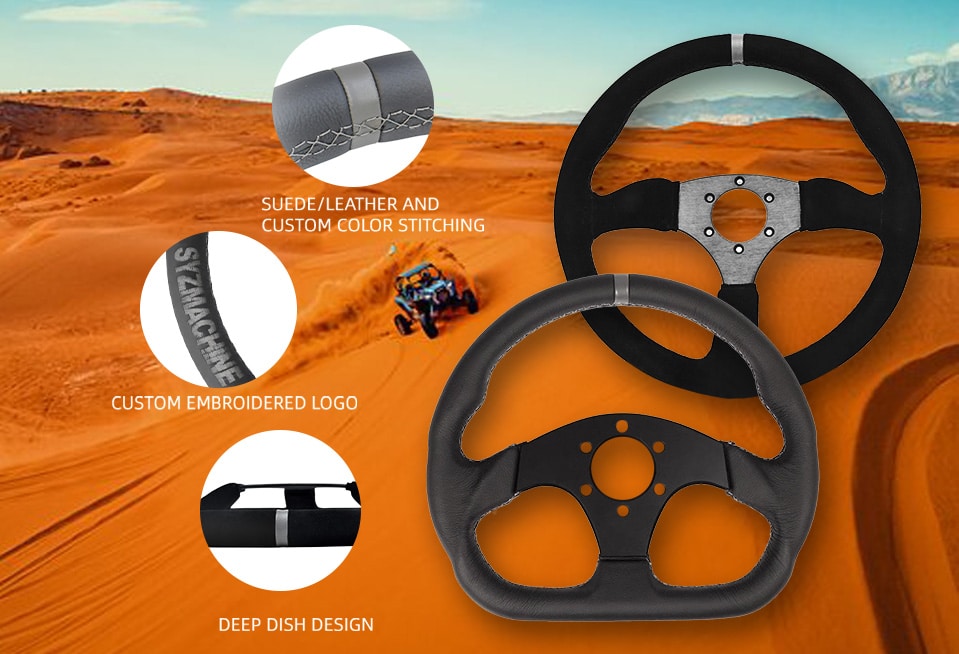
Three shapes cover almost every aftermarket requirement. Which one belongs in your catalogue depends less on taste than on how the driver gets in and out, and how much reach adjustment the cockpit needs.

Easy to operate and effort-saving, the round wheel is the most commonly used and the standard UTV design. It is the safest choice for a broad catalogue because it suits every cockpit and every driver without qualification.
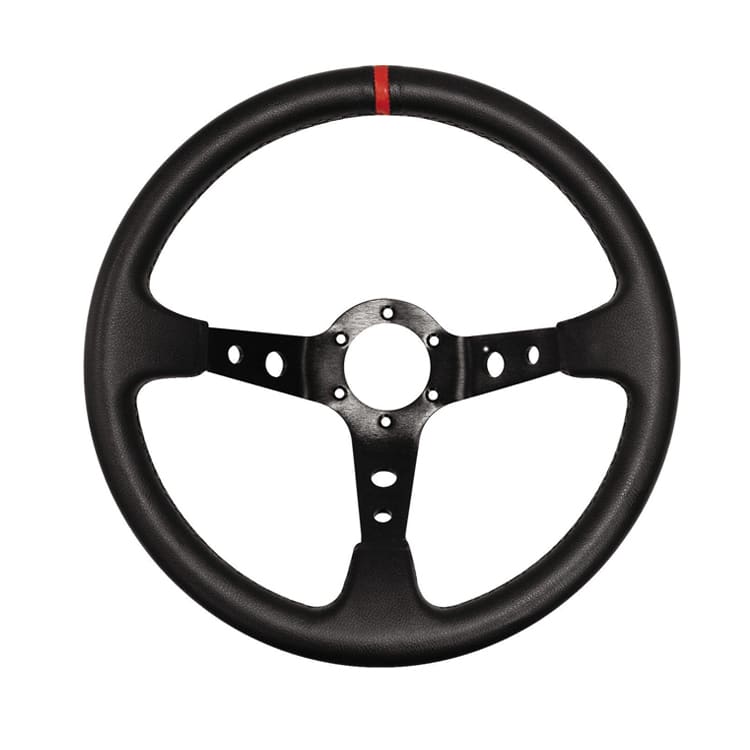
An upgraded take on the universal wheel — more durable and more stylish for ATV, UTV, off-road and racing use. The extended bowl pulls the rim toward the driver, which is what makes it the answer for harness setups and roll-cage cockpits where reach is tight.

The flat bottom leaves more room for the driver getting in and out of the vehicle, and it gives an immediate visual cue as to whether the wheels are straight — a small thing that matters more than expected in technical off-road driving.
Almost every fitment question a distributor fields comes down to these two numbers. Getting them right in the listing prevents most returns.
A smaller wheel turns the wheels through their range with less arm movement, so steering feels quicker — but the reduced leverage makes it physically heavier. A larger wheel is lighter to turn and slower in response. There is no universally correct answer; it follows the vehicle’s steering ratio and the driver’s preference.
350mm is the volume standard and the lightest to turn. 330mm sits in between and buys useful clearance getting in and out, which matters with a fixed hub. 320mm gives the sharpest response for racing and drift builds. We produce all three as standard and can go outside that band on request.
The 6-bolt, 70mm bolt circle is what the major aftermarket wheel brands have converged on, which is why hubs, quick releases and horn buttons interchange so freely across the market. Building to it means your wheel drops onto hardware customers already own. We also produce 5-bolt patterns where a platform calls for it.
This is the point most listings get wrong: whether a wheel fits is determined by the bolt pattern and the hub, not by the vehicle model. The hub adapter is what makes it vehicle-specific. State the pattern plainly in your listing and the “will this fit my car” questions largely stop.
If you need something outside the standard band: diameters, bowl depth, spoke count and bolt circle can all be developed to your specification rather than picked from this range — see custom steering wheel manufacturing for drawing-based and platform-matched development.
A steering wheel is a wrapped ring on a machined centre plate. Each of the three layers is specified separately, and each one changes how the finished product feels and what it costs.
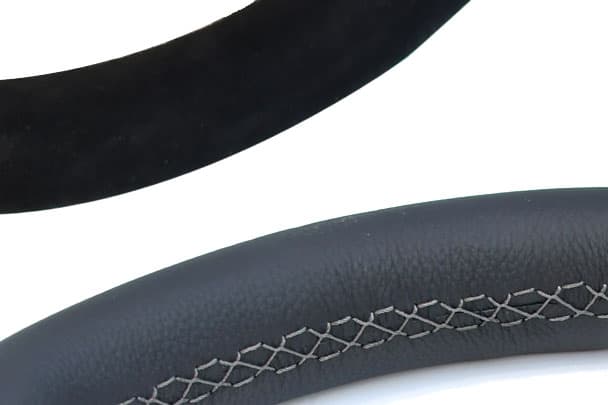
Suede prevents slipping and gives better grip and control, which is why it dominates racing and hard off-road use. Leather looks more luxurious, wears well and cleans easily — the better choice for street, show and premium retail positioning.
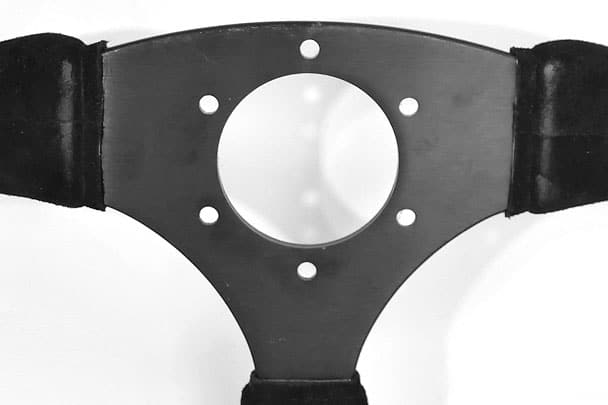
Lightweight, durable and rust-resistant. The plate carries every input the driver puts into the wheel, so it is the structural part of the assembly — available in two or three spoke layouts and five or six bolt patterns.
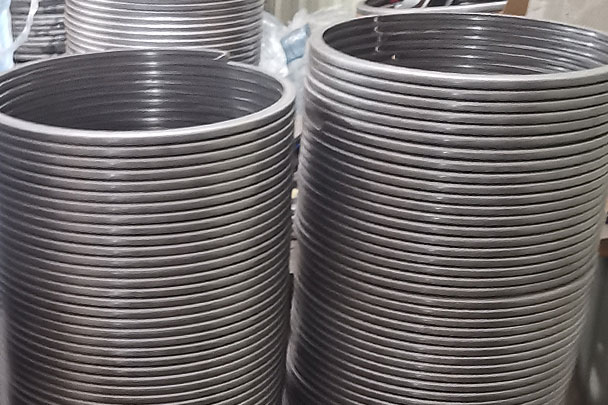
The ring is the skeleton the grip is built on. Foam goes over the ring first to set the section shape and feel, then the suede or leather surface goes over that — which is why grip diameter and firmness can be tuned without changing the ring itself.
A wheel on its own is half a sale. These three accessories let customers fit it, brand it and use it in real UTV, off-road and racing cockpits. SYZ can customize the hub adapter, backing plate and push-to-talk plate alongside the steering wheel program.
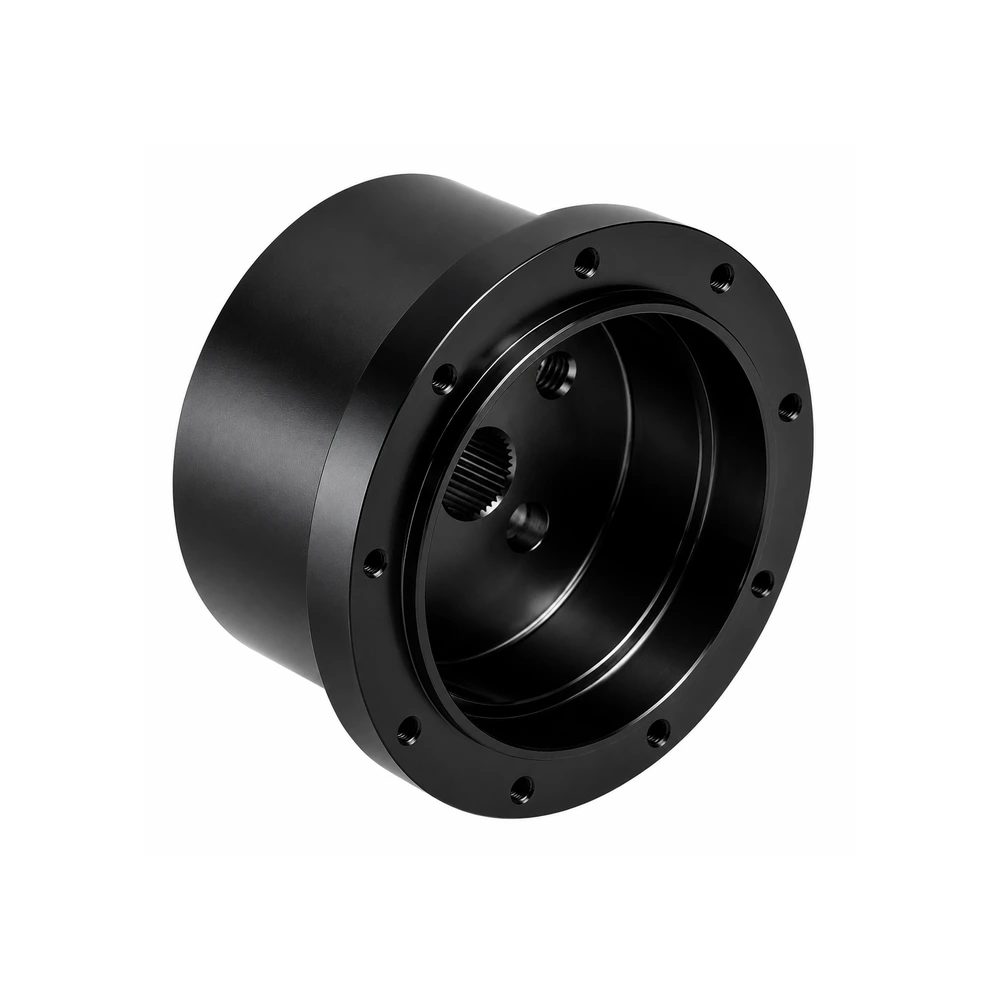
The vehicle-specific mounting part that connects the wheel or quick-release setup to the steering column. Custom machining is available for bolt patterns, spline or hub sizes, mounting hole layouts, offsets, weight-reduction pockets, anodizing, powder coating and laser logo marking.
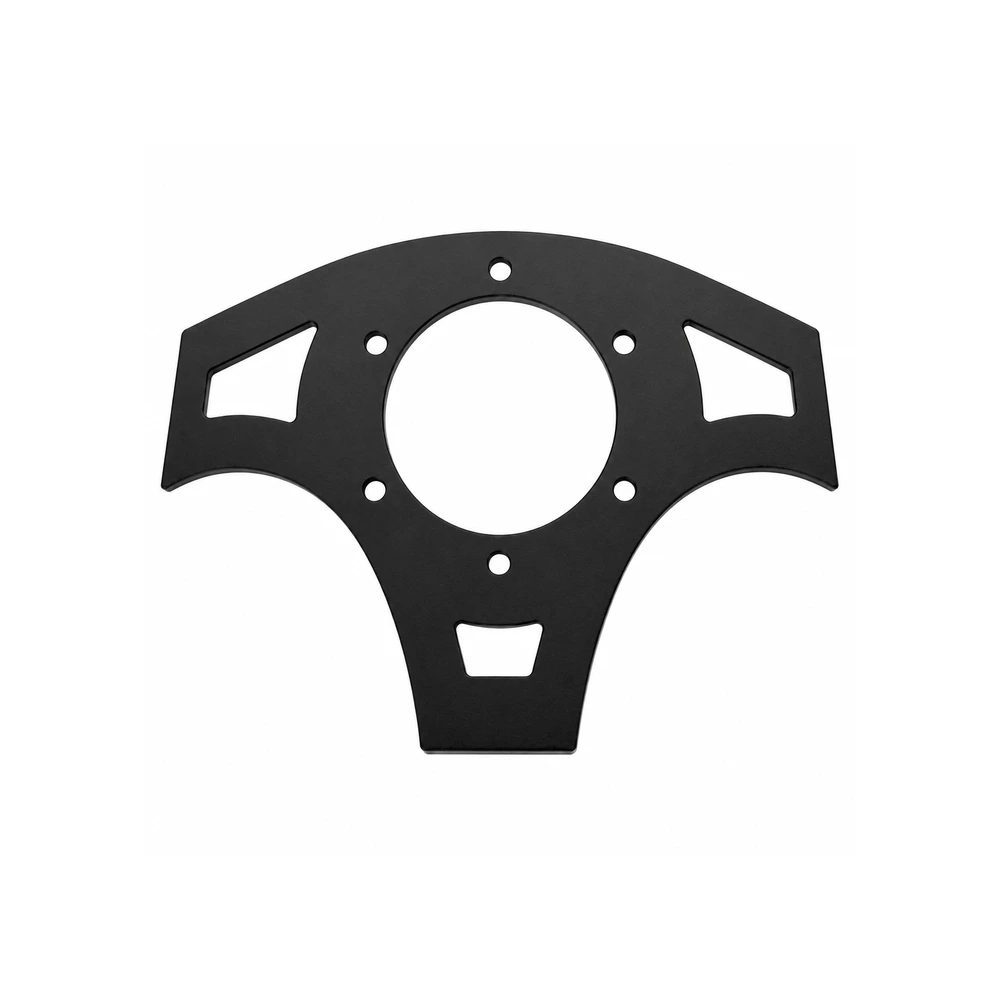
A backing, spacer or mounting plate for steering wheel assemblies, quick-release systems and racing cockpits. Shapes, thicknesses, mounting holes, cutouts, offsets, weight-reduction features, laser engraving and surface finish can be built around the drawing or sample.
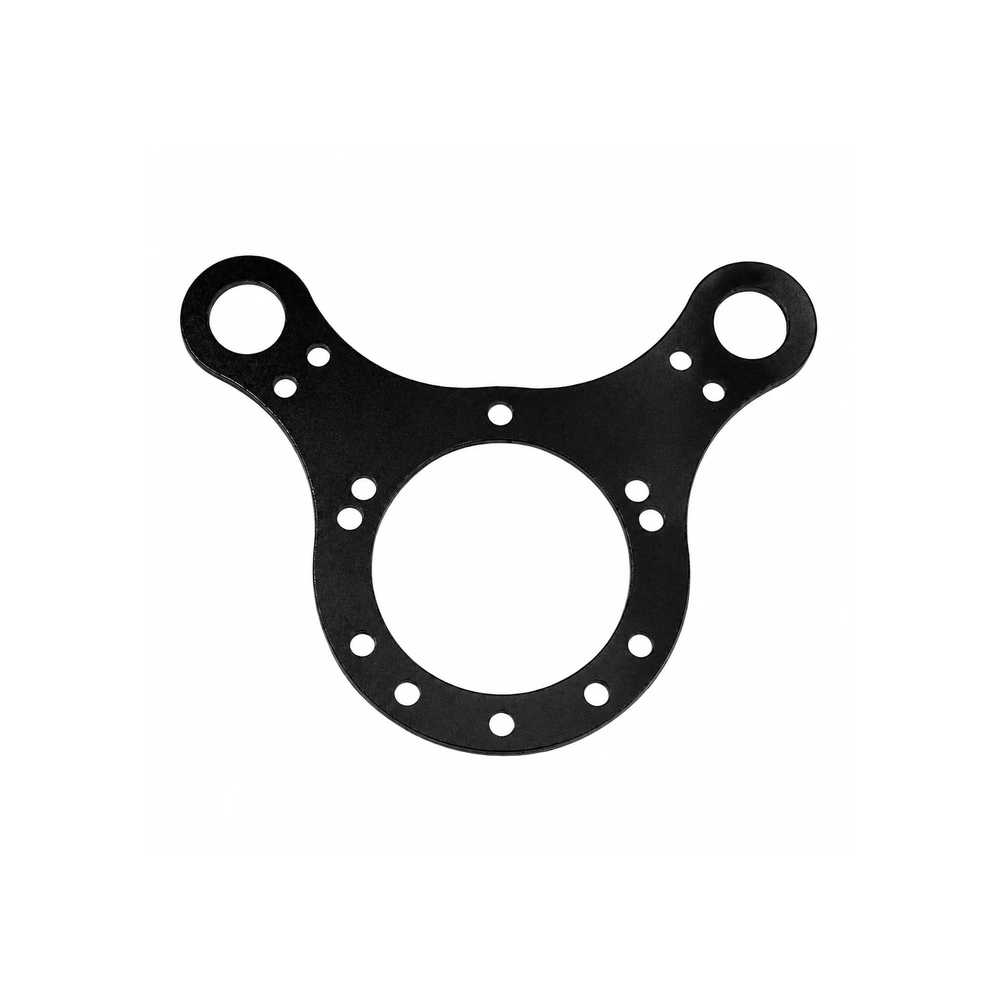
A communication button and switch mounting plate for UTV, off-road racing and motorsport interiors. Custom layouts can cover single or dual buttons, radio controls, mounting holes, cutouts, thickness, anodized colour, logo marking and vehicle-specific installation requirements.
Five in-catalogue models covering UTV, off-road, racing and golf cart. Each links through to full product detail — and each can be rebuilt to your specification and branding.
The volume seller. Suede wrap for a premium, non-slip grip over a billet aluminum centre plate, at the 330mm size that balances response against cockpit clearance for UTV and ATV use.
The same 330mm platform with the flat bottom cut in, for cockpits where ingress clearance matters or the buyer wants the motorsport look. Suede wrapped over a billet aluminum plate.

Sold as a complete solution — flat-bottom D-shaped wheel plus the hub adapter, with a quick release so the wheel comes off for security or easier entry. The 6-bolt pattern fits most aftermarket hubs.
The deep dish in the volume 350mm size, on a universal 6-hole pattern. PU and alloy construction, and the design that suits harness and cage cockpits where the rim needs to sit closer to the driver.

The golf cart and fleet segment, on the same 6-bolt universal pattern so it installs on standard hardware. Three-spoke layout, with wrapping customisable for comfort and for brand colour.
Custom sizes, colours, wrapping materials and packaging, with embroidery and laser logo branding. These are the variables, and the ones we need confirmed to quote.
| Parameter | Standard | Custom Options |
|---|---|---|
| Diameter | 320mm 330mm 350mm | Sizes outside the standard band produced to order, matched to steering ratio and cockpit. |
| Shape | Round Deep Dish D-Shape | Bowl depth and flat-bottom profile specified per design; combinations available. |
| Bolt Pattern | 6×70mm | 5-bolt patterns and custom bolt circles where the platform requires it. |
| Spokes | 2 or 3 Spoke | Spoke geometry and cut-out pattern customisable on the centre plate. |
| Wrapping | Suede Leather | PU, PVC and alternative materials; stitch colour, perforation and grip section to spec. |
| Centre Plate | Aluminum Alloy | Anodized finish in custom colours; backing plate in stainless with multi-colour options. |
| Ring | DC04 Steel Aluminum | Foam section shape and firmness tuned to change grip diameter and feel. |
| Branding | Embroidery Laser Logo | Logo on horn pad, spoke or grip; custom packaging and retail-ready boxes. |
To quote we need four things: diameter and shape, bolt pattern, wrapping material and colour, and quantity. If you are supplying into a specific platform, tell us the vehicle so the hub can be matched at the same time — the hub is what makes the wheel vehicle-specific, not the wheel itself.
A steering wheel is the one component the driver touches for the entire ride. Three things decide whether they like it, and all three are manufacturing decisions.
The centre plate and ring carry every input the driver makes. Aluminum alloy plate and DC04 steel or aluminum ring, built so the assembly stays rigid rather than flexing under hard steering — which is what “cheap wheel” actually feels like.
Foam over the ring sets the section shape and firmness before the suede or leather goes on. That is the layer most suppliers treat as filler and it is the one that decides whether the wheel is still comfortable three hours in.
Diameter, shape and grip section together determine how the wheel feels in use. We build all three designs across the standard sizes so the specification can follow the vehicle rather than whatever the supplier happens to stock.
Hub adapters, backing plates and push-to-talk plates can be quoted with the wheel program, so a full sellable set ships as one consignment with coordinated finish requirements and one technical contact behind it.
Embroidery and laser logo marking, custom anodized colours on the plate, multi-colour backing plates and custom packaging — all specified during production rather than added afterwards.
Custom sizes, colours, wrapping materials and packaging are standard offerings here, not exceptions. Send the specification, or the vehicle, and we will build to it.
Discover high-quality aftermarket parts and customized solutions tailored to your needs.
Send your request with the details and share the idea — diameter and shape, bolt pattern, wrapping material and colour, branding requirement and quantity. If you are supplying into a specific platform, name the vehicle so the hub gets matched too.
We work out the best solution based on your request and send a specific quote within 24 hours, along with the product catalogue so you can see the rest of the range while you decide.
Sample approval, production, branded packaging and export documentation. Whether it is before or after the sale, we are always here to support you.
Request the product catalogue and a factory quote — answered within 24 hours.
What buyers and distributors ask most often before placing a first order.
Fitment is determined by the bolt pattern and the hub, not by the vehicle model. Our wheels use the 6×70mm pattern that the major aftermarket brands have standardised on, so they mount to hubs and quick releases customers already own. The hub adapter is the part that makes the assembly vehicle-specific — tell us the platform and we will match it.
Universal is the standard round wheel — easy to operate, effort-saving, and the safest catalogue choice. Deep dish extends the bowl so the rim sits closer to the driver, which suits harness and cage cockpits. D-shape has a flat bottom that frees up room getting in and out, and gives an immediate visual cue that the wheels are straight.
Smaller wheels give quicker steering response with less arm movement but are physically heavier to turn; larger wheels are lighter but slower. 350mm is the volume standard, 330mm is the in-between that also buys cockpit clearance, and 320mm gives the sharpest response for racing and drift. The right answer follows the vehicle’s steering ratio and driver preference, and we produce all three as standard.
Suede prevents slipping and gives better grip and control, so it is the choice for racing and hard off-road use. Leather gives a more luxurious appearance, is durable and easy to clean, which makes it the better fit for street, show and premium retail. PU and PVC are also available where price point is the deciding factor.
Yes. Steering wheel hub adapters can be CNC machined from 6061-T6 aluminum, 7075 aluminum, steel or other specified materials, and quick-disconnect combinations are available. Backing plates and push-to-talk plates can also be customized with the same steering wheel program.
It mounts the communication button on the steering wheel so the driver can key a radio without taking a hand off the rim. Made from 6061 aluminum in black or custom anodized colour, mountable left or right hand, suitable for all round and flat-bottom wheels, in single and dual-button designs.
Yes — embroidery on the grip and laser logo marking are both standard offerings, along with custom anodized colours on the centre plate and multi-colour stainless backing plates. Custom packaging is available so the product arrives retail-ready rather than needing repackaging at your end.
Yes. Diameter, bowl depth, spoke count and bolt circle can all be developed to your specification rather than picked from the catalogue. For fully drawing-based or platform-matched development, that runs through our custom steering wheel manufacturing programme.
Diameter and shape, bolt pattern, wrapping material and colour, and quantity. Add the vehicle platform if the hub needs matching, and your branding requirement if the wheel is going out under your own label. A photo or drawing works fine if you do not have all the numbers.
Share the diameter, shape, bolt pattern, wrapping and quantity. We promise to respond within 24 hours.