Wholesale Aftermarket Parts & Accessories for ATV/UTV, Off-Road
Adjustable sleeve coilovers turn a fixed-height shock into a height-adjustable one — a threaded sleeve and spring perch that slide over the existing shock body. We manufacture the complete kit around that idea: sleeves, coil and lift springs, camber plates, top mounts, rod ends, spherical bearings and clevises, built to your drawing and sold under your brand.
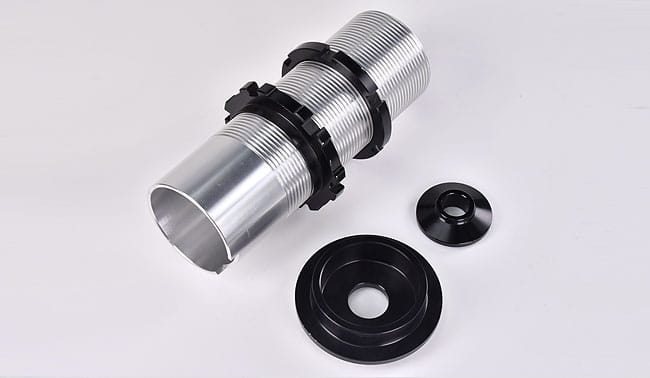
An adjustable sleeve coilover is not a complete shock absorber. It is a threaded aluminum sleeve that slides over the existing shock or strut body, carrying an adjustable spring perch and a lock collar. Turning the perch up or down the thread changes where the spring sits — and with it, the vehicle’s ride height.
That is the whole appeal. A sleeve kit converts a fixed-height factory or aftermarket shock into a height-adjustable one, without replacing the damper. It gives the height control that lowering springs cannot, at a fraction of what a full-bodied coilover costs — which is exactly why it remains one of the highest-volume entry points into adjustable suspension.
What it does not do is change damping. The shock stays as it was, so the kit’s job is height and preload, not valving. Clear setup expectations help distributors reduce after-sale questions and keep the kit positioned for the right application.
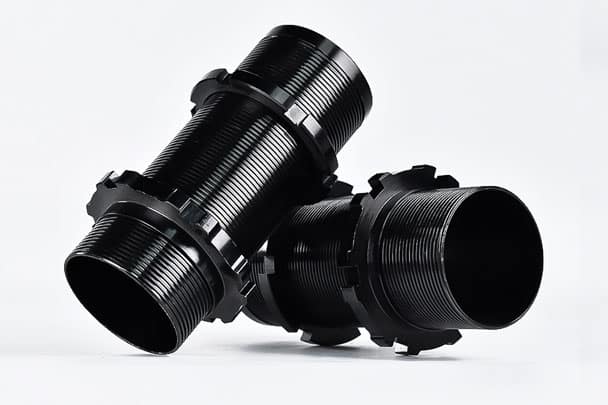
Both are called coilovers, but they solve different problems. A clear comparison helps buyers choose the correct level of adjustment, cost and damping performance before a kit is specified.
| Adjustable Sleeve Coilover | Full-Bodied Coilover | |
|---|---|---|
| What you get | Threaded sleeve, spring perch, lock collar, spring and upper mount. Fits over the shock you already have. | A complete replacement damper with the thread machined into the shock body itself. |
| Ride height | Adjustable Perch position sets it. | Adjustable Usually via a separate lower bracket. |
| Damping | Unchanged — the original shock and its valving stay in place. | Matched to the spring rate, often with adjustable rebound or compression. |
| Height vs. preload | The same perch does both jobs, so the two are linked. This is the design trade-off, and the source of most setup confusion. | Separated on better kits — body height and perch preload are independent adjustments. |
| Cost position | The affordable route to real height adjustability — high volume, broad market. | Premium. Better matched performance, at several times the price. |
| Best sold to | Buyers upgrading from lowering springs who want height control, budget builds, restoration and off-road projects reusing a good damper. | Track, competition and high-end street builds where damping quality decides the outcome. |
Sell it for what it is: the sleeve kit’s honest pitch is height adjustability on a shock the customer already trusts. Marketed that way it has a large, durable market. Marketed as a substitute for a valved full-bodied coilover, it generates returns — because the damping was never part of the deal.
Take the whole kit or just the parts you are missing. Every item below is manufactured in-house, so a mixed order ships as one consignment with one set of tolerances behind it.
CNC precision-machined from aircraft aluminum, with adjustment scales printed on the sleeve so ride height can be set repeatably rather than by eye. Works with stock or aftermarket shock bodies.
The same sleeve in a hard anodized black finish for mud, salt and wear exposure. Inner diameter machined to your shock body, drawing or sample so there is no play or rattle under load.
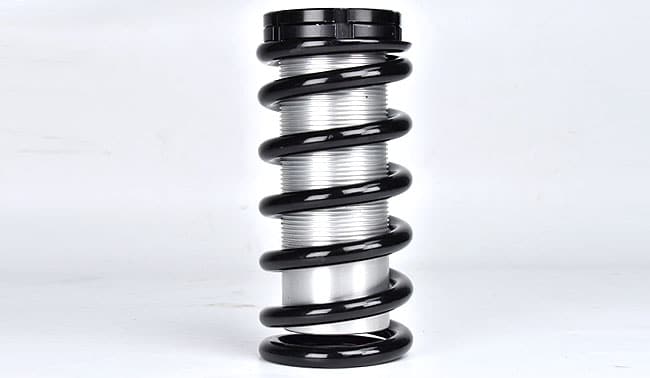
Springs matched to the perch by inner diameter so they seat square and cannot rock. Rate, free length and ID are all specified per project — the three numbers that decide whether a kit rides properly.
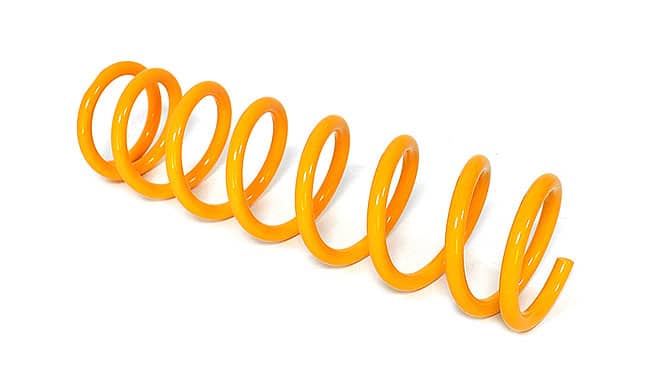
Higher free length and rate for lift rather than drop — the off-road and truck side of the same product family. Powder coat colour matched to your brand for shelf presence.
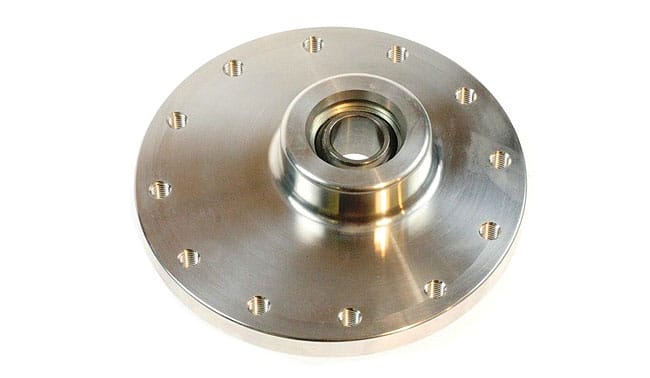
Once ride height changes, camber changes with it — which is why an adjustable plate belongs in a serious kit. Pillow-ball and slotted adjustable designs, plus fixed-angle versions for OEM applications.
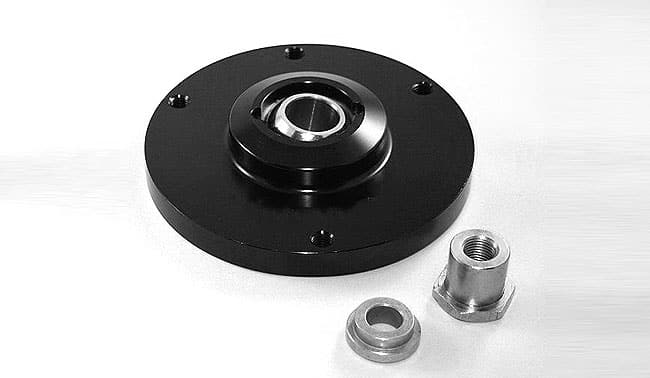
The upper end of the assembly, machined to your bolt pattern and shaft dimension. Available with a spherical bearing interface for precision, or a bushing interface where compliance and noise matter more.
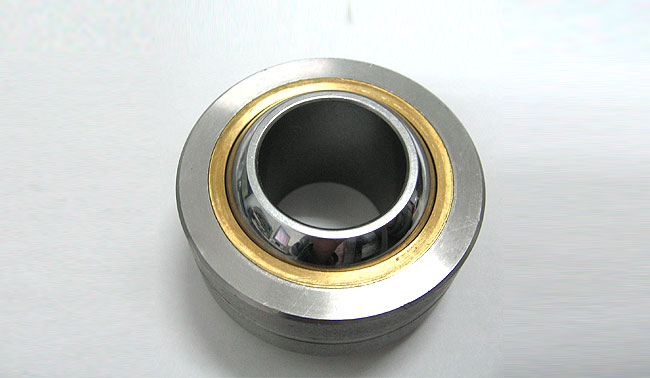
The heavy-duty option: steel-on-steel with grease lubrication, giving higher static load capacity at lower cost. Preferred where lubrication points are accessible and load matters more than maintenance-free operation.
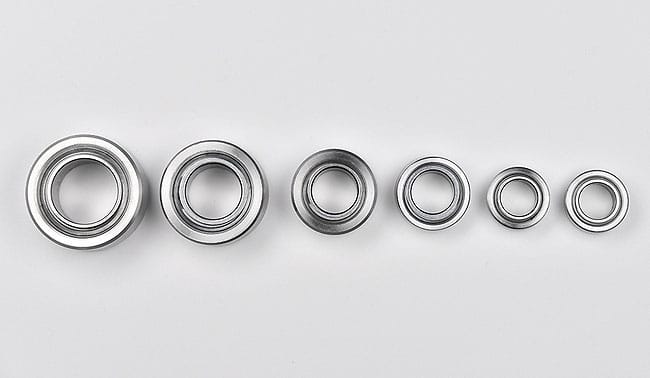
Maintenance-free PTFE-lined construction for shock and top-mount positions where re-lubrication is impractical. Clearance grade selected against load, housing tolerance and noise requirements rather than picked off a shelf.
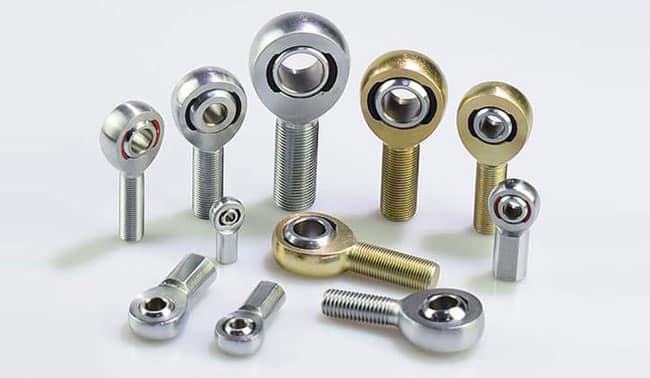
A compact single-body rod end suited to standard replacement applications and tighter packaging. Precision ground and replaceable as a standalone item, so a worn joint does not mean a new assembly.
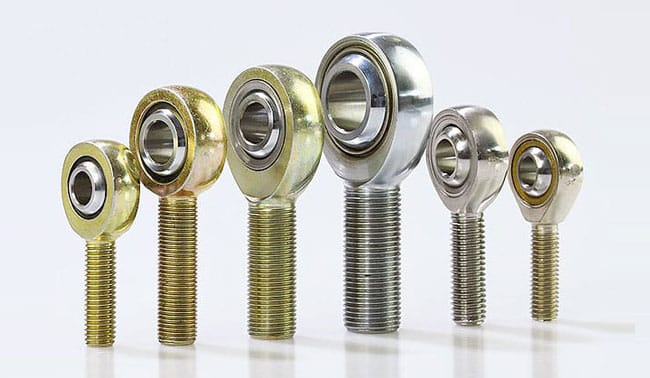
A three-piece rod end construction with greater structural strength than the single-body type — the version specified for performance builds and higher-load linkage positions in a coilover system.
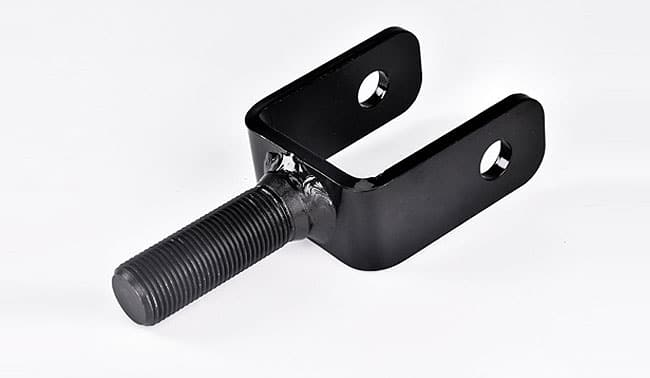
The mounting interface at the shock end, made adjustable so effective length can be tuned on the vehicle. Thread specification and pin bore machined to your geometry rather than adapted from a catalogue part.
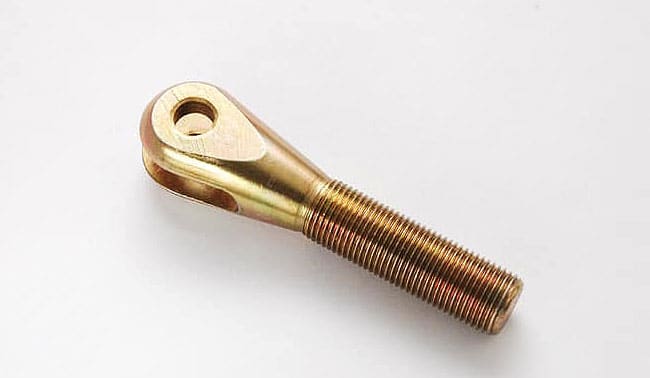
Pairs the kit with droop control. Machined steel or aluminum, corrosion-resistant finish, and sized for single or multiple strap setups — the part that stops a lowered or lifted setup over-extending.
Sleeve coilovers are simple parts, which is precisely why the details matter. Four specification decisions account for nearly every complaint a distributor hears after the sale.
Standard V-threads offer little locking surface and wear under repeated adjustment, so settings drift under sustained vibration and preload becomes inconsistent. ACME and trapezoidal profiles carry higher load, adjust more smoothly, and hold position — which on a sleeve kit is the whole product promise.
The sleeve has to grip the damper without play. Loose tolerances produce rattle, inconsistent spring seating and a suspension that feels vague. We machine the inner diameter to your drawing, sample or requested fit class so the sleeve seats cleanly on the shock body.
Thin or poorly controlled anodizing breaks down fast in mud, water and road salt, and a corroded thread can seize the adjuster. Hard anodizing and other specified finishes are selected around the environment, adjustment frequency and branding requirement.
If the spring inner diameter does not match the perch, it rocks rather than seating square, which introduces noise and uneven load. Perches are machined to the specific spring ID rather than assuming a generic fit, for single and dual-rate setups alike.
The one thing worth printing in the instructions: on a sleeve kit the perch sets ride height and spring preload at the same time — they are not separate adjustments as they are on a good full-bodied coilover. Winding the perch down for more drop also strips away droop travel, and over-preloading is a well-documented cause of harsh ride quality, noise and even damper damage. Preload does not make a linear spring stiffer; it only changes where the spring starts. Saying so plainly in the fitting instructions prevents a large share of post-install complaints.
Material and finish are chosen against load, weight target and operating environment. These are the combinations we run most often for coilover components.
| Material | Typical Use | Notes |
|---|---|---|
| 6061-T6 Aluminum | Standard | Excellent machinability and a clean anodize finish. The default for street performance sleeves, perches and collars. |
| 7075-T6 Aluminum | High Strength | Substantially higher tensile strength than 6061 for motorsport and heavy-duty builds where load capacity and low weight are both required. |
| Carbon Steel (AISI 1045) | Heavy Duty | Specified where the load case exceeds what an aluminum component should carry, typically in clevises and mounting hardware. |
| Stainless Steel | Corrosive | Marine, coastal and wet-environment applications where corrosion resistance outranks weight. |
| Titanium | Premium | Weight-critical and high-end performance builds where the cost is justified by the specification. |
| Hard Anodize / Anodize / Zinc / E-Coat | Finishes | Hard anodizing is available for coilover hardware exposed to wear and corrosion. Standard anodizing in custom colours is available for branding, with zinc plating and E-coating for steel parts and complex geometries. |
Component-level supply: if you already have springs and mounts sorted and only need the threaded hardware, that is a separate program — see custom coilover hardware manufacturing for sleeves, spring perches and lock collars supplied to your drawings.
We manufacture high-quality performance suspension components and provide customized solutions for special applications — with free quotations and catalogue on request.
Over since 1999 in suspension parts manufacturing. That depth is what lets us stay ahead of the competition and deliver solutions built around your specific requirement rather than a catalogue substitute.
Strict quality control standards at every stage, so every component leaves with the durability and performance the specification called for — consistent from batch to batch, not just on the first sample.
We keep you updated on order progress and hold delivery dates, so your operations keep running without disruption or last-minute reshuffling of your own commitments.
A professional team providing prompt, personalised assistance throughout the process — from the first specification question to after-sales support once the kit is in the market.
Sleeves, springs, camber plates, top mounts, rod ends, spherical bearings and clevises all come from the same workshop, so a complete kit ships as one consignment with one set of tolerances behind it.
Precision quality at a competitive price, built to your drawing. Thread spec, bore, perch geometry, spring rate, finish colour and branding are all specified by you rather than picked from a shelf.
At SYZ Machine, we provide support at all times.
Send your request with the details and share the idea. For a coilover kit the useful specifics are shock body diameter, spring rate, free length and ID, thread preference, finish and quantity — but a drawing, sample or even the target vehicle is enough to start.
We work out the best solution based on your request and send a specific quote within 24 hours, flagging anything in the specification that would affect fit, adjustment range or cost before you commit to it.
Sample approval, production, inspection, branded packaging and export documentation. Whether it is before or after the sale, we are always here to support you.
Request the sample, the catalogue, or a quote — free of charge, answered within 24 hours.
What buyers and distributors ask most often before specifying a coilover kit.
They are threaded aluminum sleeves that fit over an existing shock or strut body, carrying an adjustable spring perch and lock collar. Moving the perch along the thread changes where the spring seats and therefore the vehicle’s ride height. They convert a fixed-height damper into a height-adjustable one without replacing the damper itself.
A sleeve kit adds height adjustment to the shock you already have. A full-bodied coilover replaces the shock entirely, with the thread machined into the damper body and valving matched to the spring rate. Sleeves are the affordable route to real height adjustability; full-bodied kits deliver matched damping performance at several times the price.
Height and spring rate, not damping. The original shock and its valving stay in place, so the ride character is a combination of the new spring against the old damper. Stating this clearly before sale helps customers choose the right product and avoids confusing a sleeve kit with a full damper replacement.
Because a V-thread has minimal locking surface and wears under repeated adjustment and load cycling, so ride height settings drift under sustained vibration. ACME and trapezoidal profiles carry higher load, adjust more smoothly and hold their position — on a product whose entire value is repeatable adjustment, that is not a detail worth economising on.
Enough that the spring is captive at full droop and no more. On a sleeve kit the perch controls ride height and preload together, so winding it down for extra drop also removes droop travel. Over-preloading is a documented cause of harsh ride, noise and damper damage — and it does not stiffen a linear spring, it only changes where the spring starts working.
Yes — that is the normal case. Send the shock body outer diameter, or the shock itself, and the sleeve inner diameter is machined to your drawing, sample or requested fit class so there is no play. Perch geometry is matched to your spring inner diameter at the same time.
Yes. Sleeves, springs, camber plates, top mounts, rod ends, spherical bearings and clevises can all be ordered individually or in any combination. Because they are made in the same workshop, a mixed order still ships as one consignment.
Yes. Springs can be powder coated to your brand colour, aluminum components anodized in custom colours, and logos engraved. Branded and retail-ready packaging is available so the kit arrives shelf-ready rather than needing repackaging at your end.
Shock body diameter and length, spring rate, free length and inner diameter, the thread specification if you have a preference, finish, quantity and any branding requirement. If you do not have all of it, send a drawing, a sample or the target vehicle and our engineers will work the rest out with you.
Share your shock dimensions, spring specification and quantity. We promise to respond within 24 hours.