Wholesale Aftermarket Parts & Accessories for ATV/UTV, Off-Road
SYZ Machine runs an in-house CNC machining workshop built around ATV/UTV, off-road, racing and industrial components. Send a drawing, a 3D file, or a physical sample, and our engineers turn it into a quoted, inspected, production-ready part — from the first prototype run through repeat bulk manufacturing, at a competitive factory price.
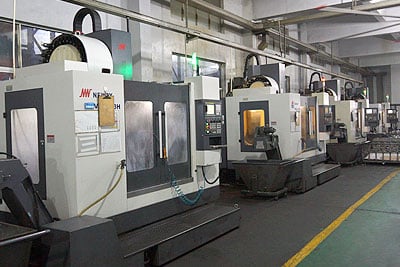
As a CNC machining manufacturer specializing in ATV/UTV, off-road and racing car parts, SYZ Machine is equipped with advanced machining workshops and cutting-edge equipment. That same capacity serves customers across automotive, aerospace, industrial, power and energy programs.
Buying CNC machined parts is rarely just about price per piece. It is about whether the supplier understands what the part has to survive — a 300 hp UTV landing on a rock ledge, a hydraulic clevis under cyclic load, or a precision bracket that has to hold a datum through anodizing.
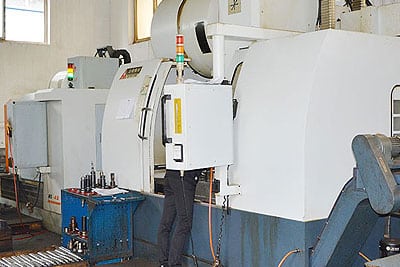
We have been machining vehicle and industrial components since 1999. Our Ningbo facility plus affiliated Jiangsu production bases runs 48 Ningbo machines, 12 lathes, 4 grinding machines, 3 drilling machines, 3 threading machines and 2 milling machines, with monthly capacity of 200,000 pieces at the SGS-assessed Wuxi rod end and ball joint base across suspension, steering, drivetrain and body components.
Because we also design and sell our own suspension and steering product lines, we read drawings the way a parts engineer does — flagging the wall thickness that will chatter, the thread that will gall, or the finish that will eat your tolerance, before it becomes a rejected shipment. More about SYZ Machine.
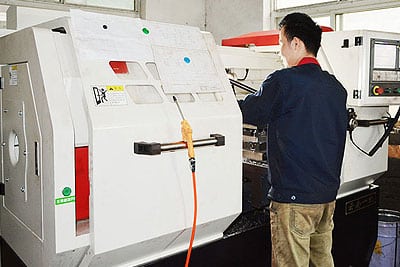
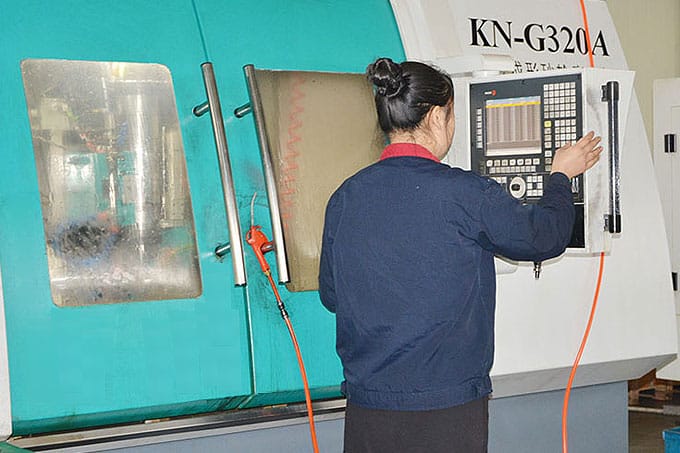
CNC machining — computer numerical control machining — is a manufacturing process in which computer-controlled machines remove material from a workpiece to create the desired shape or product. The machines follow a pre-programmed set of instructions generated from your CAD model, so the process runs with high precision and accuracy on part number one and part number ten thousand alike.
That repeatability is why CNC machining is used widely across industries for producing complex and precise parts and components: it holds tight tolerances on intricate geometry without the tooling investment that casting or forging demands, and it works in metals and plastics alike.
For low-to-mid volumes, custom geometry, and parts that must be dimensionally right the first time, CNC machining is usually the fastest route from drawing to a part you can bolt on and test.
Most custom parts are produced with one, or a combination, of the processes below. Tell us the part and we will confirm the route — including whether a secondary operation is the cheaper way to hit your print.
A rotating cutting tool removes material from a stationary workpiece. This is the most common type of CNC machining, used for housings, brackets, plates, manifolds and any prismatic part. We run 3-axis, 4-axis and 5-axis milling centers, so undercuts and multi-face features are produced in fewer setups — and fewer setups mean less stacked tolerance.
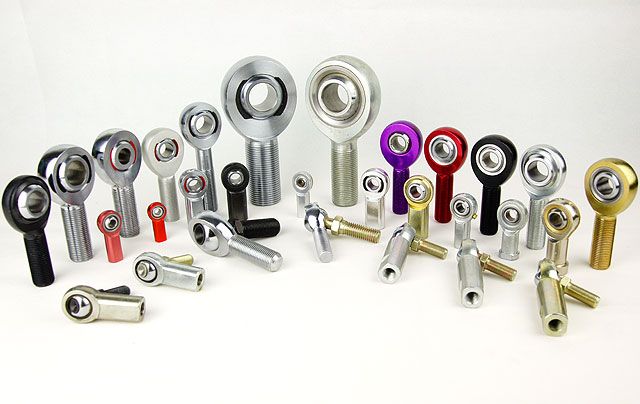
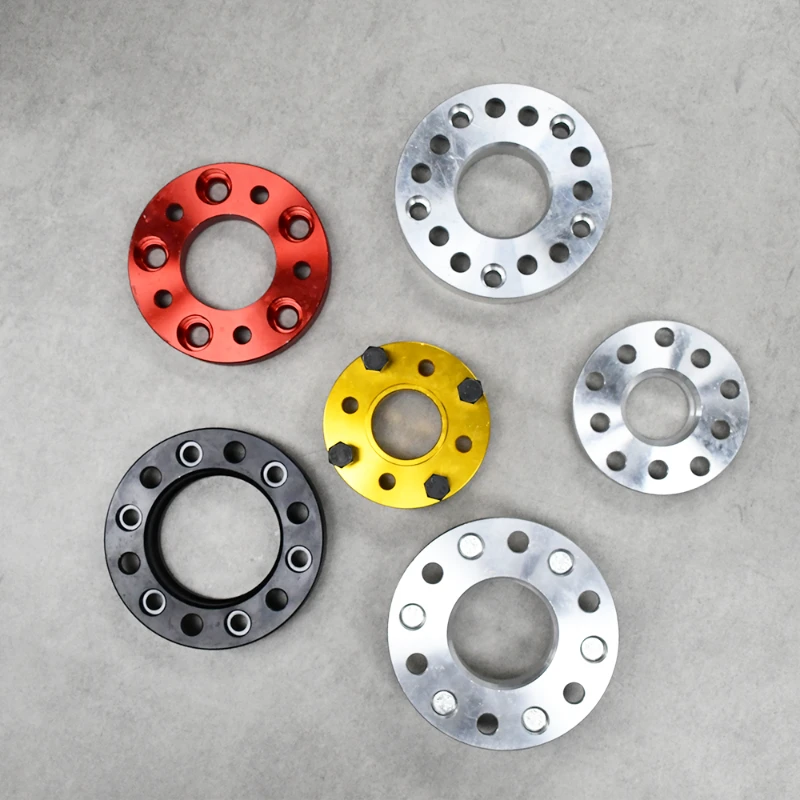
The workpiece rotates while a cutting tool removes material, producing cylindrical parts such as shafts, bolts, screws, bushings, spacers and threaded sleeves. Our 12 lathes cover the turned components behind most of our rod end and wheel spacer product lines.
A rotating cutting tool creates holes in a workpiece — for fasteners, electrical wiring, lubrication passages or mating components. Hole position, perpendicularity and finish all affect assembly, which is why fine-hole and threaded-hole checks sit in our standard inspection list.
An abrasive wheel removes material to reach a precise size and surface finish. Grinding is the answer for hardened parts, bearing seats and sealing faces where a turned or milled finish is not tight or smooth enough to do the job.
Tool and workpiece are submerged in a dielectric fluid, and an electrical charge erodes the workpiece into the desired shape. EDM cuts hardened steel and produces sharp internal corners and slots that a rotating cutter physically cannot reach.
A laser beam cuts or engraves the material, used for intricate designs, precise cuts and permanent part marking. Other processes including waterjet cutting, plasma cutting and wire EDM can be arranged when the material or thickness calls for it.
Beyond cutting: in addition to CNC machining we offer assembly and finishing services that shorten your own supply chain. Our skilled technicians can assemble machined parts into subassemblies or finished products — reducing your labor costs and simplifying your logistics — and apply anodizing, plating, powder coating and other finishes so parts arrive with the appearance and protection you specified.
Below are some of our most popular machined parts, available in a variety of models. Each one started as a drawing or a sample and is now machined, finished and packed in repeat batches. Please contact us for more information on any of them.

CNC machined from billet aluminum for strength and precision fit. The high-clearance profile keeps the rod off rocks and obstacles. Custom dimensions, anodized finishes and laser-engraved branding available.
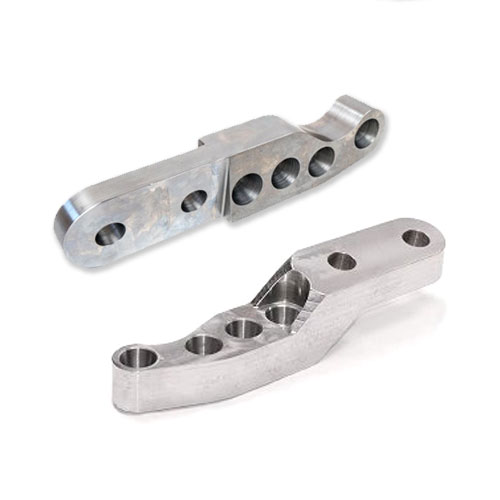
Machined from solid billet for steering correction on lifted 4×4, Jeep, Ford and Chevy builds. Custom hole sizes and spacing, raw, anodized or coated finishes, and logo engraving supported.
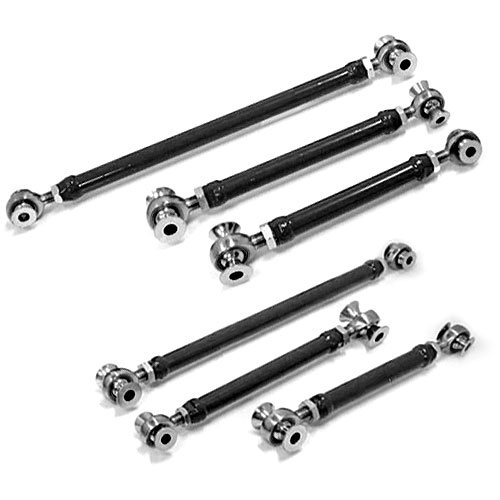
A machined-plus-assembled program: control arms with rod ends, spacers, brackets and mounting hardware supplied as one kit, with polyurethane bushings on request. Shows how machining, subassembly and packing combine in a single order.

Machined bodies paired with our own heavy-duty rod ends into a length-adjustable link. Custom lengths, logos and finishes supported under OEM/ODM terms — a typical machining-plus-component program.
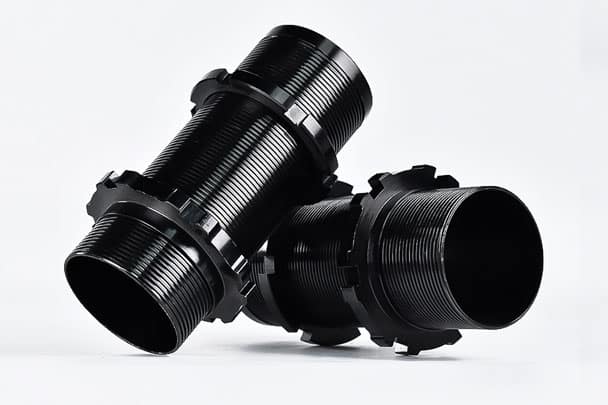
Precision-machined threaded sleeves and collars with adjustment scales, produced for ride-height tuning on street, off-road and motorsport builds. Matching coilover hardware can be machined to suit.

Machined flanges and precision fabrication in titanium and stainless, with polished, brushed and other premium surface finishes. Proof that our material range runs well past the everyday 6061.
Material choice drives cost, strength, corrosion life and how the part finishes. Below are the grades we machine most often. If your grade is not listed, send the specification and we will confirm availability and machinability.
| Material | Common Grades | Properties |
|---|---|---|
| Aluminum Alloy | 6061 / 5052 / 2024 / 6063 / 7050 / 7075 | Lightweight and easy to machine; good corrosion resistance. 6061 is the default for brackets and housings, 7075 where strength-to-weight matters most — as in our 7075 billet radius rods. |
| Copper / Bronze / Brass Alloy | 101 / C110 / C932 / 260 / 360 | Good thermal and electrical conductivity; good strength and ductility; easy to machine. Used for bushings, electrical contacts and bearing races. |
| Stainless Steel Alloy | 15-5 / 17-4 / 18-8 / 303 / 316 / 316L / 416 / 410 / 420 / 440C | High corrosion resistance; high strength and hardness; good wear resistance; can withstand high temperatures. The default for marine, food and medical-adjacent parts. |
| Steel Alloy | 1018 / 1215 / 4130 / 4140 / 4310 / 300M | High strength and toughness; good machinability; good fatigue resistance; can be heat treated for increased hardness. 4130 chromoly is the workhorse of our off-road linkage parts. |
| Zinc Alloy | Common die-cast & machining grades | Lightweight and easy to machine; good dimensional stability. |
| Titanium Alloy | Ti-6Al-4V & equivalents | High strength-to-weight ratio; excellent corrosion resistance and high-temperature capability. Often selected for demanding precision hardware where weight and corrosion resistance matter. |
| Material | Properties |
|---|---|
| HDPE — High-density polyethylene | Good chemical resistance, impact resistance, low moisture absorption. |
| UHMW — Ultra-high-molecular-weight polyethylene | Excellent wear and abrasion resistance, low coefficient of friction and high impact strength — the same family used in our UHMW suspension bushings. |
| PEEK — Polyetheretherketone | Excellent high-temperature resistance, chemical resistance and mechanical strength. |
| ABS — Acrylonitrile butadiene styrene | Good impact resistance, toughness, low cost. |
| PP — Polypropylene | Good chemical resistance, high fatigue resistance, low moisture absorption. |
| PS — Polystyrene | Good optical clarity, stiffness, low cost. |
| PC — Polycarbonate | Good impact resistance, toughness and optical clarity. |
| PVC — Polyvinyl chloride | Good chemical resistance, flame retardancy, low cost. |
| POM — Polyoxymethylene (acetal) | Good dimensional stability, low friction, high stiffness. |
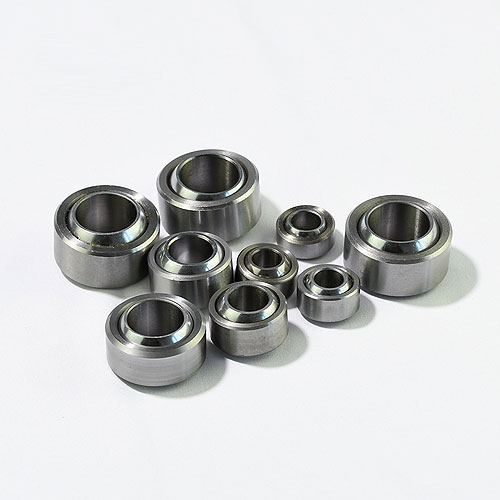
| PTFE — Polytetrafluoroethylene | Excellent chemical resistance, low coefficient of friction and high-temperature resistance — the liner material behind self-lubricating spherical bearings. |
| Acrylic — PMMA (Polymethyl methacrylate) | Good optical clarity, high surface hardness. |
| Nylon — Polyamide | Good wear resistance, toughness, low coefficient of friction. |
General tolerances and precision tolerances are two different levels of tolerance that can be applied to CNC machined parts — and the gap between them is a cost decision as much as an engineering one.
General tolerances are the allowable variations in size and dimension that are acceptable for most applications, typically expressed as a range of values or as a percentage of the dimension being measured. The specific values depend on the material being machined, the manufacturing process used, and the requirements of the application.
Our standard: ±0.127 mm on metal and ±0.254 mm on plastic — equivalent to ±0.005 in and ±0.010 in, and broadly in line with the ISO 2768 medium class that most machined metal parts are quoted against.
Precision tolerances are a higher level of tolerance that requires more precise machining and measurement techniques — tighter fixturing, slower cutting strategies, in-process gauging, and often a grinding or reaming operation after milling.
These tolerances are typically used where extremely tight accuracy, traceability or application-specific inspection is required. Please contact our sales team if you need precision tolerances, so the correct process route is priced instead of guessed.
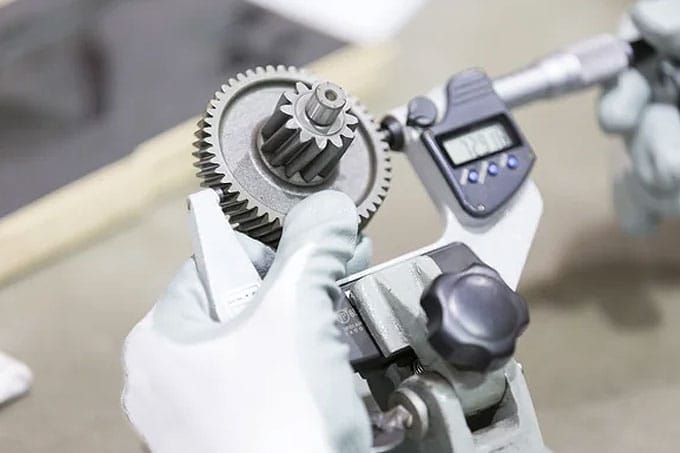
A practical tip that saves money: tolerance every dimension the same way and you pay for the tightest one everywhere. Mark only the features that actually control fit — bearing bores, mating faces, hole patterns — and let the rest run to general tolerance. We flag over-tolerancing during quotation instead of quietly charging for it.
Finishing is not cosmetic housekeeping. It changes corrosion life, wear behaviour, friction, glare and — if the coating is thick enough — the finished dimension. Choose it at the drawing stage, not after the first article.
| # | Surface Finish | What It Does & Where It Is Used |
|---|---|---|
| 1 | Lapping | Uses abrasive materials to achieve a very high level of flatness, parallelism and surface quality on a metal surface. Commonly used in the production of optical components, precision bearings and other high-precision parts where surface finish is critical. |
| 2 | Polishing | Uses abrasive materials to remove small amounts of material from a surface, resulting in a smooth and shiny finish. Improves appearance, removes surface scratches or blemishes, and increases resistance to corrosion and wear. |
| 3 | Plating | Coats a metal surface with a thin layer of another metal, increasing corrosion resistance and wear resistance. Hard chrome plating is a common choice on shafts and rods that see sliding contact. |
| 4 | Anodizing | An electrochemical process that forms a protective oxide layer on a metal surface. Provides corrosion resistance, improves wear resistance and offers a wide range of colour choices — the standard finish on most of our billet aluminum parts. Note that anodizing reproduces whatever texture is underneath, so bead blasting or polishing first is what produces the even matte look. |
| 5 | Passivation | Removes contaminants from the surface of metal parts and forms a thin oxide layer that prevents corrosion. Commonly used on stainless steel and other alloys to increase the life and durability of the part. |
| 6 | Black Coating | Used across automotive, aerospace and firearms applications for an aesthetically pleasing black finish or improved corrosion resistance. Also reduces glare on metal surfaces, improves lubricity and increases durability. |
| 7 | Parkerizing | Also known as phosphate coating, it creates a porous, corrosion-resistant coating in a dull grey or black. Provides improved rust resistance and a good surface for oil retention. Common on firearms, automotive parts and machinery components that need a durable protective coating. |
| 8 | Powder Coating | Provides a durable, long-lasting finish that resists scratches, chipping and fading, available in a variety of colours and textures. Coating thickness must be carefully controlled so it does not push machined dimensions or tolerances out of specification. |
| 9 | Brushing | Uses a wire brush to create a pattern of lines on the surface of a metal part, mainly to improve aesthetics. By adjusting brush direction and pressure we achieve the desired texture — straight, swirly or chaotic. |
Finish and roughness: a standard as-machined surface generally lands around Ra 1.6–3.2 µm (63–125 µin) with visible tool marks. If your part needs a specific Ra value, or a cosmetic Class A face, state it on the drawing — it changes tooling, feed rates and sometimes the process itself.
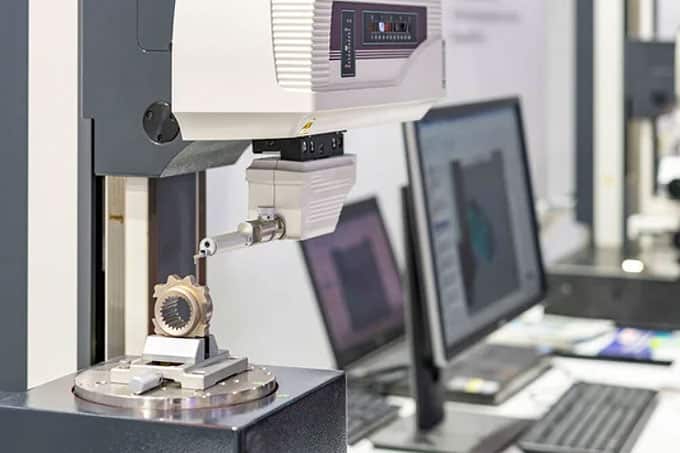
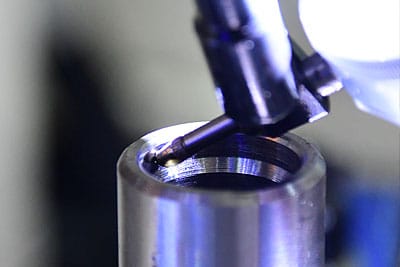
We attach great importance to quality, because our customers depend on our parts and assemblies to perform reliably and consistently. We use advanced equipment and techniques to measure and verify the dimensions, tolerances and other critical specifications of every component, and our engineers and technicians monitor and review each step of the process.
SYZ Machine is ISO 9001 certified and SGS-assessed on-site, with in-house R&D, prototyping, dynamometer testing and pull testing. If your program needs a first article inspection report, material certificates or a specific sampling plan, tell us at the RFQ stage and we will build it into the production plan. See how we build and inspect CNC-machined radius rods for a worked example.
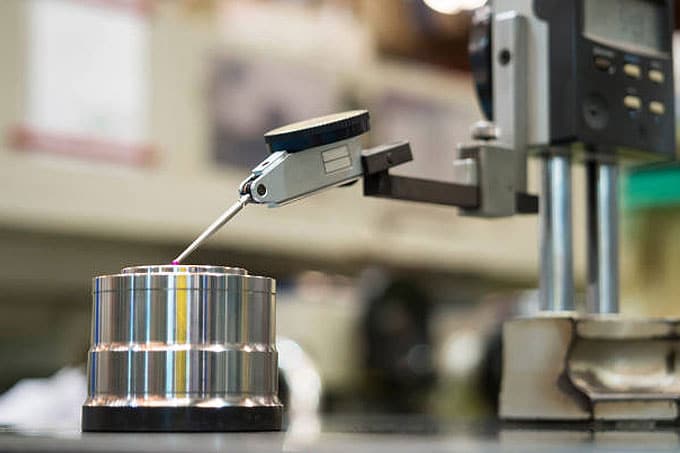
CNC machining is a versatile technology that can be used in almost any industry requiring high-precision parts and components. These are the sectors we quote most often.
Brackets, housings and precision hardware where tolerance control, material documentation and traceability requirements must be reviewed before quoting.
Coilover sleeves, camber plates, gears, steering knuckles, wheel spacers and crankshafts. Our largest machining segment, and the one our own product lines grew out of.
Stainless steel, titanium and engineering-plastic parts for medical-device-related projects where drawings, material requirements and surface quality need careful review.
Printed circuit board fixtures, connectors, sensor bodies and heat-dissipating housings, most often in aluminum or copper alloys.
Gears, bearings, clevises and hydraulic components. Machined piston rods and clevis ends are recurring industrial programs for us.
Watches, cameras and mobile phone components, where cosmetic surface quality matters as much as the dimension on the print.
Machined hardware for defense-related industrial or vehicle programs, quoted case by case according to drawing, material, finish, hardness and compliance requirements.
Our home ground: ATV/UTV, off-road, race car, motorcycle, go-kart and watercraft components.
Obsolete or discontinued parts reverse engineered from a physical sample — a large share of our aftermarket programs start exactly this way.
At SYZ Machine, we provide support at all times. Just 3 steps to start now!
Send us your request with details and share your idea: 2D drawing or 3D file, material, quantity, tolerance requirements, finish and target application. A photo of a sample part works too — we reverse engineer from physical parts regularly.
We work out the best solution based on your request and send a specific quote within 24 hours. Our engineers review the design for manufacturability first, and an NDA can be signed before you share anything proprietary.
Prototype, first article inspection, mass production, finishing, assembly, packing and shipping. Whether it is before or after the sale, we are always here to support you.
Send us your CNC machining project to get quick technical and quotation support.
High-quality precision CNC parts and services are the product. Everything below is how we make sure you get them repeatably.
We pride ourselves on producing high-quality products that meet our customers’ specifications. Experienced machinists use state-of-the-art equipment and techniques so every part meets strict quality standards, holding tight tolerances and complex geometries on 3-axis, 4-axis and 5-axis milling machines, lathes and routers.
Our streamlined production process delivers products quickly and efficiently without sacrificing quality or accuracy — the SGS-assessed Wuxi rod end and ball joint base supports monthly capacity of 200,000 pieces.
We strive to offer competitive prices while maintaining the highest quality standards. Factory-direct, with no trading-company margin sitting between you and the machine.
Our engineers and designers work with you to optimise designs for CNC machining, using advanced software to analyse the model and minimise cost and lead time. Design modifications, material selection and assembly guidance are all part of the service.
We assemble CNC parts into subassemblies or finished products to reduce your labor costs and simplify logistics, and we apply anodizing, plating, powder coating and more to give parts the appearance and protection you specify.
We understand the importance of protecting our clients’ proprietary designs, which is why we offer NDAs for custom projects — signed before drawings change hands.
Machining, heat treatment, surface treatment, assembly, testing and packing coordinated in-house across our Shanghai, Jiangsu and Ningbo facilities.
Customers in 20+ countries, 24/7 response, free samples where stock allows, and hassle-free worldwide shipping.
With in-house CNC machining centers and lathes we customise parts from your drawings or samples at competitive cost, with prototypes usually ready within 4–6 weeks before mass production.
Short, practical guides from our engineering team, answering the questions that come up most often during quotation.
A full walkthrough from billet to inspection report on a real production part.
Material choices, machining steps and why some designs cost more than they need to.
Aluminum grade selection explained through the wheel spacer example — the same logic applies to any billet part.
Getting dimensions off a physical sample correctly, so the reverse-engineered part actually fits.
Which system to specify, and the conversion traps that produce unusable drawings.
How to call out threads on adjustable assemblies so machining and assembly agree.
Ordering, samples, MOQ, lead time, payment and shipping answered in one place.
Material comparisons, suspension design and manufacturing notes published regularly.
Ten workshop videos covering rod ends, ball joints, axles, forging and linkage production.
The questions buyers ask us most often before placing a first custom machining order.
Our general tolerance is ±0.127 mm on metal parts and ±0.254 mm on plastic parts, roughly ±0.005 in and ±0.010 in. Tighter precision tolerances are available for high-criticality or regulated projects — contact our sales team with the drawing so the correct process route, fixturing and inspection method can be quoted rather than assumed.
A 2D drawing with tolerances plus a 3D model (STEP or IGES) is ideal. We can also quote from a dimensioned sketch, photos of a sample, or a physical sample sent to our factory. Include material, quantity, surface finish and any critical features so the first quote is accurate rather than provisional.
Yes. We offer NDAs for custom projects because we understand the importance of protecting our clients’ proprietary designs. Ask for it at first contact and we will have it signed before drawings change hands.
Metals include aluminum (6061, 5052, 2024, 6063, 7050, 7075), copper, bronze and brass alloys, stainless steel (303, 316, 316L, 17-4, 15-5, 410, 420, 440C and more), alloy steels (1018, 1215, 4130, 4140, 4310, 300M), zinc alloys and titanium. Plastics include HDPE, UHMW, PEEK, ABS, PP, PS, PC, PVC, POM, PTFE, acrylic and nylon. If your grade is not listed, send the specification and we will confirm.
With in-house CNC machining centers and lathes we customise parts from your drawings or samples at competitive cost, and prototypes are usually ready within 4–6 weeks before mass production. Actual lead time depends on material availability, part complexity, finishing operations and quantity — we confirm a date together with the quote.
In milling, a rotating cutting tool removes material from a stationary workpiece — best for prismatic parts such as brackets, housings and plates. In turning, the workpiece rotates while the cutting tool removes material — best for cylindrical parts such as shafts, bolts, screws, spacers and sleeves. Many parts use both: turned first, then milled for flats, holes and features.
Yes. We offer anodizing, plating, powder coating, passivation, polishing, brushing, black coating, Parkerizing and lapping, and our technicians can assemble machined parts into subassemblies or finished products. That reduces your labor costs and simplifies logistics, because one supplier ships a finished, packed item instead of loose components.
Yes. Send the physical sample or detailed photographs with key dimensions and we will produce the manufacturing drawing, confirm material and finish, and quote the part. This is how a large share of our aftermarket programs start.
Automotive and motorsport, aerospace, medical, electronics, industrial and power, consumer products and defense, alongside our core ATV/UTV, off-road, motorcycle, go-kart and watercraft product lines. CNC machining suits almost any industry that needs high-precision parts and components.
Use the form below or email [email protected] with your drawing, material, quantity and finish. Our target is to return a specific quote within 24 hours, and our engineers will flag anything in the design that could be simplified to reduce cost or lead time before you commit.
Share your drawing or sample details, material, tolerance, finish and quantity. We promise to respond within 24 hours.