Wholesale Aftermarket Parts & Accessories for ATV/UTV, Off-Road
Bump steer is a geometry problem, not a parts problem — which is why a kit only works if every piece in it can be dialled in. We manufacture the full set: heavy-duty rod ends, reinforced tie rod sleeves, CNC-machined tapered studs, and spacers, all made in-house to your thread, taper and length specification.
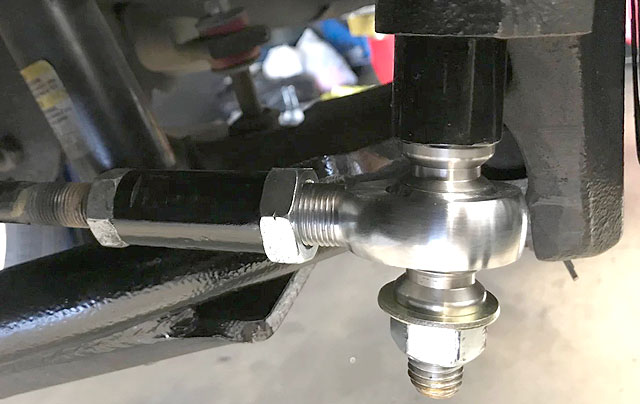
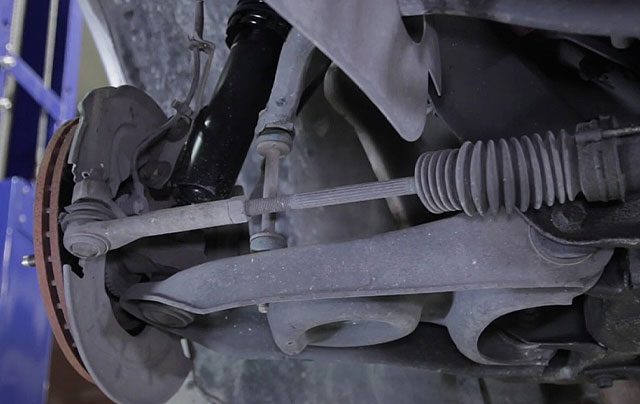
Bump steer is the unintended steering movement that happens when a wheel travels over uneven ground. More precisely, it is an unwanted change in the wheel’s toe angle as the suspension compresses and rebounds — the wheel turns slightly without anyone touching the steering wheel.
The root cause is geometry. The tie rod and the control arm each swing through their own arc as the suspension moves. When those two arcs do not match, toe changes through the travel, and the vehicle steers itself. Left uncorrected, it causes premature tire wear and makes the vehicle harder to control on rough surfaces.
It shows up most after ride height changes — lowering a street car, lifting a truck — because ride height directly changes the tie rod angle. It also appears on factory setups once ball joints, tie rod ends and bushings wear enough to let the linkage wander off its intended path.
Worth being straight about: bump steer can never be eliminated completely. As long as the suspension moves, some toe change exists — the geometry is three-dimensional and no linkage matches arcs perfectly through full travel. The goal is to minimise it. For race builds the common working target is keeping toe change under roughly 0.020" per inch of suspension travel, though the figure depends on where along the hub the measurement is taken, so compare like with like.
The key is correcting the geometric relationship between the suspension and steering systems. A bump steer kit helps keep the movement trajectory of the steering rod closer to the control arm, reducing the unintended steering changes caused by suspension compression or rebound.
Spacers move the tie rod end up or down on the steering knuckle, changing where the outer pivot sits. This is the finest of the adjustments available and usually the last one used to dial the arc in precisely once the coarser corrections are made.
Tapered studs replace the factory mounting point entirely, giving far more freedom in both height and orientation than the OE stud allows. This is the critical component for correcting geometry after a lift kit, where the linkage has been pulled well beyond its intended range.
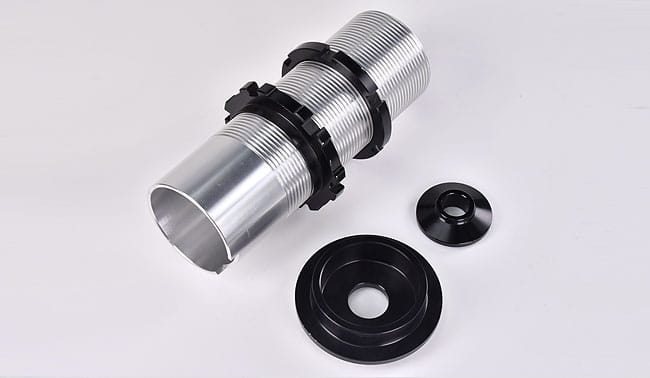
Reinforced sleeves let the tie rod’s effective length be set and locked, so the inner and outer pivots can be positioned where the geometry actually needs them rather than where the factory part happens to put them. Available in LH/RH thread for on-vehicle adjustment.
Heavy-duty rod ends provide greater articulation than a sealed OE tie rod end, so the corrected geometry does not bind at the extremes of travel. They also let the exact angle be dialled in rather than accepted as-is from the factory linkage.
Even with the kit fitted, the setup still has to be measured. A technician can check toe change through the travel, find the remaining mismatch and correct camber, caster and toe together. Skipping this is the difference between “better” and genuinely stable.
A kit cannot compensate for slop. Worn ball joints, tie rod ends and bushings let the linkage drift off its path regardless of how well the geometry is corrected, so tired wear parts should be replaced before or alongside the kit, not after.
Different builds, different components: on a lowered car the tie rod angle changes sharply, so a kit plus careful alignment is the standard route. On a lifted truck the problem is the opposite — the geometry is stretched past its intended range, which makes spacers and tapered studs the critical parts. On a race car, where travel is aggressive and small mismatches cost lap time, adjustable rod ends and precision alignment do the work. Our engineering guide on how to avoid bump steer walks through all three cases in detail.
Size in inch or metric, in chromoly, stainless steel or carbon steel. The popular series are below — custom requests are always acceptable.
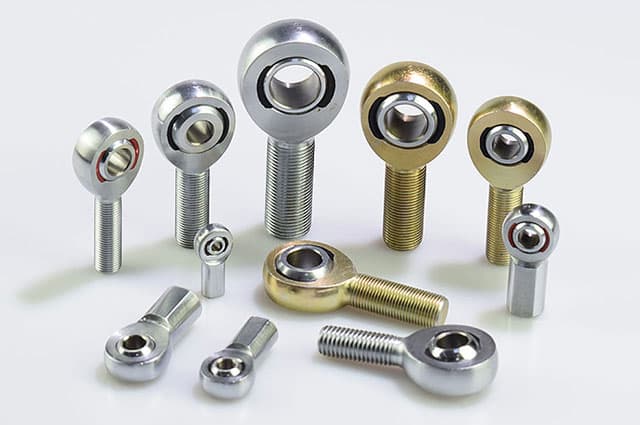
The compact single-body construction, offered in both male and female shank and in matched inch and metric versions. Suited to standard replacement duty and tighter packaging where a three-piece body will not fit.
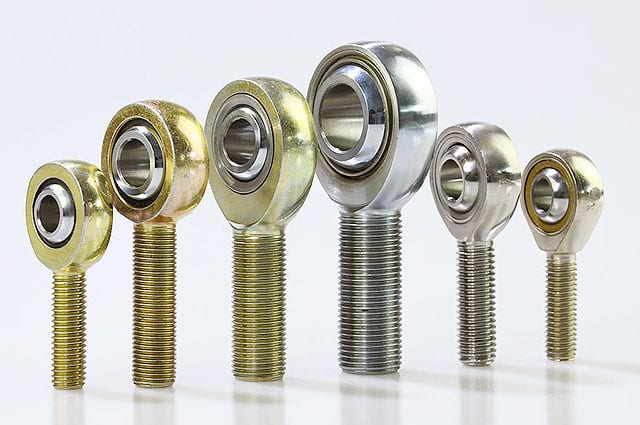
A three-piece rod end body with greater structural strength than the single-body type — the series specified for performance and racing steering links, where the joint sees high load and the geometry has to hold under it.
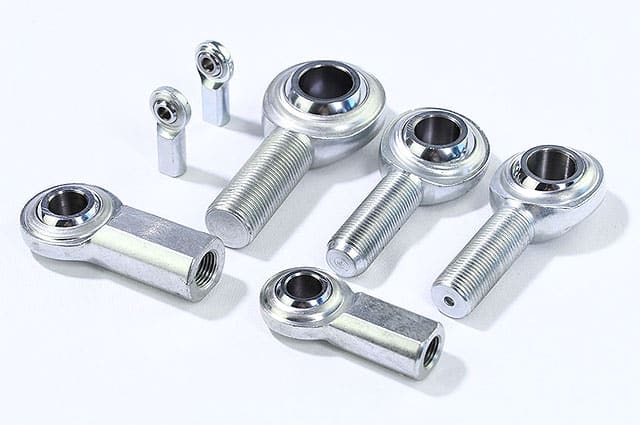
The commercial-standard series that most aftermarket steering links are built around, available across the full inch and metric range in male and female shank so an existing linkage can be matched without redesigning it.
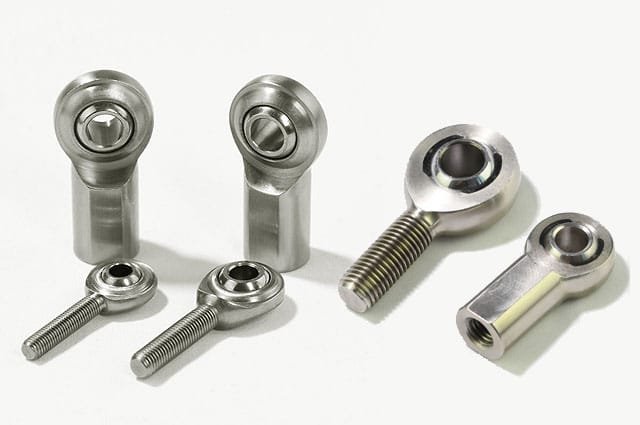
The same geometries in stainless steel, for vehicles that see salt, spray or washdown. Chosen where corrosion would seize a plated joint long before the bearing itself is worn out.
Choosing the series: shank size, thread and misalignment angle all follow from the linkage, not from a catalogue preference. If you are specifying from scratch, our guides on choosing rod end size for steering systems and misalignment angle cover the two decisions that most often get made wrong. Full range and sizing detail sits on the heim joints and rod ends page.
Size and thread in inch or metric, left-hand or right-hand, in steel, aluminum or stainless steel. Available in various finishes — custom length and design welcome.

Lightweight aluminum sleeve with opposing-hand threads so effective length can be adjusted on the vehicle without disconnecting either end. Anodized finish options available for branded kits.

The steel counterpart where load capacity outranks weight — typical for trucks, off-road builds and heavier vehicles. Finish specified to suit the environment the linkage will live in.
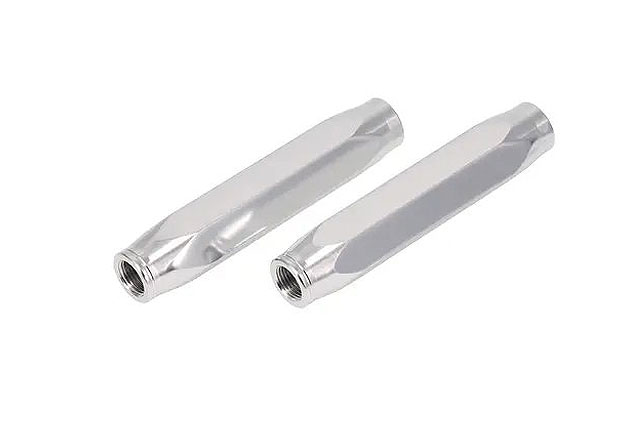
A second aluminum profile for builds where wrench access, clearance or appearance calls for a different outer form. Same adjustment function, different packaging envelope.
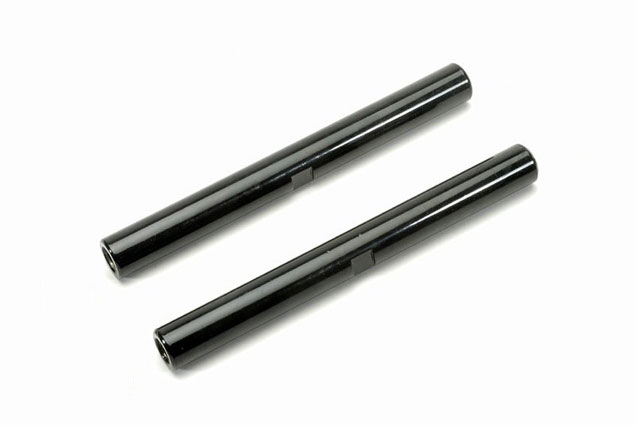
The steel version of the second profile, for the same clearance and access reasons where a steel sleeve is the right call on load grounds. Custom lengths and designs are welcome across all four.
Taper size customisable to fit OE or aftermarket knuckles, in steel or stainless steel. Spacers available in various heights and ID/OD sizes — custom designs welcome to match your geometry.
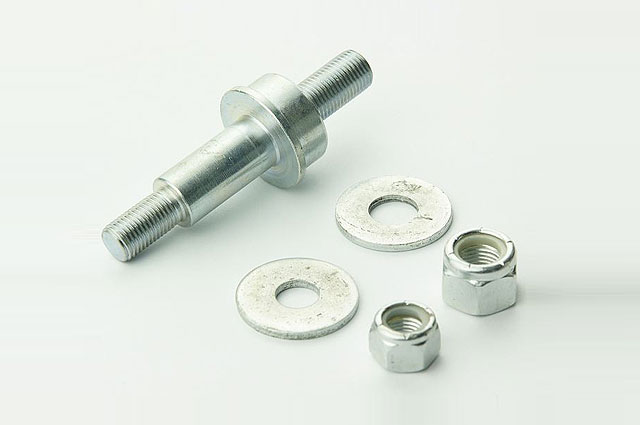
Replaces the factory mounting point to reposition the outer pivot, which is what makes real correction possible after a ride height change. Taper angle and diameter machined to the specific knuckle rather than adapted.
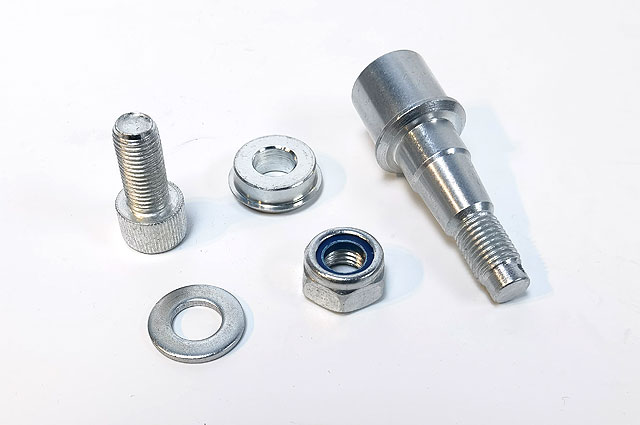
A second stud configuration covering a different taper and thread pairing, so an existing knuckle can be matched without machining the knuckle itself. Height specified to the correction the geometry needs.
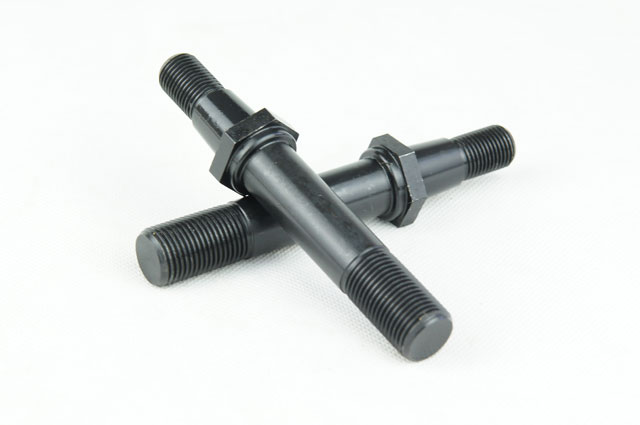
The third standard configuration, designed to stack with spacers so coarse correction from the stud and fine correction from the spacer can be combined on the same joint.
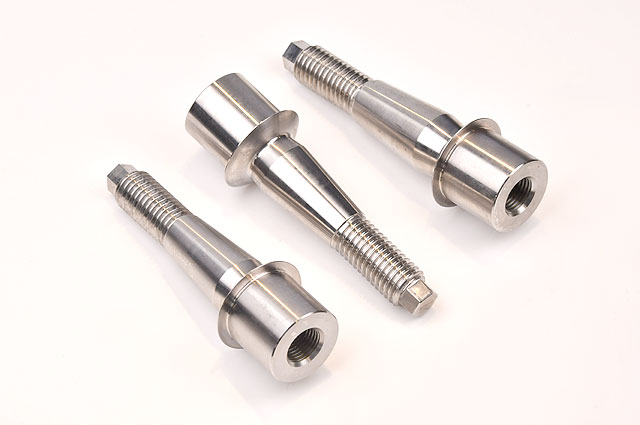
The stainless option for salt, marine and washdown environments, where a plated steel stud would corrode into the knuckle taper and turn a serviceable joint into a destructive removal job.
On spacers: heights and ID/OD sizes are made to the correction you need rather than sold as a fixed stack, and custom designs are welcome to match your geometry. Where the joint also needs extra angular clearance, high-misalignment tie rod end spacers and heim joint misalignment spacers serve the same linkage from our standard range.
Nothing here is fixed to a catalogue. These are the variables you set, and the ones we most often need confirmed before quoting.
| Component | Standard Options | Customisable |
|---|---|---|
| Rod Ends / Heim Joints | XM/XF MXM/MXF JMX/JFX CM/CF | Inch or metric sizing, male or female shank, chromoly / stainless / carbon steel, misalignment angle, race type and thread specification. |
| Tie Rod Sleeves | TRS-A001 TRS-S001 TRS-A002 TRS-S002 | Inch or metric thread, LH or RH hand, steel / aluminum / stainless, overall length, outer profile and surface finish. |
| Tapered Studs | TSS-S001 TSS-S002 TSS-S003 TSS-SS001 | Taper angle and diameter to fit OE or aftermarket knuckles, stud height, thread specification, steel or stainless steel. |
| Spacers & Washers | Various Heights Various ID/OD | Height, inner and outer diameter, material and finish — designed to match your geometry rather than picked from a stack. |
| Kit Packaging | Neutral Private Label | Logo marking, retail-ready boxes, part numbering and fitting instructions supplied under your brand. |
To quote accurately we need four things: the vehicle and what was done to it (lowered, lifted, or built from scratch), the knuckle taper if you have it, the existing tie rod thread size and hand, and your quantity. If any of those are unknown, send a sample or photos of the joint and our engineers will work back from that — reverse-engineering an existing linkage is routine work here.
A bump steer kit is only as good as its worst-toleranced part. Making all four component families in one workshop is what keeps the set consistent.
Strict quality control combined with efficient production keeps your costs down without sacrificing performance — and keeps dimensions consistent from batch to batch, which matters more on an adjustable kit than almost anywhere else.
From CNC-machined components to special materials and thread types, we support OEM-style customization with low MOQ, fast sampling and consistent quality — so a complete kit ships as one consignment, not four.
We support performance and off-road brands with repeatable manufacturing, on-time export handling and consistent standards, so the project is built around more than a one-time low quote.
Precision-machined components held to tight tolerances, which is exactly what a suspension and steering system needs — a taper that does not seat properly is a safety item, not a fit complaint.
From rod ends to sleeves, spacers and studs, we cover every key component in a bump steer solution, so you are not sourcing the critical fourth part from someone else’s tolerance regime.
Drawings, samples, special threads and materials can be reviewed against your exact requirement, backed by a responsive sales and engineering team for sampling, production and follow-up support.
At SYZ Machine, we provide support at all times.
Send your request with the details and share the idea — vehicle and modification, knuckle taper, tie rod thread size and hand, target quantity. A sample or photos of the existing joint works just as well as a drawing.
We work out the best solution based on your request and send a specific quote within 24 hours, flagging anything in the specification that would affect fit or adjustment range before you commit to it.
Sampling, production with consistent QC, branded packaging and export documentation. Whether it is before or after the sale, we are always here to support you.
Send us your steering geometry problem and get engineering feedback plus a factory quote within 24 hours.
What builders and distributors ask most often before specifying a kit.
It is the unintended steering movement that happens when a wheel goes over uneven ground — specifically, an unwanted change in the wheel’s toe angle as the suspension compresses and rebounds. The tie rod and control arm each swing through their own arc; when those arcs do not match, the wheel steers itself without any driver input.
Four component families: heavy-duty rod ends (heim joints), reinforced tie rod sleeves, CNC-machined tapered studs, and spacers and washers. Together they let the tie rod be repositioned relative to the control arm so the two arcs run closer to parallel through the travel.
No, and any supplier claiming otherwise is overselling. As long as the suspension moves, some toe change exists — the geometry is three-dimensional and cannot be made perfect through full travel. The goal is minimising it; for race builds a common working target is under roughly 0.020" of toe change per inch of suspension travel.
The clearest sign is the vehicle darting left or right after hitting a bump while the steering wheel stays straight. Alongside that, expect twitchy steering needing constant correction, and a saw-tooth wear pattern across the tire tread from the tires scrubbing as toe changes. It typically appears or worsens after a lowering kit, a lift kit, or once joints have worn.
It depends on the direction the ride height moved. On lowered cars the tie rod angle changes sharply, so the kit plus a careful alignment is the standard route. On lifted trucks the geometry is stretched past its intended range, which makes tapered studs and spacers the critical parts. On race cars, adjustable rod ends and precision alignment do most of the work.
Yes. Taper size is customisable to fit OE or aftermarket knuckles rather than adapted from a standard part, in steel or stainless steel. Send the knuckle dimensions, the original stud, or the knuckle itself, and the taper angle and diameter are machined to it.
Both, across the range. Rod ends are available in inch and metric sizing in male and female shank, and tie rod sleeves in inch or metric thread in left-hand or right-hand hand — opposing hands being what lets length be adjusted on the vehicle without disconnecting either end.
Rod ends in chromoly, stainless steel or carbon steel. Tie rod sleeves in steel, aluminum or stainless steel with various finishes. Tapered studs and spacers in steel or stainless steel. Stainless is the specification for salt, marine and washdown environments where a corroded stud seizes into the knuckle taper.
Yes. We support OEM-style customization with low MOQ and fast sampling, working from drawings or samples with special threads and materials as needed. Logo marking, retail-ready packaging, part numbering and fitting instructions can all be supplied under your brand.
Yes, and it is the step most often skipped. Even with the correct parts fitted, a technician needs to measure toe change through the travel, identify what mismatch remains, and set camber, caster and toe together. Worth stating in your fitting instructions — it is the difference between “better” and genuinely stable.
Share the vehicle and modification, knuckle taper, tie rod thread and quantity. We promise to respond within 24 hours.