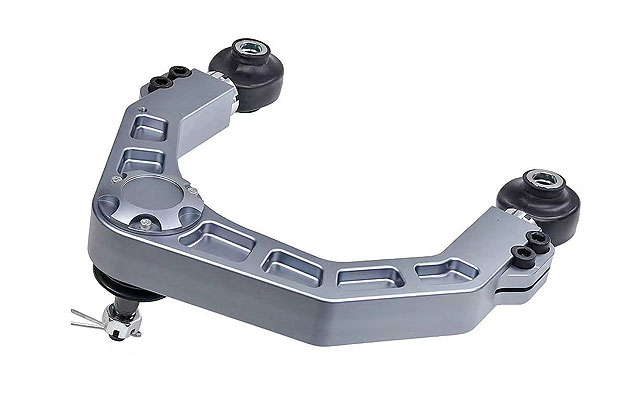
Wholesale Aftermarket Parts & Accessories for ATV/UTV, Off-Road
Upgrade handling, response and safety with chassis and suspension components made to motorsport tolerance — PTFE-lined rod ends and spherical bearings in three clearance grades, bump steer kits, camber plates, coilover hardware, steering racks and sprint car parts. Built in our own workshop for circuit, drift, drag and dirt oval programs.

A race car and a street car are built to opposite briefs. One is optimised for speed and agility — light structure, high-output engine, purpose-built suspension. The other trades some of that away for comfort, reliability and daily usability. Fitting race-grade components to a street car is how you close part of that gap, which is why our catalogue serves both the paddock and the tuning shop.
996, 997 and 991 chassis are already covered on the drift and track side. Demand here concentrates on spherical top mounts, camber plates and tight-clearance bearings.
Alongside S197 and S550 platforms. Bump steer correction and adjustable tie rod ends are the first parts most builders order.
5th and 6th generation Camaro, plus C5–C7 Corvette. Rear toe rods, sway bar links and coilover hardware carry the volume.
Part of a deep BMW line — E30, E36, E46, E90, E82 135i, F22 M235i, M2 and Z4. Spherical bushings replacing rubber is the usual first upgrade.
Sitting beside the 240SX (S13/S14/S15), 350Z and 370Z drift chassis that share much of the same joint and linkage hardware.
These are the flagship platforms, not a limit. Send the chassis and the part and we will confirm — contact us for other supported models.
The chassis list below comes from our own drift suspension kit program — these are platforms we already have bump steer kit and rod end geometry for, so a quote does not start from zero.
| Region | Make | Chassis Covered |
|---|---|---|
| Japanese | Nissan | 240SX S13 / S14 / S15 350Z 370Z |
| Toyota | AE86 GT86 GR86 | |
| Honda | Civic EK EG FD FK | |
| Mazda | RX-7 FC / FD RX-8 | |
| Subaru | BRZ | |
| Lexus | IS300 GS400 SC400 | |
| US & European | Ford | Mustang S197 / S550 Focus ST Fiesta ST |
| Chevrolet | Camaro 5th / 6th Gen Corvette C5 / C6 / C7 | |
| BMW | E30 E36 E46 E90 E82 135i F22 M235i M2 Z4 | |
| Porsche | 911 996 997 991 | |
| Mercedes-Benz / Audi | C-Class CLK A4 / S4 / RS4 | |
| Dodge | Challenger |
A note on fitment: we confirm against the part, not the model year. Thread pitch, bore, shank length and taper all change within a generation, so a year on its own is not enough to quote against. Send the OE part number, a drawing, or photos of the existing part with a measurement reference. Every product page also carries its own compatibility detail, and if you are unsure our sales engineers will confirm before you order.
“Race car” is not one market. A circuit car, a drift car, a drag car and a dirt oval sprinter load their chassis in completely different ways, and each rewards a different part of the catalogue. Start with the racing discipline, then specify the rod ends, bearings, steering parts and suspension hardware around that load case.

Repeatability is everything — the car has to behave identically on lap 20 as on lap 2. That means minimum deflection anywhere in the geometry, which is why tight-clearance bearings and rigid top mounts matter more here than raw strength. The SEMA 2025 S2000 build is a good illustration of how far the chassis side gets taken.
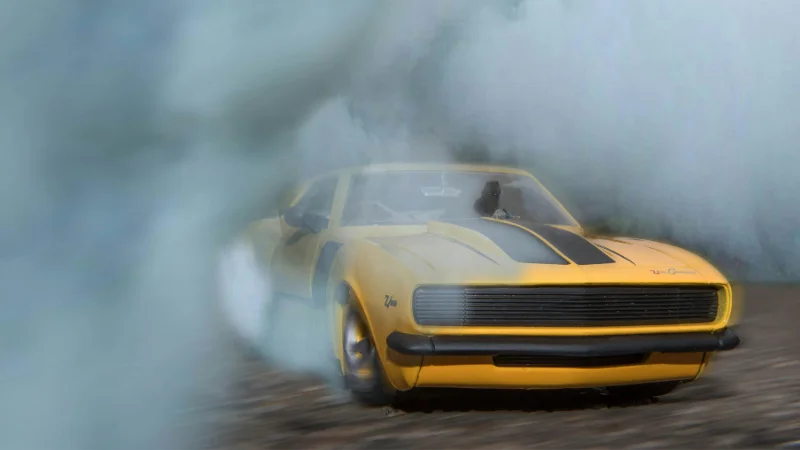
Enormous steering angle, constant impact loading, and a chassis that spends its life at the edge of its geometry. Angle kits push the suspension well past factory travel, so misalignment capability and bump steer correction stop being optional. Our drift suspension kit program is built around exactly that.
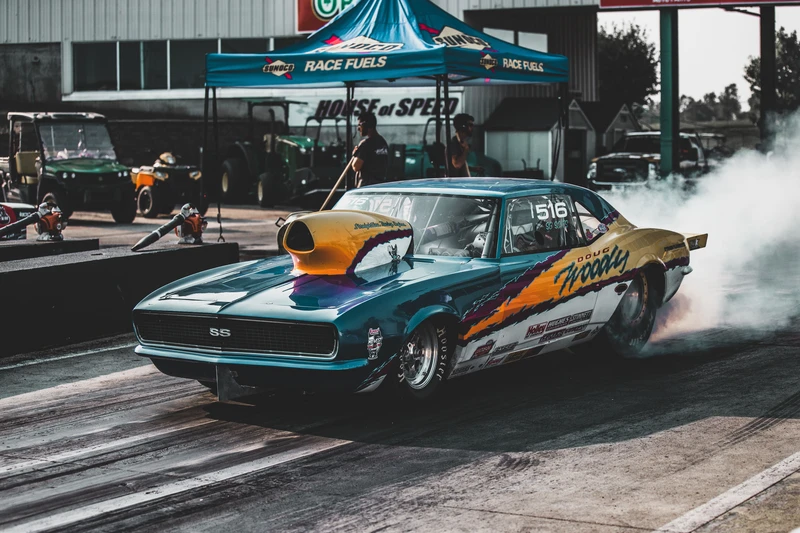
One direction, one moment that matters. Everything is tuned around planting the rear tyre in the first sixty feet, which makes link geometry and anti-squat the whole conversation. We wrote up why in drag race 4-links: the 0.3-second advantage.
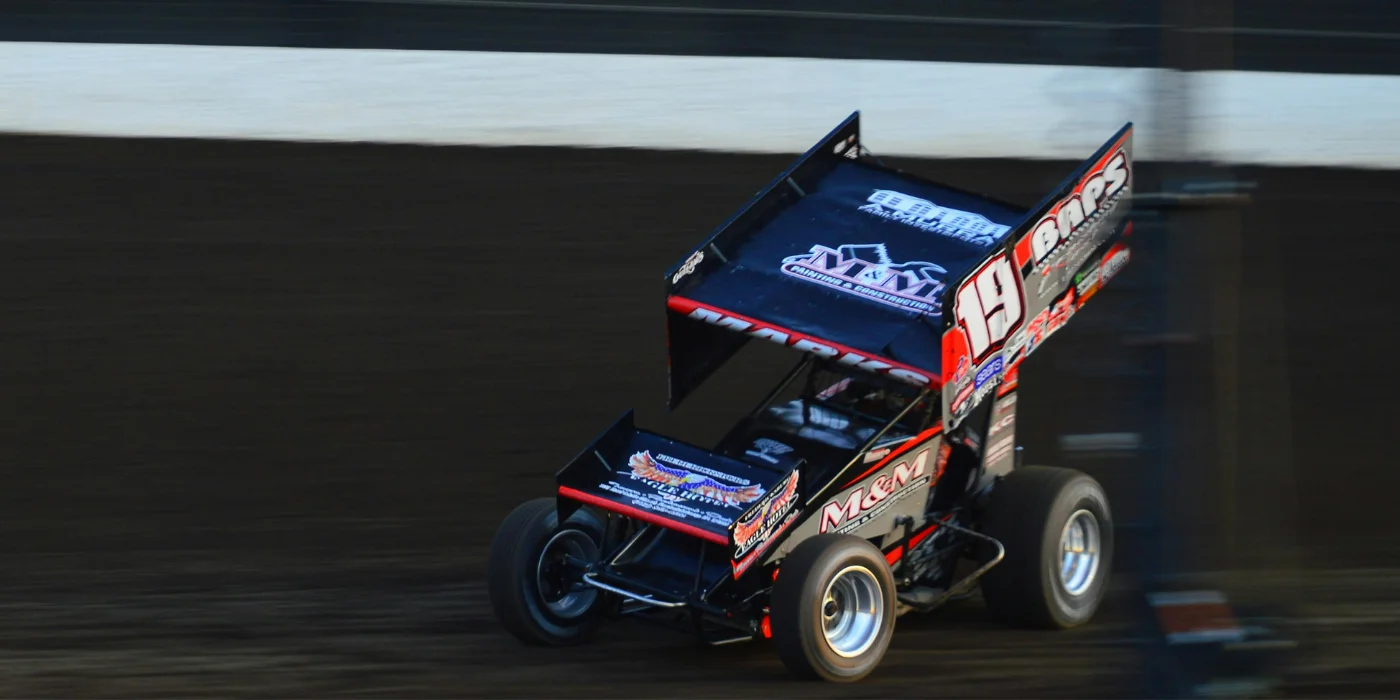
A category with its own vocabulary — Jacobs ladders, torsion bar stops, swedged rods, Dzus fasteners. Weight matters as much as strength, so aluminium and carbon rod ends do work that steel would do elsewhere. Full range on our sprint car parts page.
The common thread: lowering a car or fitting an angle kit moves the tie rod and control arm onto different arcs, and toe starts changing every time the suspension cycles. That is bump steer, and on a track car it shows up as twitchy turn-in and saw-tooth tyre wear long before anyone calls it a fault. The fix is geometry, not damping — the detail is in how to avoid bump steer.
Eleven families across the five groups the catalogue is organised by — suspension, steering, drivetrain, parts and accessories. All machined through our own Ningbo facility and affiliated Jiangsu production bases, supported by 48 Ningbo machines and 12 lathes, which is why a mixed order ships once rather than five times.
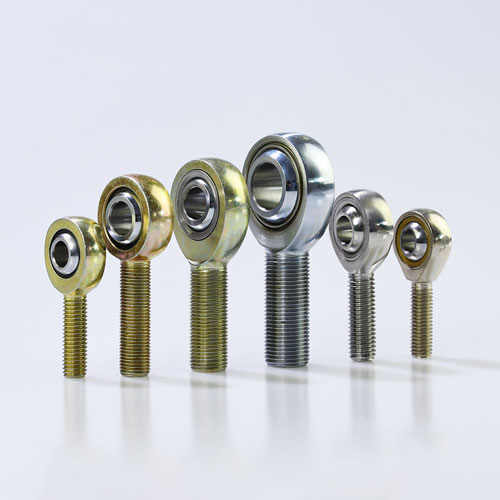
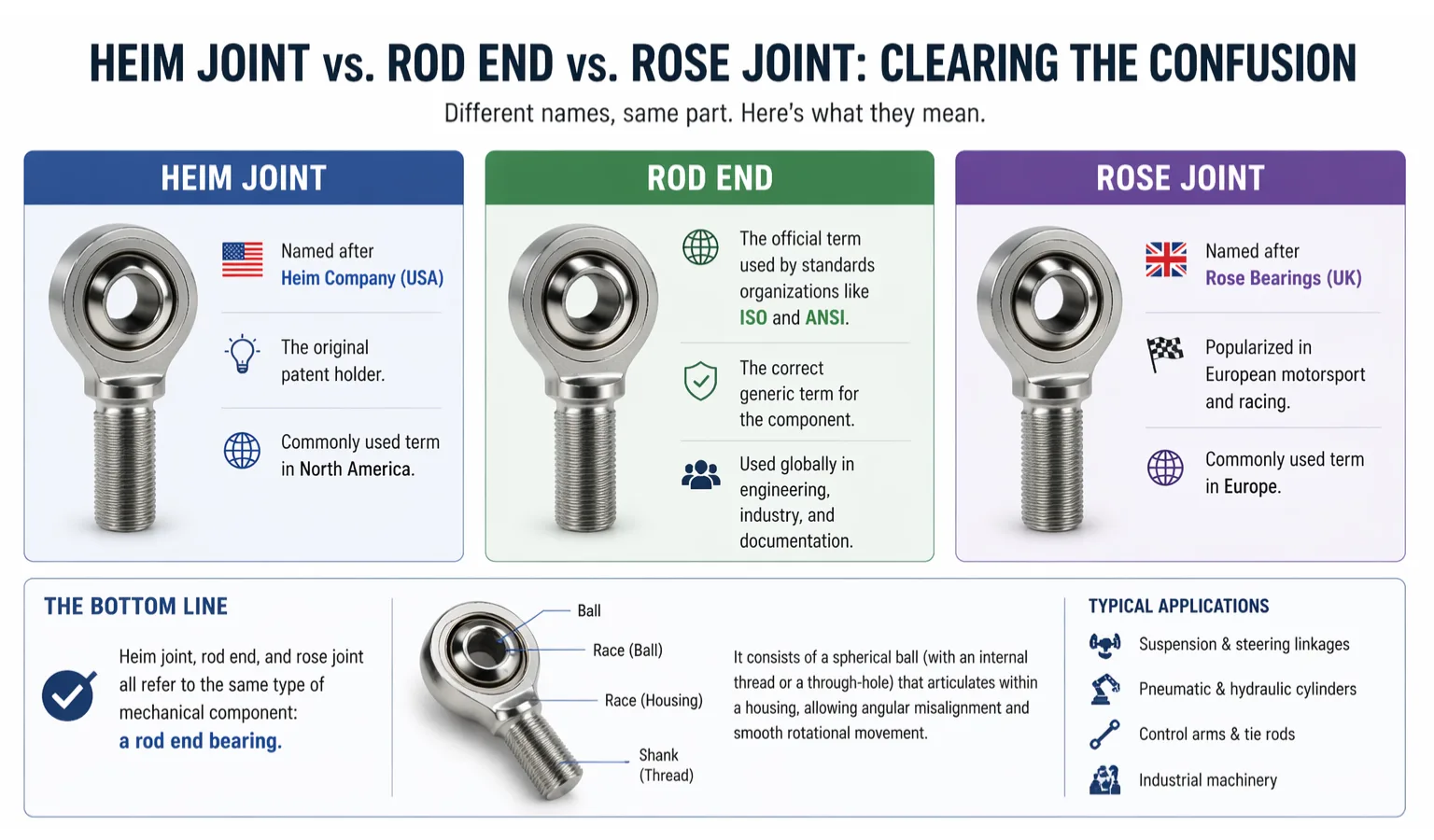
Chromoly, carbon steel, stainless and aluminium bodies in 2-piece and 3-piece construction, with PTFE-lined and metal-to-metal race options and left- or right-hand thread throughout. The self-lubricating PTFE series is what most circuit and drift programs specify. Full series and size reference in the table below.
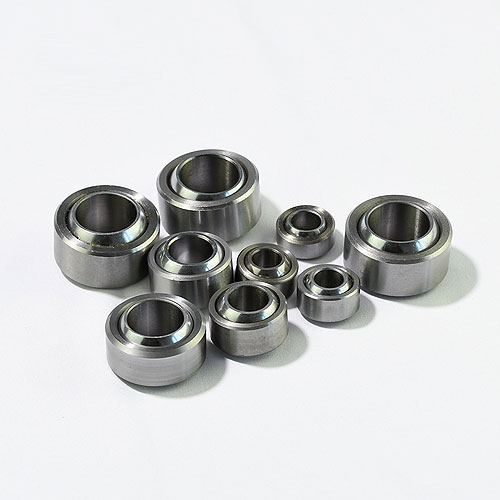
35CrMo outer ring with a hardened GCr15 ball, in PTFE-lined and steel-on-steel builds. Three radial clearance grades — F1 tight for racing where any play costs driver feedback, F2 and F3 where a little compliance is wanted. Phosphate, zinc and black oxide finishes, with a full stainless option for wet environments.
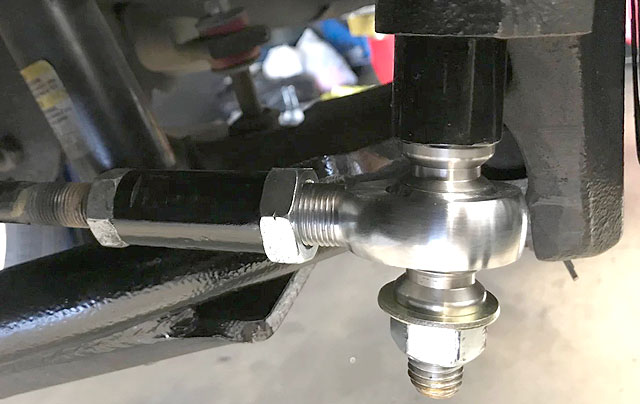
The kit that repositions the tie rod relative to the control arm so the two travel on matching arcs. Tapered studs replace factory mounting points, spacers move the end up or down on the knuckle, and adjustable ends let you dial the geometry in rather than guess at it. Built on the XM/XF and JMX/JFX series.

Three designs across three diameters, with suede or leather wrap over an aluminium centre plate and a DC04 or aluminium ring. Quick-disconnect hubs, backing plates and push-to-talk plates are made alongside them, so a wheel programme ships as a complete assembly rather than as parts to be matched later.
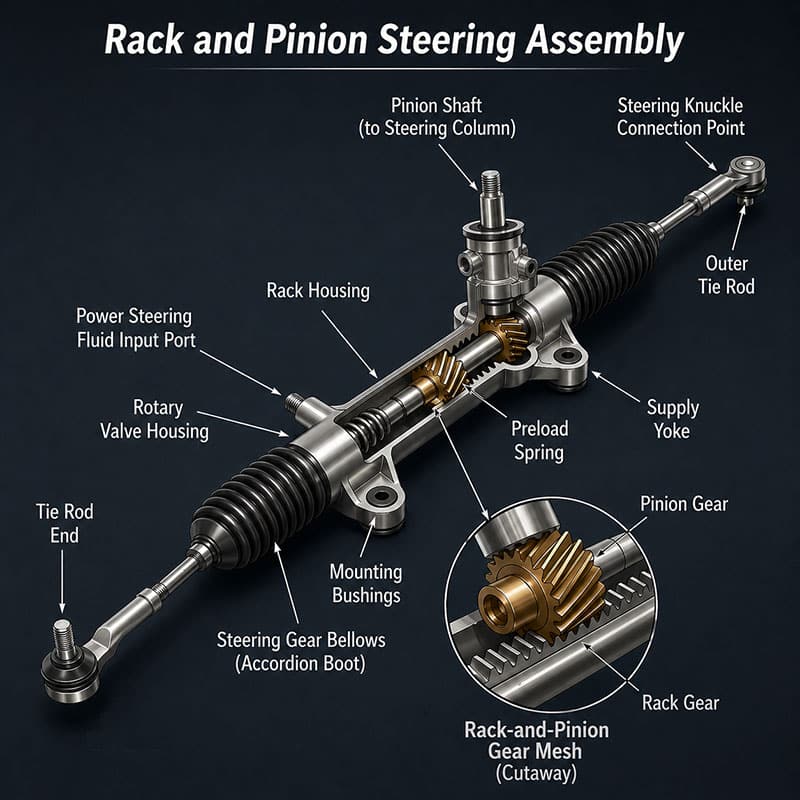
A rack is a system, not a part — pinion gear, rack shaft, housing, sealing, mounting brackets, input shaft and tie rod system all have to agree. We build the whole assembly to your ratio and travel, which is what an angle kit or a quicker steering box actually requires. Rack ends and inner tie rods are also supplied on their own.
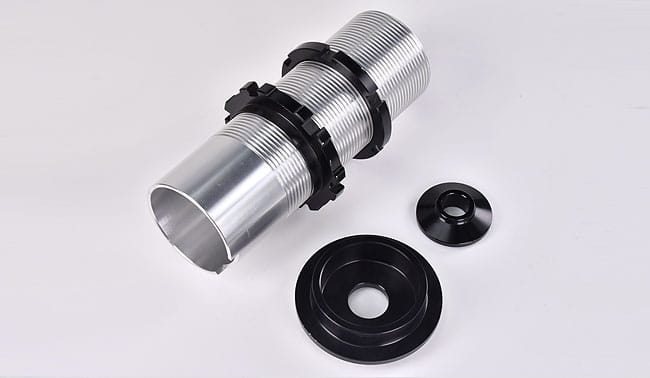
ACME and trapezoidal threads rather than V-threads, so preload adjusts smoothly and holds under vibration instead of drifting during a session. 6061-T6 and 7075-T6 aluminium, AISI 1045 carbon steel, stainless and titanium; hard anodised to an HRC50 surface. H7/K6 and H7/M6 interference fits eliminate the play that turns into rattle. Complete kits on our adjustable coilover suspension kit page.
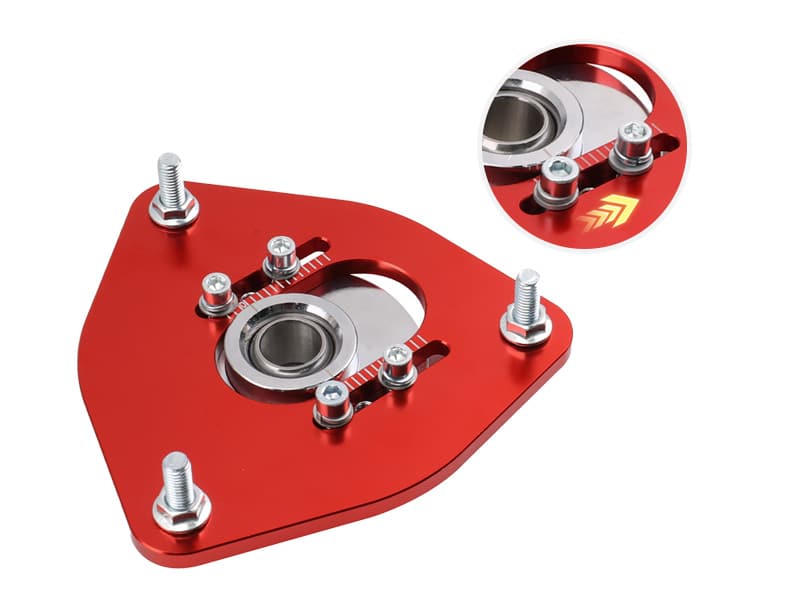
The mount that decides whether alignment is a setting or a fixed condition. Pillow-ball adjustable plates in 6061 or 7075 aluminium, anodised or hard anodised to HRC50 in a colour matched to your branding. Bore and bolt-pattern tolerance is machined to your drawing so the shock body does not wobble in the mount.
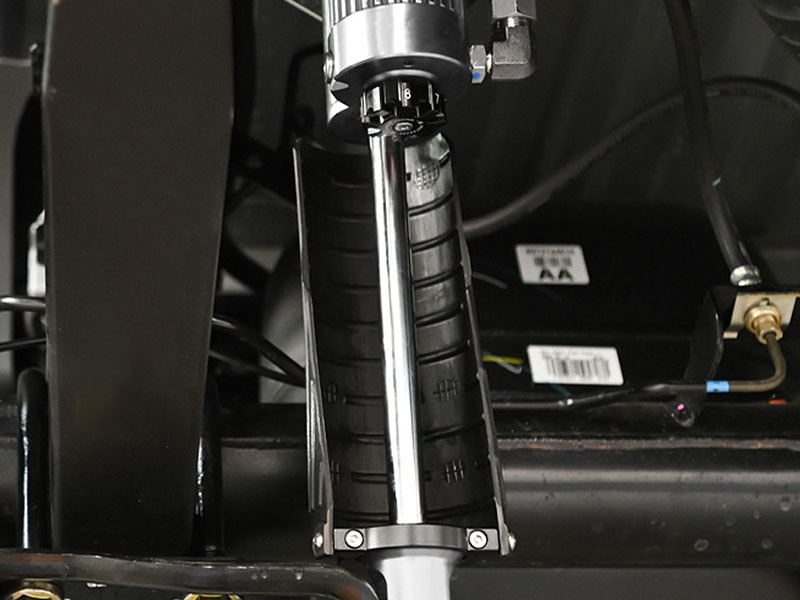
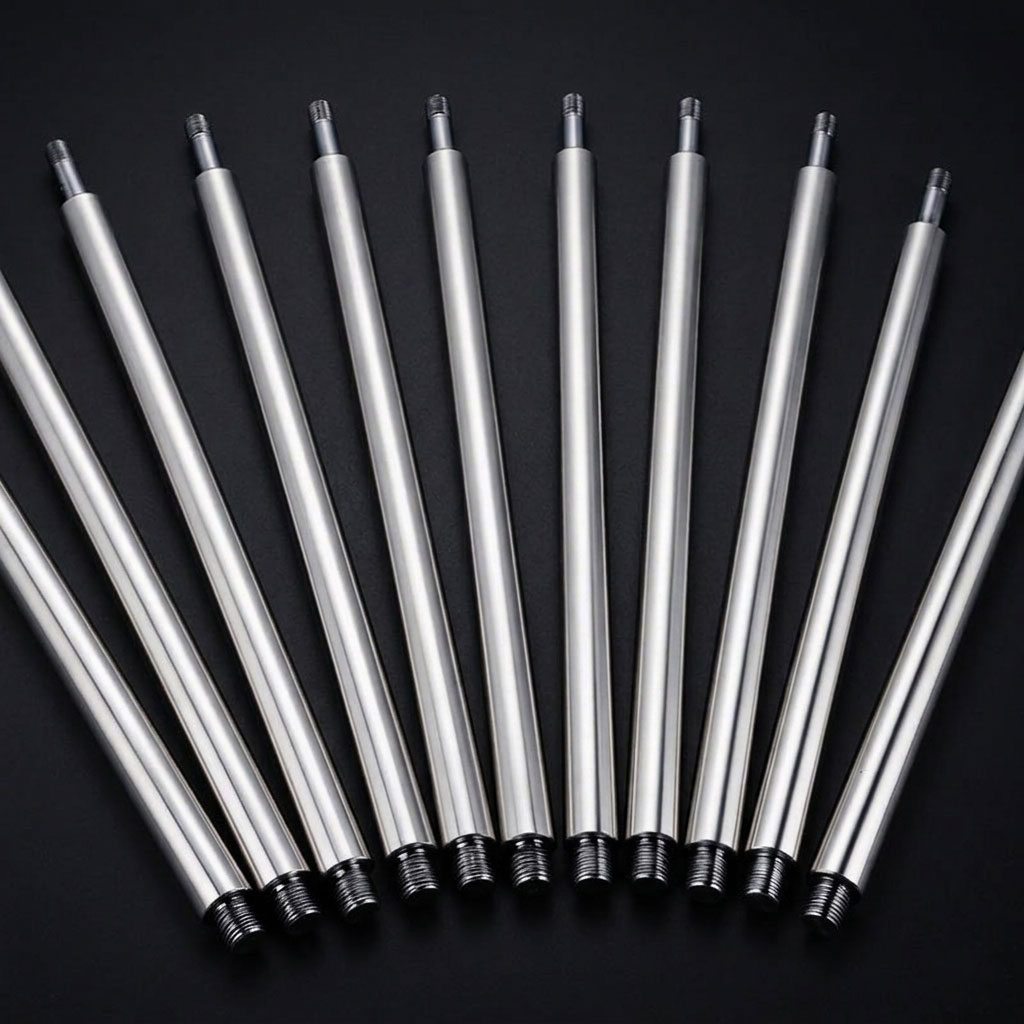
1045 carbon, 4130 chromoly, stainless or 7075-T6 rods, hard chromed to HV800–1200 at 15–30µm, finished to Ra ≤ 0.2µm with straightness inside 0.05mm. Rough chrome is what kills dynamic seals, so this is the number that decides whether a damper leaks in month three. Shock eyelets with rubber bushing or spherical bearing are built to match.
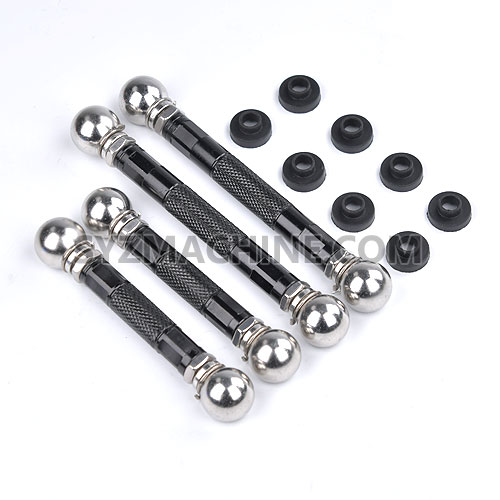
Adjustable billet links for factory air suspension — Porsche 955/957/958, 970, 971 and Macan 95B, Audi A8/S8/A6/RS6/S7/RS7, e-tron and SQ5, Bentley GT/GTC and Bentayga, Mercedes E-Class and W219, Rolls-Royce Wraith, Range Rover, Tesla Model S. These are not core track hardware; they sit here as a related stance and show-car line often handled by the same performance parts distributors.
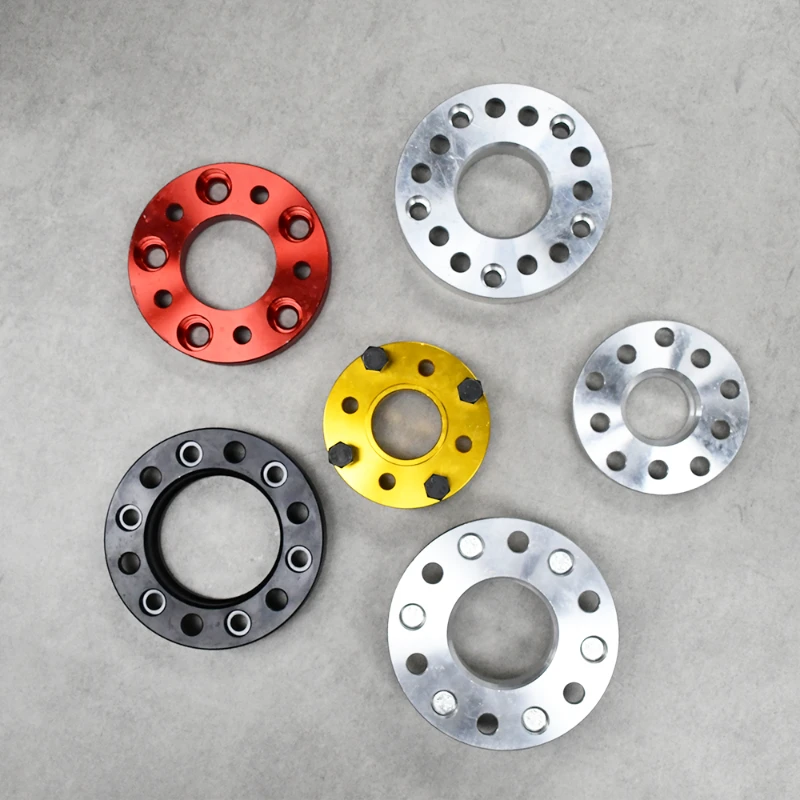
Hub-centric spacers and bolt-pattern adapters machined to ±0.02mm with Grade 12.9 studs, anodised in any colour you want to brand. On a track car the job is usually clearing a wider wheel or correcting track width after a suspension change — both cases where centring tolerance matters more than thickness.
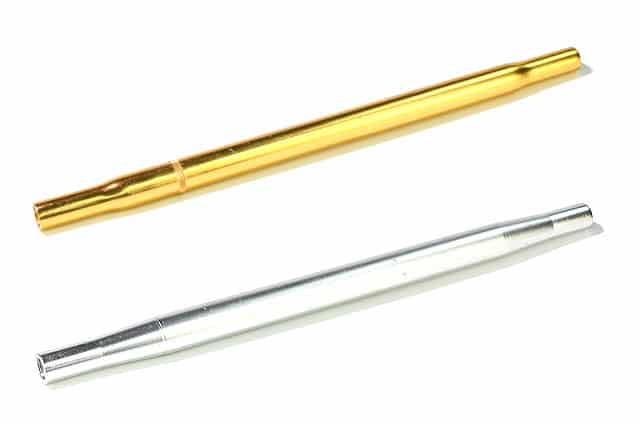
Aluminium and chromoly swedged rods, aluminium and carbon rod ends, flanged spherical bearings, torsion bar stops, clevis rod ends, quick-release D-rings, Jacobs ladders, weld-in bungs and Dzus fasteners with springs and tab plates. Lightweight, durable and priced to let a distributor compete rather than just carry stock.
Also in the same workshop: weld-in tube adapters and bungs, jam nuts, high-misalignment spacers and cone spacers, misalignment washers, limit straps and clevises, sway bar end links and adjustable rear toe rods. These are the parts a chassis build actually needs and the ones most often forgotten at quote stage — ask for them on the same line rather than sourcing them separately.
The four rod end series we carry as standard, with the inch and metric sizes each one covers. Anything outside these ranges is a custom job rather than a refusal — send the drawing.
| Series | Male / Female | Inch Sizes | Metric Sizes |
|---|---|---|---|
| XM / XF Self-lubricating, widest range | XM / MXM male XF / MXF female | 3/8, 7/16, 1/2, 5/8, 3/4, 7/8, 1 1/4, 1-14, 1-12, 1 1/2, 1 3/4, 2-12 | M6–M48 widest metric range |
| JMX / JFX PTFE-lined racing series | JMX / JMX-M male JFX / JFX-M female | 3/8, 7/16, 1/2, 5/8, 3/4, 7/8, 1 1/4, 1-14, 1-12 | M6–M30 |
| SCM / SCF | SCM / SCM-M male SCF / SCF-M female | 3/8, 7/16, 1/2, 5/8, 3/4, 7/8, 1 1/4 | M6–M20 |
| PCYM / PCYF 2-piece high misalignment | PCYM male PCYF female | 3/8, 7/16, 1/2, 5/8, 3/4 | Custom on request |
Minimum internal play for maximum steering precision, for competitive motorsport where any deflection costs driver feedback. Suited to high-speed, high-load applications.
The middle grade, where a small amount of compliance is wanted alongside precision. The default unless the application argues otherwise.
More internal play for tolerance of contamination and thermal movement. Custom clearance values can be specified outside all three grades on request.
How to read this: clearance grade affects handling precision, noise behaviour and service life at the same time, so it is worth deciding deliberately rather than defaulting. Misalignment angle is the other spec that decides whether a joint binds at full droop — why misalignment angle matters covers it, and heim joint vs. tie rod end is the right starting point if you are choosing between the two.
Four things that decide whether a race part is worth putting your brand on — and what we actually do about each.
Performance in a chassis part is measured in deflection, not horsepower. Tight-clearance bearings, precision thread fits and micron-level CNC accuracy are what turn driver input into vehicle response rather than into slack somewhere in the linkage.
Every part is machined to drawing and inspected against it. Controlled bore and thread tolerance means the shock body does not wobble in the mount and the spring seats consistently — the difference between a part that passes inspection and one that never becomes a warranty claim.
Race parts fail from fatigue and contamination, not from a single overload. Hard chrome and hard anodised surfaces, controlled heat treatment and consistent clearance across batches are what keep a component behaving the same on lap 40 as on lap 4.
Vehicle-parts manufacturing experience since 1999, and long-running relationships with racing teams, aftermarket brands and high-volume distributors. We are a manufacturer, not a trading company — every part is produced in-house with full process control.
The commercial questions every buyer asks first, answered up front rather than after three emails.
Our minimum is 100-300 pieces per item on race car components. It flexes by line and by whether a part is catalogue or custom — tell us the family and target volume and we will give you the specific figure.
A 30% deposit with the 70% balance before shipment, by wire transfer or PayPal. Flexible terms can be discussed for long-term partners once there is a working relationship behind the account.
Free stock samples are available for dimension and material checking, and custom sample cost is negotiable — usually refunded once the production order lands. Fit it to the car before you commit to a container.
Send a drawing or a physical sample and we work from that. Aluminium, stainless, chromoly and titanium are all in-house, along with thread type, shank length, ball width, spacers, anodise colour, laser engraving and branded packaging.
Incoming material inspection, in-process control and final inspection before packing, with full QC documentation. Dimensional reports covering OD, bore, width and clearance values are available on request, and we run dyno and pull testing in-house.
We ship worldwide to more than 20 countries and handle export documentation ourselves. Packaging can be neutral, branded or retail-ready, and we keep you updated on production progress so delivery dates hold.
Certified and audited: the factory is certified to ISO 9001 with SGS on-site production assessment, and a standard warranty applies to our parts with details on each product page. If something does go wrong, you are dealing with the people who machined it rather than with a middleman.
We manufacture and customise race car parts and accessories. Contact us for catalogues, technical support or a custom solution.
Send the chassis you cover, the families you want quoted and your target quantities. Drawings or a physical sample are ideal, but the platform and the part will get us started.
Our engineers work out the best solution for your request — series, size, clearance grade, material and finish — and send a specific quote within 24 hours along with the catalogue.
Sample approval, production under full QC documentation, branded packaging and export paperwork. Whether it is before or after the sale, we are always here to support you.
Request the race car parts catalogue and a factory quote — answered within 24 hours.
Before a distributor, race shop or team places a production order, these are the details that usually decide whether the part is ready for sampling.
Thread direction, pitch, shank length, bore, ball width and taper need to match the chassis part, not just the vehicle model year.
F1, F2 and F3 clearance grades change steering feel, noise behaviour and service life, so we confirm the grade before production.
Chromoly, aluminium, stainless steel and titanium each fit different load, weight and corrosion targets; the drawing should call this out early.
Black oxide, zinc plating, phosphate, anodising and hard anodising are specified around environment, appearance and batch consistency.
Private-label orders can include laser marking, anodised brand colours, packaging requirements and batch inspection reports.
What buyers and teams ask most often before opening an account.
More than 40 chassis are already tooled, covering Porsche, BMW, Ford, Chevrolet, Nissan, Toyota, Honda, Mazda, Subaru, Lexus, Mercedes-Benz, Audi and Dodge — from the 240SX and AE86 through to the 911 GT3 RS, M4 GTS, GT-R, Mustang GT350 and Camaro ZL1. The full chassis list is in the table above. Anything not on it can usually be developed from a drawing or a sample, so contact us rather than assuming it is out of scope.
Yes — custom work is most of what we do. Send samples or detailed drawings and we build to them. Material choice is open across aluminium, stainless steel, chromoly and titanium, and thread type, shank length, ball width, spacers, surface treatment and branding are all specified by you. Rapid prototyping is available before committing to a production run.
Five groups. Suspension — coilover hardware, camber plates and top mounts, piston rods, shock eyelets, lowering links. Steering — bump steer kits, adjustable tie rod ends, steering racks and rack ends, racing steering wheels and hubs. Drivetrain — wheel spacers, adapters and hub hardware. Parts — rod ends, heim joints, spherical bearings and uniballs, tube adapters and bungs. Accessories — sprint car and dirt oval hardware including swedged rods, Jacobs ladders and Dzus fasteners.
MOQ starts at 100-300 pieces per item for race car components. It flexes by line and by whether the part is a catalogue item or a custom development — tell us the family and target volume and we will give you a specific figure rather than a policy.
30% deposit and 70% balance, payable by wire transfer or PayPal. Flexible terms are available for long-term partners once there is an ordering history behind the account.
F1 for competition, where minimum internal play gives maximum steering precision and any deflection costs driver feedback. F2 as the standard grade for most builds. F3 where more internal play is wanted to tolerate contamination and thermal movement. Custom clearance values can be specified outside all three. Clearance affects handling precision, noise and service life together, so it is worth deciding deliberately rather than defaulting.
Yes — we ship internationally and currently serve customers in more than 20 countries, so our parts are accessible to racing programs worldwide. We handle export documentation ourselves and keep you updated on production progress so delivery dates hold.
Our founding team began manufacturing rod end bearings in Shanghai in 1999, and the current legal entity was registered on 29 February 2012. Production runs through our own Ningbo facility and closely-affiliated Jiangsu production bases, including an SGS-assessed Wuxi rod end and ball joint base with monthly capacity of 200,000 pieces. We are a manufacturer, not a trading company, and we hold ISO 9001 certification with SGS on-site production assessment.
All parts carry a standard warranty, with the details set out on each product page. We stand behind what we machine and offer full support if an issue arises — and because we are the factory rather than a reseller, a warranty conversation goes straight to the people who made the part.
Detailed compatibility information sits on every product page. Beyond that, confirm by the part rather than the model year — thread pitch, bore, shank length and taper all change within a generation. If you are uncertain, send the OE part number, a drawing, or photos with a measurement reference and our team will confirm fitment before you order.
Send the RFQ form on this page, email drawings or specifications to [email protected], or call 0086-21-34689886 for a production discussion. For custom development, include the chassis, part family, target quantity, drawings or sample photos, material, finish and any packaging requirements so our team can quote the correct sampling and production route.
Let’s build your solution together. We specialise in manufacturing and customising race car parts and accessories — contact us for product catalogues, technical support or a custom solution. Rm.701, No.23, Lane 466, YinDu Rd. SH, CN · 0086-21-34689886 · [email protected]