The metallurgy of 4130 Chromoly
4130 is a low-alloy steel containing chromium and molybdenum, which improve hardenability, strength, and fatigue resistance.
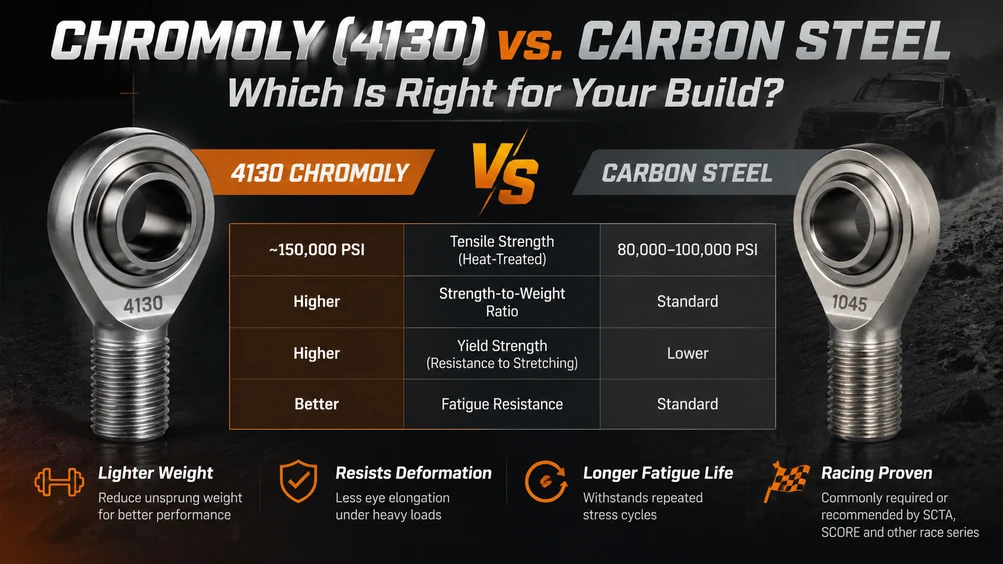
- Tensile Strength: Properly heat-treated 4130 Chromoly can achieve tensile strengths around 150,000 PSI, depending on heat treatment and processing conditions. Typical 1045 carbon steel components are commonly in the 80,000–100,000 PSI tensile strength range, depending on material condition.
- Weight Savings: Because 4130 provides higher strength-to-weight performance, a properly engineered 3/4″ Chromoly spherical bearing joint can achieve load ratings comparable to larger carbon steel designs, reducing unsprung weight.
Yield points and “Stretching”
In many high-load suspension applications, the more common concern with lower-strength steel housings is not immediate fracture, but permanent deformation before failure.
- Eye Elongation: Under repeated high loads, a lower-strength steel housing may experience plastic deformation around the eye, causing the eye bore to become ovalized.
- Fatigue Life: Properly heat-treated 4130 Chromoly offers higher fatigue strength and better resistance to repeated stress cycles, making it a preferred material for many racing and off-road applications. This is why racing organizations such as SCTA and SCORE commonly require or recommend high-strength materials like Chromoly for certain safety-critical components.
Related reading: Why Off-Road Racing Prefers 4130 Chromoly Rod Ends · Aluminum Rod Ends: Pros, Cons, and Weight-Saving Benefits · When Should You Choose Stainless Steel Rod Ends?