Fine-Tuning Toe-In Without Disassembling Your Linkage
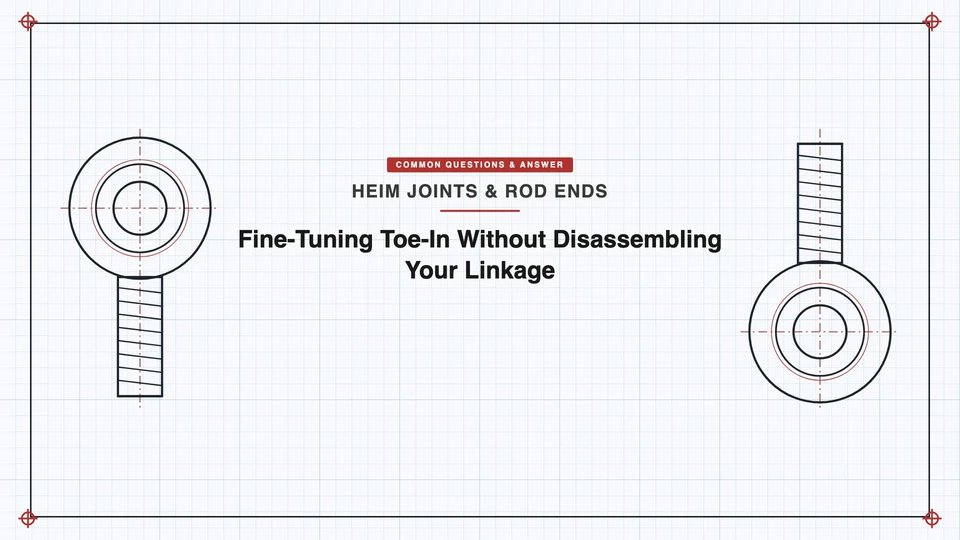
Toe-in can be fine-tuned without disassembling the linkage when the tie rod or toe link uses adjustable threaded rod ends. Loosen the jam nuts, rotate the link body in small increments, re-lock hardware, roll the vehicle to settle it, and remeasure before driving.
Welding Guide: Choosing the Correct Weld-In Bungs
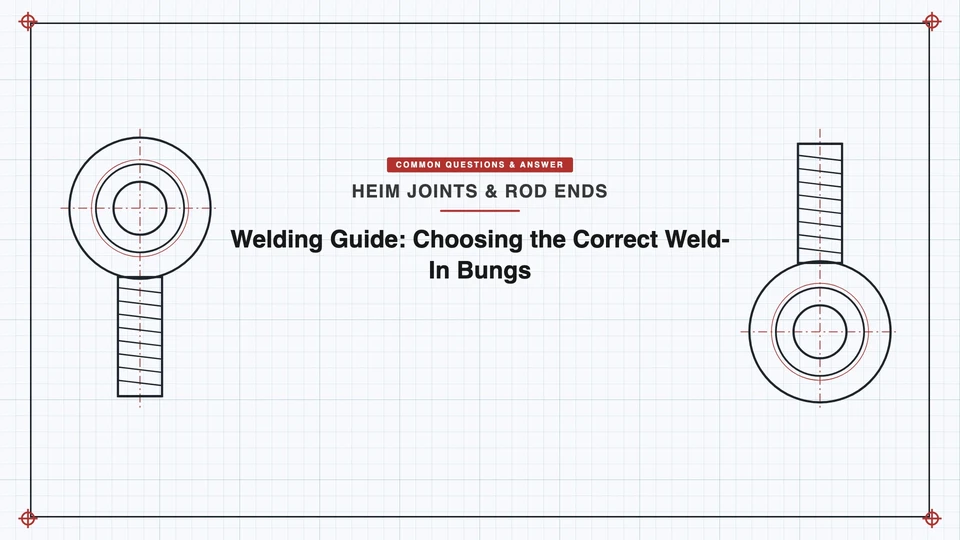
The correct weld-in bung must match the rod end thread size and pitch, fit the tube ID closely, and use the right thread hand for fixed or adjustable links. Welding quality, heat control, cooling, and thread chasing determine whether the finished linkage remains strong and serviceable.
Using LH/RH Threads for Quick Linkage Adjustments
LH/RH threaded rod ends create a turnbuckle-style linkage that can be lengthened or shortened by rotating the center tube without disconnecting either end. The benefit is fast, repeatable adjustment; the trade-off is more setup discipline, clear thread identification, and secure jam nut locking.
How to Inspect for “Binding” After Installing a Heim Joint or Rod End
Inspecting for binding means cycling the installed rod end through the real range of motion before and after final torque. Look for hard stops, scrubbed contact marks, bracket-ear interference, insufficient spacer width, and clearance that disappears once hardware is tightened.
Do Rubber Boots and Dust Seals Really Extend Rod End Life?
Rubber boots and dust seals can extend rod end life when grit, water, road salt, or grease loss are the main threats. They help most on exposed metal-to-metal or greaseable joints, but can trap moisture or wear at high articulation angles if the boot is poorly fitted.
Why You Must Use Safety Washers in Single-Shear Rod End Mounts
Safety washers are mandatory in single-shear rod end mounts because they can retain the housing if the spherical ball wears or pulls through. They do not replace high-misalignment spacers; they are a separate fail-retention device that must be installed on the outside of the joint.
How to Install a Heim Joint Into a Tapered Steering Hole
A heim joint cannot simply be bolted into a tapered steering hole because the spherical bearing needs a straight, supported shank. Use a matched tapered adapter stud or fully ream the hole straight with proper hardware, safety washers, torque control, and binding checks through suspension travel.
Proper Torque Specs for Rod End Jam Nuts
Rod end jam nut torque has no universal number because thread size, nut thickness, lubrication, plating, and engagement length change the clamp result. A practical method is to snug the jam nut, add about a quarter turn while holding the rod end body, then recheck length and angle.
Do You Always Need High-Misalignment Spacers?
High-misalignment spacers are only needed when the joint must articulate beyond the clearance a standard spacer allows, especially in steering, track bars, and long-travel links. They can reduce available bolt diameter, so the decision must balance angular clearance against bolt strength and mounting style.
Heim Joint vs. Tie Rod End: Street Performance vs. Off-Road Articulation
Tie rod ends usually fit street steering because they are sealed, damped, and durable in daily contamination. Heims become attractive off-road when articulation angle, high-misalignment spacers, and service inspection are more important than NVH. The right answer can change by vehicle location and safety hardware.
Tuning Your Rig: Adjusting Roll Center Height With Rod Ends
Rod ends help tune roll center height by allowing pivot height or linkage geometry changes that move the instant center and roll center. Raising or lowering the roll center changes body roll, jacking force, and balance. Every adjustment should be followed by alignment and bump-steer verification.
Precision Geometry: Heims vs. Rubber Bushings for Track Use
Heims improve track-use precision by reducing bushing deflection, keeping camber and toe more repeatable under load, and giving the driver more direct feedback. Rubber bushings still help with noise, impact harshness, and durability. Track builds often convert only the pivots where geometry precision matters most.