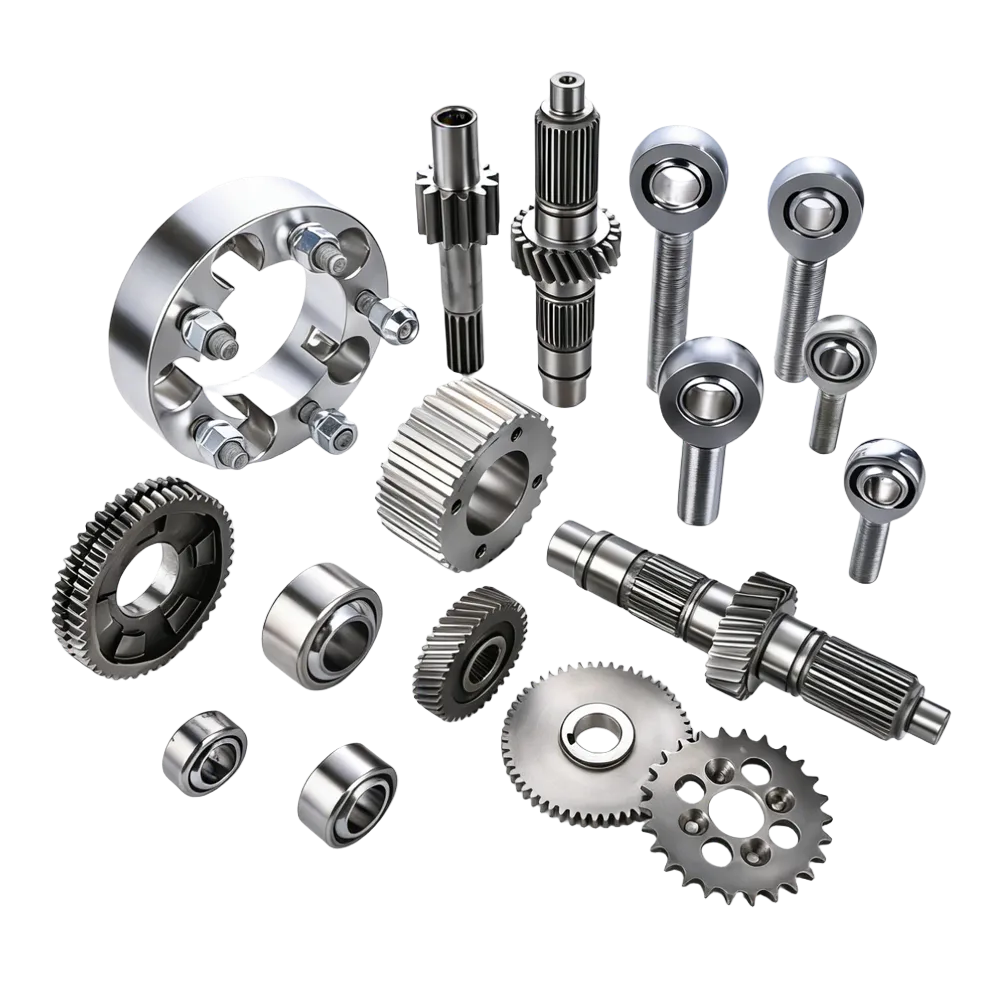

Bore size is the diameter measurement of the inside of a hollow cylindrical object — a pipe, cylinder, hole, or bearing. The term shows up across several unrelated industries with the same basic meaning applied to different objects, so the first step in answering “what’s the bore size” is figuring out which context is being asked about.
Bore Size Across Different Contexts
| Context | What “bore” refers to |
|---|---|
| Engine | Cylinder diameter that the piston travels inside — bore size combined with stroke length determines displacement |
| Pipe / hose | Internal flow diameter, which governs flow capacity |
| Bearing | The inner ring’s inner diameter (ID) — one of the three core bearing dimensions, alongside outer diameter and width, and it determines what shaft size the bearing fits |
| Firearms | Barrel’s internal diameter, typically expressed as caliber or gauge |
| Wheels | Center bore — the machined hole on the back of a wheel used to center it on the vehicle’s hub |
| Musical instruments | Internal tubing diameter in brass/woodwind instruments, which affects tone (narrower bores read brighter, wider bores read fuller) — a consumer/artistic-context example, not covered further here |
Bore Size in Manufacturing and Machining
For custom manufacturing, bore size is one of the most fundamental — and most tightly controlled — dimensions in machining. The bore’s tolerance directly determines what type of fit it can form with a mating shaft: a clearance fit, a transition fit, or an interference fit. Bore size itself is the nominal dimension; the fit type is a separate concept that comes from comparing the bore’s tolerance to the shaft’s tolerance.
Bore diameter is typically measured with an inside micrometer, a bore gauge, or a three-point internal bore gauge, depending on the precision required and the size of the hole.
Bore Size Isn’t the Same as Fit Type
Bore size answers “how big is this hole,” on its own. It doesn’t by itself tell you whether that hole will slide freely over a shaft or grip it tightly — that’s determined by comparing the bore’s tolerance to the mating shaft’s tolerance. For the two ends of that comparison, see What Is Clearance Fit? and What Is Interference Fit? — both build directly on the bore-size concept covered here.
Data note: Gemini’s research channel failed to return results for this question. The definitions and context table above draw on ChatGPT, Perplexity, and Google AI Overview, which agreed closely on both the general definition and the context breakdown.
Related reading: What Is Clearance Fit? · What Is Interference Fit?