A heim joint and a tie rod end do the same job — locating and pivoting a steering or suspension link — but they behave very differently depending on where you drive. This article isn’t the general feature comparison (see Heim Joint vs. Tie Rod End for that) and it isn’t the durability story about builders switching back to heavy-duty tie rod ends after running heims (see Why Hard-Core Builders Often Switch Back From Heim Joints to 1-Ton Tie Rod Ends). This one is narrower: what actually changes in how each joint handles and feels when the same vehicle moves between daily street driving and dedicated off-road articulation.
On the Street: Sealing and Damping Decide the Experience
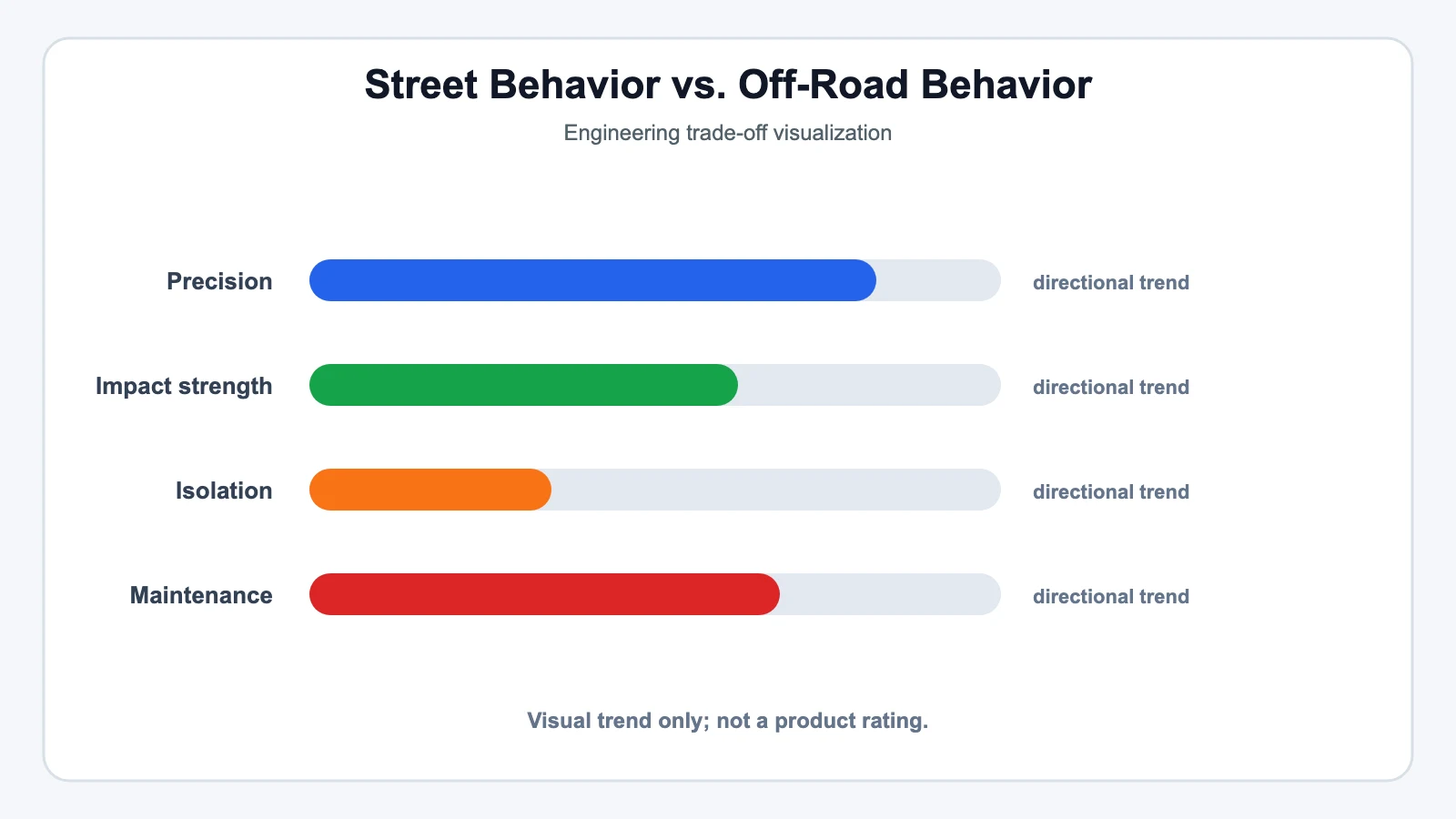
A tie rod end’s rubber grease boot keeps road grit, water, and salt off the bearing surface and retains lubrication — it’s a sealed, low-maintenance system by design. A heim joint’s spherical bearing is exposed; there’s no boot that fits over it without limiting its range of motion. On pavement, that difference shows up as two things: contamination exposure (a heim on a daily-driven car takes on far more road grime over its life than the same joint would see in a dedicated off-road application) and ride feel (a tie rod end’s boot and slight internal compliance damp out road vibration; a heim’s metal-on-metal or PTFE-lined interface transmits it straight through).
Real-world opinions on how much this actually matters on the street are genuinely split. In one off-road Facebook group, a user asking whether heims were safe for a highway-heavy Jeep got flatly opposite answers in the same comment thread: "Heim joints are just fine for on-road driving. Don’t listen to the haters," against "Heim joints on road suck…" from another commenter. A third reply pointed out that the setup in the photo didn’t actually use heim joints on the steering at all — only on the track bar — a reminder that it’s worth confirming exactly which linkage uses which joint before drawing conclusions from a build photo.
A long-running thread on the Hardline Crawlers forum shows the same split from actual long-term use: one builder ran Teflon-lined chromoly heims as a daily driver for three years of street and trail use with "never heard a squeak," while others in the same thread describe cheap heims squeaking and clicking within months. The pattern that emerges isn’t "heims are quiet" or "heims are noisy" — it’s that joint quality and installation quality drive the street experience far more than the heim-vs-TRE category does. A quality PTFE-lined heim with a proper boot and regular inspection can be genuinely street-livable; a bargain unsealed one won’t be.
Off-Road: Articulation Angle Changes the Calculus
Long-travel off-road suspension pushes steering and suspension links through much larger angles at full compression or droop than street driving ever does. A tie rod end’s tapered-stud geometry has a fixed maximum swing angle before it binds or contacts its housing; push a long-travel build past that limit and the joint either restricts articulation or takes damage under load.
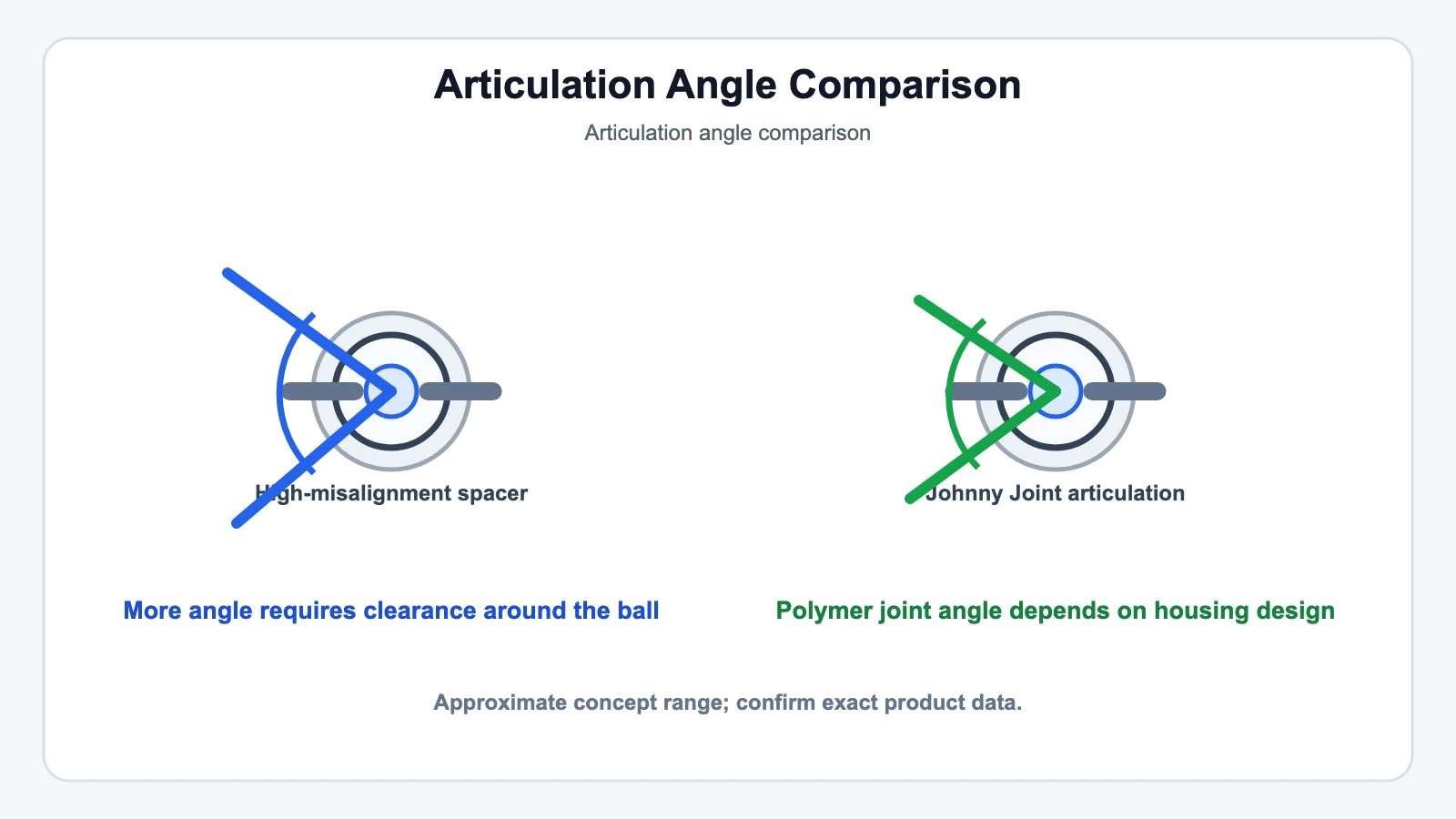
This is where the heim’s design advantage is real — but it comes with a caveat that’s easy to get backwards. A plain heim joint, mounted with standard hardware and no misalignment accommodation, doesn’t automatically out-articulate a tie rod end. The extra range comes specifically from pairing the heim with a high-misalignment spacer — a shaped bushing that lets the ball swing through a much wider cone before the shank contacts the housing. Sources describing high-misalignment tie-rod-end and heim products cite roughly 50°–65° of usable misalignment once properly spaced, against roughly 20°–30° for a typical tie rod end — but treat those as typical ranges tied to specific products, not fixed category rules. One older Jeep-forum discussion, in fact, described standard rod ends as limited to around 20° of articulation with tie rod ends reaching closer to 30° — the opposite of the usual claim. The likely explanation is that it’s comparing a plain heim (no misalignment spacer) against a good tie rod end, which is a fair fight the other direction goes to. The honest takeaway: don’t assume "heim" automatically means "more articulation" — check whether the specific joint you’re buying is built and spaced for high misalignment, or it may not out-articulate the tie rod end it’s replacing.
Beyond raw angle, a heim’s threaded shank also makes link-length and toe adjustment straightforward without special tools — a genuine convenience for a build that gets re-geometried between trips, and one reason heims show up so often on custom long-arm control arms and drag links even outside pure articulation requirements.
Street vs. Off-Road, Side by Side
| Street driving behavior | Off-road articulation behavior | |
|---|---|---|
| Heim joint | Direct, unfiltered feel; exposed bearing accumulates road grime; quality-dependent noise | Handles large swing angles well when paired with a high-misalignment spacer; easy threaded length adjustment |
| Tie rod end | Sealed and quiet; boot keeps out contamination; low maintenance | Fixed maximum swing angle from the tapered-stud design; binds or is damaged if pushed past it on long-travel setups |
| What actually decides the outcome | Joint quality, boot condition, inspection frequency | Whether a high-misalignment spacer is actually fitted, not just the joint category |
The Practical Split: Decide by Part, Not by Vehicle
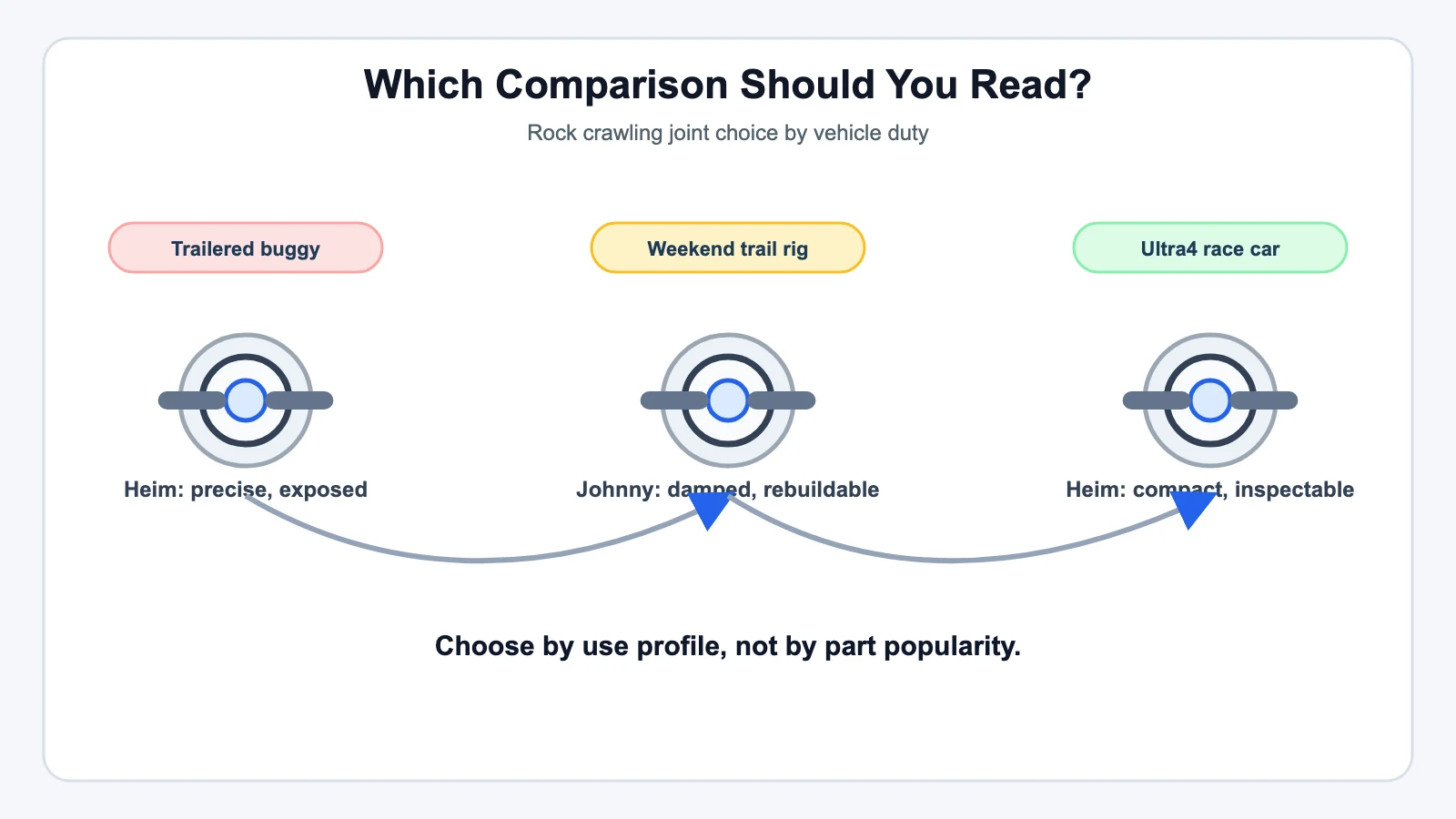
Most experienced builders don’t apply one joint type across an entire steering and suspension system — they split the decision by component and by how the vehicle is actually used:
- Steering linkage on a street-heavy vehicle: a quality sealed tie rod end (or heavy-duty "1-ton" upgrade) is the lower-maintenance, more forgiving choice.
- Track bar or control arms on a dedicated off-road or competition build: heims with proper misalignment spacing earn their keep where the extra articulation and adjustability are actually used.
- Anything mixed-use: the deciding question isn’t "which part is theoretically stronger," it’s "how much of this vehicle’s life is spent on pavement versus flexed out on the trail" — weight the decision toward whichever environment the vehicle actually spends more time in.
A Safety Note
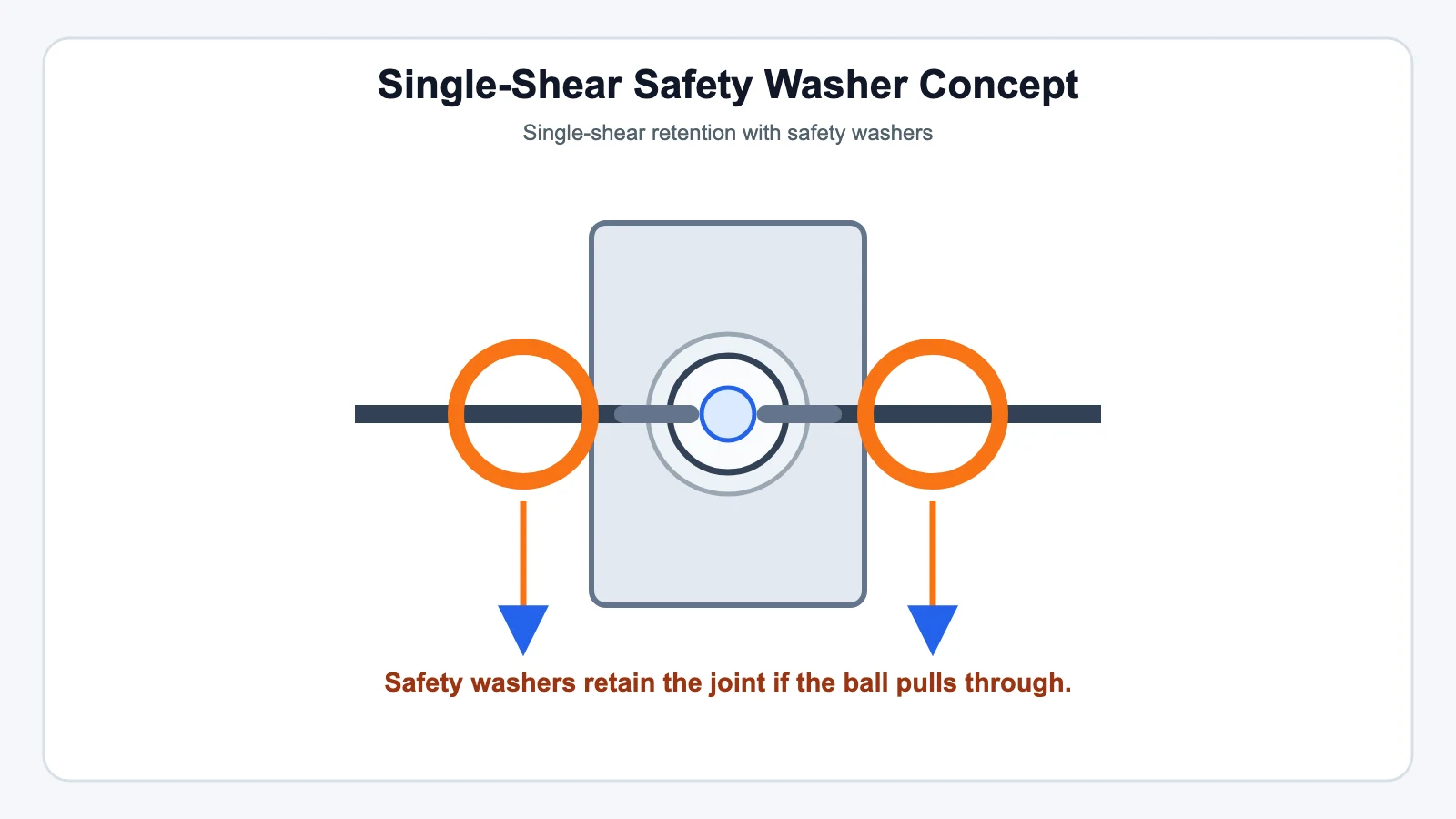
Steering components are safety-critical regardless of which joint you run. If you’re mixing street and off-road use, inspect exposed heim joints more frequently than you would a sealed tie rod end — grit and moisture accumulate faster than they would in a dedicated off-road-only application. On single-shear mountings, a safety washer captured behind the joint (a washer larger than the rod end, installed opposite the mounting bracket) is a cheap way to keep a worn joint from separating completely if it does fail — it doesn’t replace inspection, but it’s a reasonable backstop.
Related reading:Heim Joint vs. Tie Rod End (general comparison) · Why Hard-Core Builders Often Switch Back From Heim Joints to 1-Ton Tie Rod Ends · Track Rod Ends: Terminology and Sizing for the UK and Australia