A tie rod end is the ball-and-socket joint that connects your steering system's linkage to the steering knuckle — the part that actually turns the wheel when you turn the steering wheel, while still letting the suspension move freely up and down over bumps.
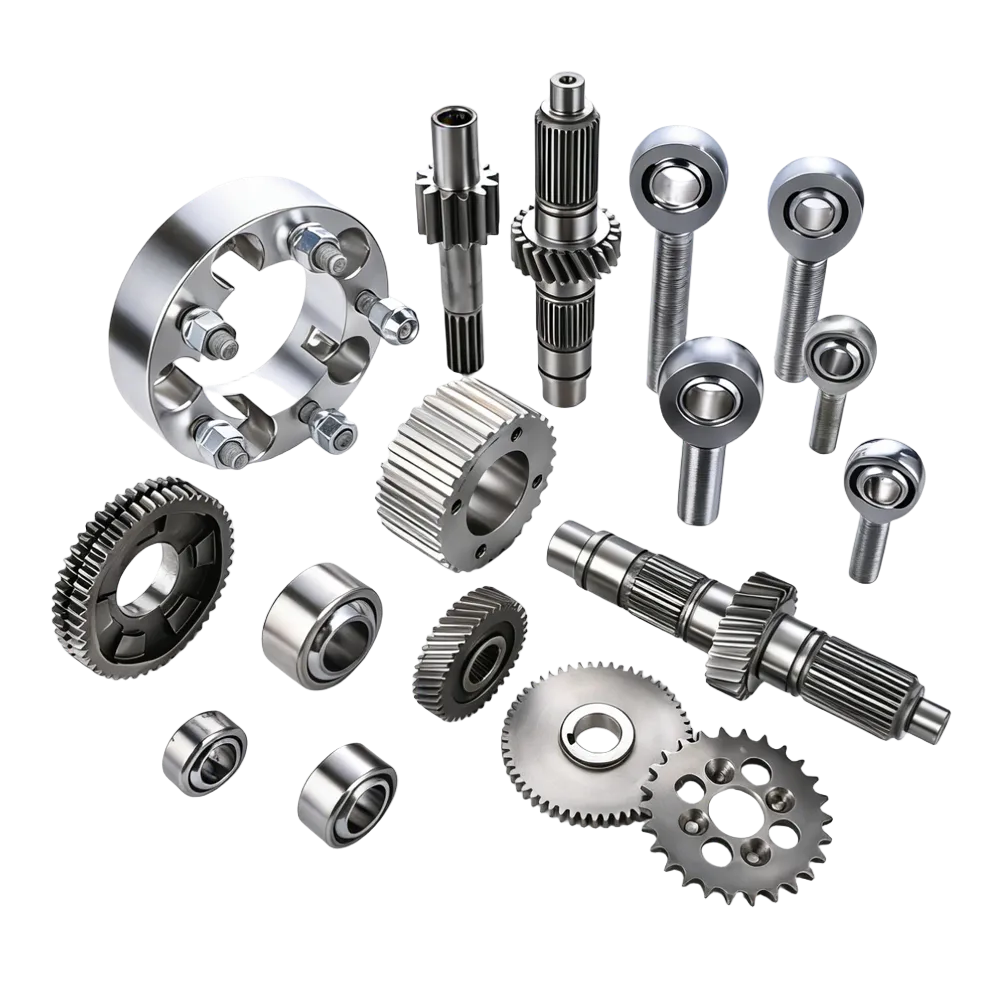
Most vehicles have two per side: an inner tie rod end, threaded into the steering rack and hidden under a rubber boot, and an outer tie rod end, the exposed ball joint near the wheel that most people picture when they hear the term. Built into that joint: a ball stud, a housing/seat, a grease-filled dust boot, and — on the outer end — a threaded connection used to set toe alignment.
When it wears, you'll typically feel it as loose or vague steering, clunking over bumps, and uneven tire wear. If the ball joint fully separates, that wheel loses steering control entirely, which is why a suspected bad tie rod end shouldn't be driven on and ignored.
For the full breakdown — the complete connection chain, why it has to be a ball joint and not a rigid link, and how toe adjustment actually works — see What is a tie rod, and what does it connect to?. For how to tell whether it's your inner or outer end that's failing, see Inner vs. outer tie rod ends.
Related reading: What is a tie rod, and what does it connect to? (full breakdown) · Inner vs. outer tie rod ends: how to tell which one you need
SYZ Rod Ends manufactures custom and OEM-spec tie rods — see the tie rod product line for spec details.