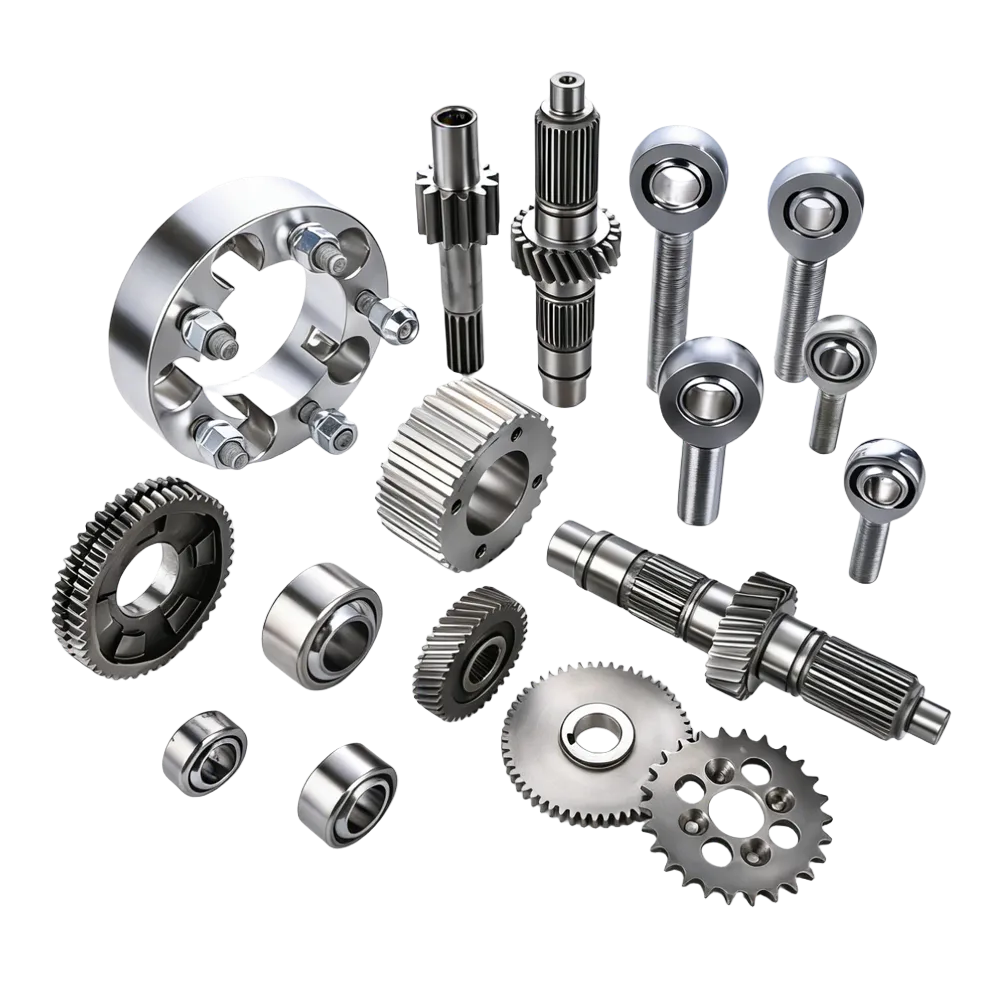

Inner and outer tie rod ends fail with nearly identical symptoms — looseness, clunking, uneven tire wear — which is exactly why symptoms alone won't tell you which one to replace. You need to physically locate where the play is coming from. Here's the difference between the two parts, and the actual test that pinpoints which one has failed.
The two parts, side by side
| Inner tie rod | Outer tie rod end | |
|---|---|---|
| Connects to | Steering rack / steering gear | Steering knuckle |
| Shape | Long straight rod with an internal ball joint | Shorter L-shaped/angled arm with an exposed ball stud and threaded post |
| Location | Hidden inside the rubber accordion boot | Exposed, near the wheel |
| Exposure | Protected from road debris, water, salt | Directly exposed to road spray, grit, salt |
| Ease of visual inspection | Requires pulling back the boot | Visible without disassembly |
The exposure difference matters practically — the outer end takes the brunt of road grime and moisture, which is generally why it's the one that gets replaced more often. The research didn't turn up a hard number on how much more often (no source quantified a wear-frequency ratio), so that's a directional pattern, not a stat to quote.
Why you can't diagnose this by symptoms alone
Loose steering, a clunk over bumps, uneven tire wear — inner and outer failures produce the same complaints, because both are ball joints in the same mechanical chain and both show up as "play in the steering linkage" from the driver's seat. The only reliable way to know which one is bad is to find where the play physically is.
The 9-and-3 o'clock test
- Jack up the front of the vehicle so the wheel hangs free.
- Grip the tire at the 9 o'clock and 3 o'clock positions (the sides, not top/bottom — that tests the wheel bearing, not the tie rod).
- Push and pull, watching the steering linkage while you do it.
- If the outer tie rod end's ball joint visibly moves or you hear a clunk right at the knuckle connection — the outer end is bad.
- If the outer end stays tight but you can feel movement under the rubber boot near the steering rack — the inner tie rod is bad.
This is the step most symptom-checklist articles skip: they'll tell you what bad-tie-rod symptoms feel like, but not how to localize which part is actually causing them.
After replacing either one: get an alignment
Replacing an inner or outer tie rod changes your front toe angle — this is confirmed in NHTSA technical guidance, not just repair-shop convention. Whichever one you replace, budget for a wheel alignment afterward; don't skip it because "it's just the inner one."
Related reading: What is a tie rod, and what does it connect to? · What are the symptoms of a bad tie rod?