
Heat treatment is the controlled heating and cooling of a material — usually metal — to change its physical or mechanical properties without significantly changing its shape. It’s how the same base alloy can end up hard and wear-resistant in one part and soft and ductile in another, depending entirely on how it’s heated and cooled.
The Three-Stage Process
Every heat treatment process follows the same basic sequence:
- Heating — raising the material to a target temperature.
- Holding — keeping it at that temperature long enough for the internal structure to transform uniformly all the way through.
- Cooling — bringing the temperature back down at a controlled rate. This rate is what actually determines the final result: fast cooling (quenching) locks in hardness; slow cooling (furnace cooling) allows the structure to relax and soften.
Core Heat Treatment Processes
| Process | Purpose | Method |
|---|---|---|
| Annealing | Soften the material, improve ductility/machinability | Heat above critical temperature, then cool very slowly in the furnace |
| Normalizing | Refine grain structure, improve strength uniformity | Heat slightly higher than annealing temperature, cool in open air |
| Quenching / Hardening | Maximize hardness and wear resistance | Heat, then cool rapidly (water, oil, or forced air) |
| Tempering | Reduce brittleness after quenching while retaining useful hardness | Reheat at a lower temperature after quenching, then air-cool to relieve internal stress |
| Case hardening (carburizing/nitriding) | Hard surface, tough core | Diffuse carbon or nitrogen into the surface of soft steel to form a hardened outer layer |
Why It Matters
The same alloy can be heat-treated in different ways to suit completely different jobs. A knife blade needs quenching and tempering to hold an edge without chipping; a car body panel needs to be annealed and softened first so it can be stamped into shape without cracking. Heat treatment is the step that decides which of those two outcomes a given piece of steel ends up with.
Nitrided Carbon Steel: A Case-Hardening Example
Nitriding is a specific case-hardening process — one branch of the “case hardening” row in the table above, not a separate category outside the heat-treatment framework. The process: carbon steel is heated in a nitrogen-rich environment (ammonia gas or plasma), and nitrogen atoms diffuse into the steel’s surface to form a hard nitride layer while the core stays tough and ductile.
Effects:
- Increased surface hardness (better scratch and wear resistance)
- Improved fatigue strength
- Better wear resistance
- Relatively good dimensional stability — unlike quenching, nitriding doesn’t require a rapid quench, so distortion risk is lower
Limitations:
- Plain carbon steel gets limited benefit from nitriding — the best results generally require steel that already contains nitride-forming elements like chromium, aluminum, molybdenum, or vanadium
- The hardened layer is relatively shallow — it’s a surface treatment, not a through-hardening process
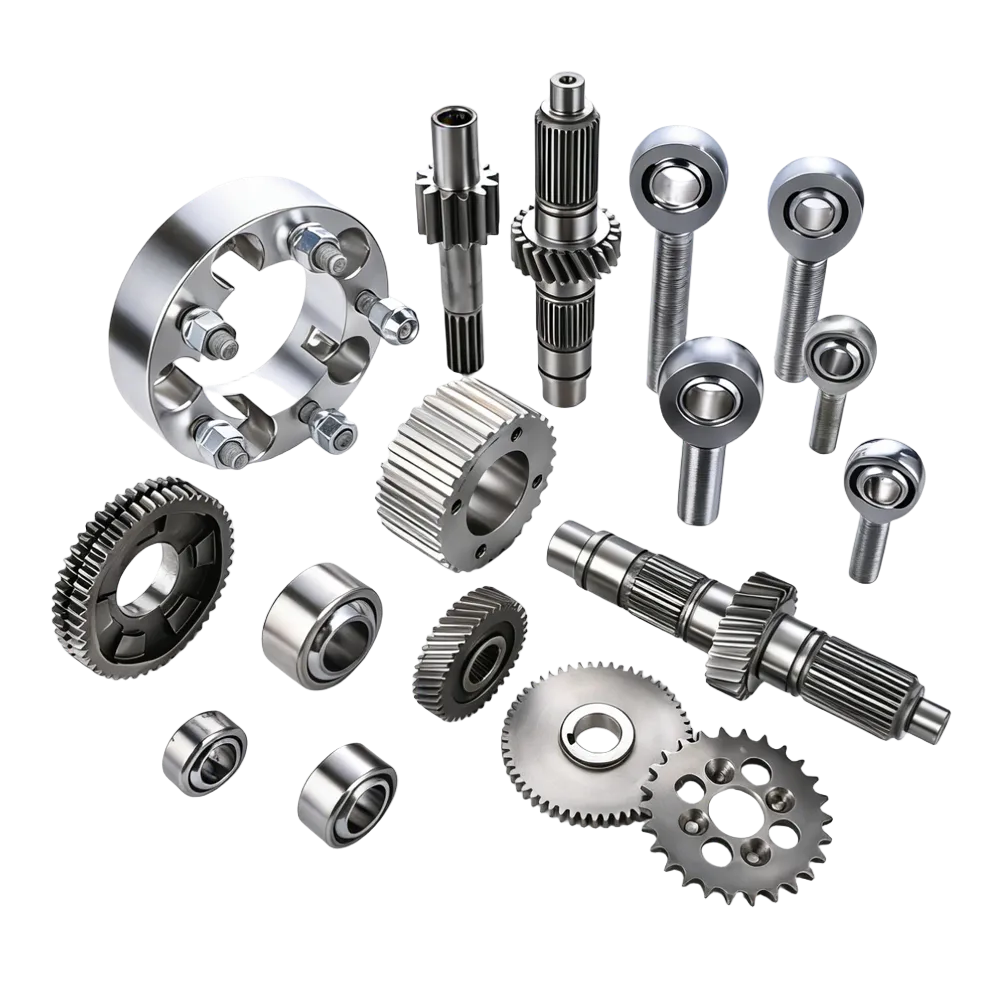
Common applications: gears, shafts, crankshafts, camshafts, dies, and injection-molding components — parts that see repeated surface friction or cyclical loading.
A related term: nitrocarburizing diffuses both nitrogen and carbon simultaneously, and is a distinct process from straight nitriding — worth knowing the two aren’t interchangeable terms.
Data note: this nitriding section draws only on the two AI research channels (ChatGPT and Perplexity) that returned valid results for this sub-topic — the other two failed to return usable data for this specific query. Both channels that did return results agreed closely on the metallurgical definition above.
Related reading: What Is Carbon Steel?