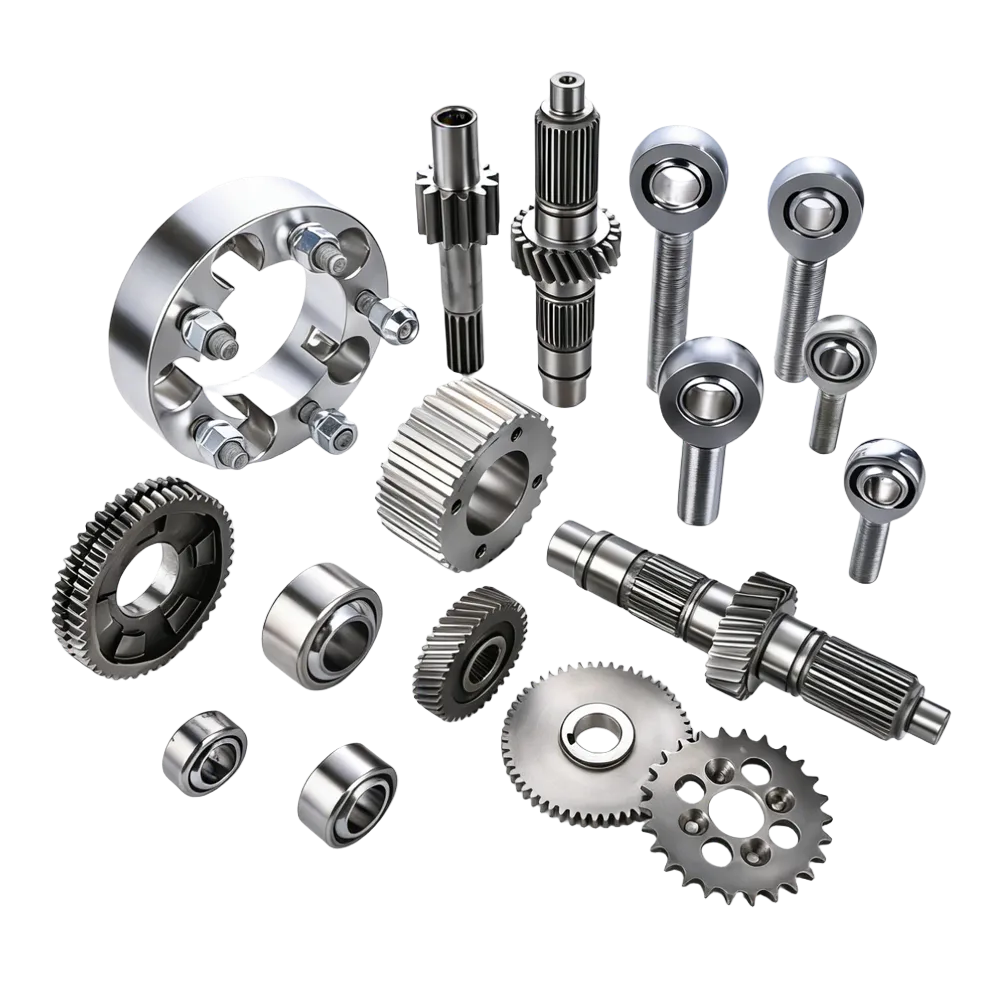
A control arm bushing is the rubber (sometimes polyurethane) sleeve pressed into the point where a control arm bolts to the car's frame or subframe. It's built in three layers — an outer metal shell, a flexible rubber core, and an inner metal sleeve for the mounting bolt — and its job is to let the control arm pivot freely while cushioning the impact and vibration that would otherwise transmit straight into the chassis as noise and harshness.
What It Actually Does
Two jobs, both happening constantly while the car is moving:
- Vibration and noise isolation. The rubber core absorbs high-frequency road shock before it reaches the cabin — this is the same NVH (noise, vibration, harshness) engineering concern that shows up throughout a car's chassis design.
- Controlled pivoting. The bushing lets the arm swing up and down as the wheel travels over bumps, while still holding the arm firmly enough that suspension geometry — and wheel alignment — doesn't drift under load.
A worn bushing fails at both jobs at once: more vibration gets through, and the arm develops play it wasn't designed to have.
Why They Wear Out
Rubber degrades from a combination of heat cycling, age, road salt and chemical exposure, and the sheer number of flex cycles a bushing goes through over the life of a car. None of that is a defect — it's the expected lifespan of an elastomer part doing constant work in a harsh underbody environment. What varies is how long it takes: some shops report control arms and their bushings routinely running well past 100,000 miles, others see failure much sooner in salt-belt or gravel-road conditions. Treat any specific mileage figure you see quoted for bushing life as a shop's experience-based reference, not a factory spec — no manufacturer publishes a hard bushing lifespan number.
Signs a Bushing Has Worn Out
- Clunking or knocking over bumps, during braking, or under acceleration
- Loose, wandering, or unstable steering feel
- Increased vibration or harshness in the cabin
- Uneven or accelerated tire wear
These symptoms overlap heavily with a worn ball joint, so a clunk alone doesn't confirm which part is at fault — that diagnosis needs a hands-on inspection with the wheel off the ground, not just symptom-matching from the driver's seat.
Can You Replace Just the Bushing?
Sometimes. On vehicles where the bushing is a separately serviceable part, a shop can press the old one out and a new one in. On many others, the bushing is only sold as part of the complete control arm assembly, because pressing bushings requires a hydraulic press most shops don't want to dedicate labor time to when a pre-assembled replacement arm is available at a comparable cost. Which situation applies to your car is a parts-availability question specific to that vehicle, not something that generalizes across all cars.
Bushings come in more than one material — rubber and polyurethane behave differently enough that it's worth understanding before you replace one. That comparison is covered separately.
Related reading: What Are Control Arm Bushings? (Material Types Compared) · What Is a Control Arm on a Car?