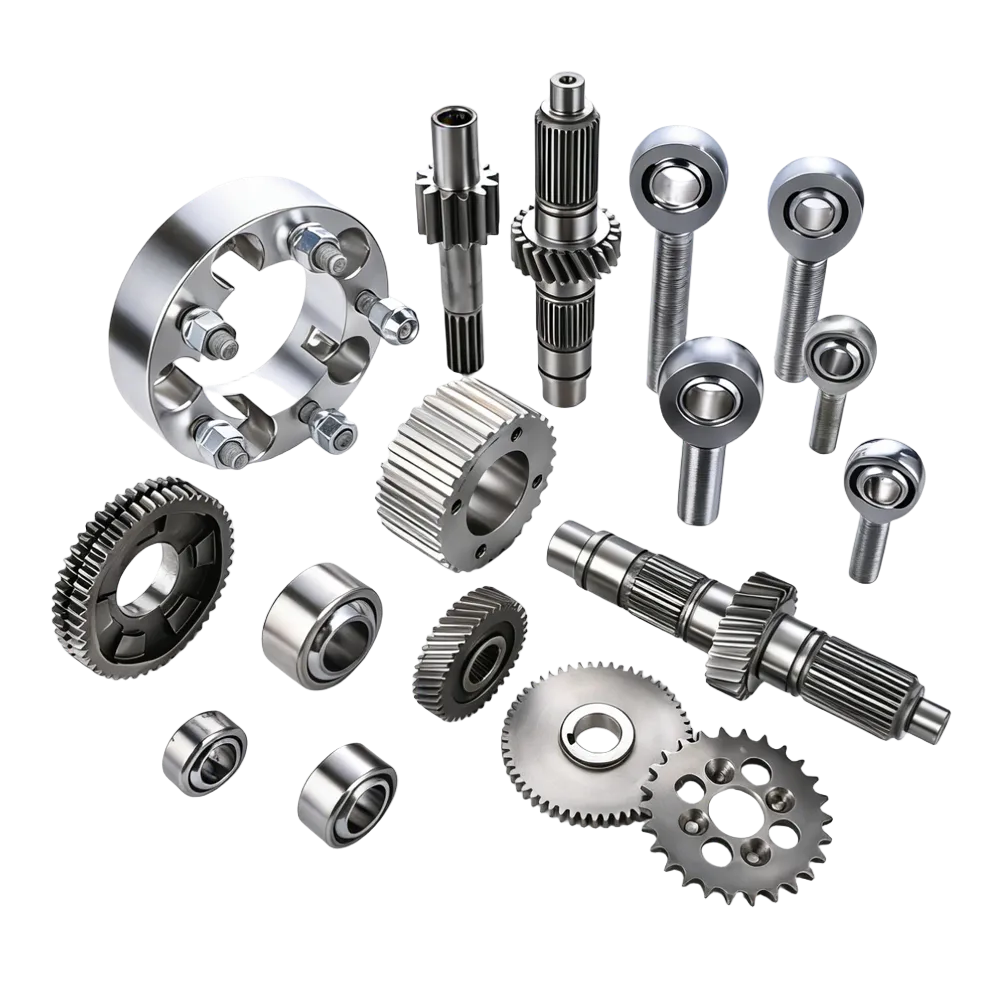
A ball joint is a spherical bearing — a steel ball riding inside a lubricated socket — that connects a car's control arm to its steering knuckle. It works like a hip joint: it lets the wheel move up and down with the suspension and turn left and right with the steering, at the same time, without the connection binding.
Where It Sits in the Chain
Picture the chain of parts running from the chassis to the wheel: control arm → ball joint → steering knuckle → wheel hub. The control arm is bolted to the frame and swings up and down with the suspension. The steering knuckle holds the wheel bearing and rotates when you turn the steering wheel. Neither of those parts alone can pivot in more than one direction — the ball joint is what sits between them and absorbs both motions at once, which is exactly why it's built as a ball-and-socket rather than a hinge.
What's Actually Inside One
A ball joint is a simple assembly built around four parts:
- Ball stud — a hardened steel shaft with a machined ball at one end and a threaded stud at the other. The threaded end bolts into the steering knuckle; the ball end sits inside the socket.
- Socket housing — the steel shell that holds the ball stud, usually with a bearing surface between the two to cut friction and wear.
- Grease — packed inside the socket to lubricate the ball's rotation and keep it quiet.
- Rubber boot — seals the opening of the socket, keeping grease in and water, dirt, and road salt out. A torn boot is usually what starts a ball joint's failure, not the ball or socket wearing out on their own.
Upper vs. Lower: They Don't Do the Same Job
Most cars have both an upper and a lower ball joint per side, and they're not interchangeable in function. The lower ball joint generally carries more of the load and wears faster; the upper mostly maintains alignment. Which one does more of the structural work depends on the suspension design — a distinction worth understanding on its own, so we've broken out the full count, location, and upper/lower comparison in How Many Ball Joints Does a Car Have?
The exact load path depends on the suspension design. Check the vehicle’s service information before assuming which ball joint carries the vehicle’s weight; the upper and lower joints serve different roles across SLA and MacPherson strut layouts.
When One Starts to Fail
A worn ball joint tends to announce itself before it fails outright: clunking or knocking over bumps, squeaking when turning, a steering wheel that feels loose or vague, vibration, or uneven tire wear on one side. These symptoms overlap with worn tie rod ends and bad wheel bearings, so a clunk alone isn't a diagnosis — it's a reason to have the joint checked for play. We cover diagnosis, grease type, and service intervals as their own topics rather than folding them in here: see What Type of Grease for Ball Joints? and How Often Should You Grease Your Ball Joints?.
Ball Joint vs. Other Suspension Pivots
A ball joint isn't the only kind of pivoting link in a suspension or steering system — rod ends (heim joints) do a related job on linkages like tie rods, radius arms, and steering arms, but they're a different part with a different service profile. If you're trying to figure out which one you're actually looking at, or which one belongs in a given application, see What Is the Difference Between a Heim Joint and a Ball Joint?
Related reading: How Many Ball Joints Does a Car Have? · What Does the Lower Ball Joint Do? · What Is the Difference Between a Heim Joint and a Ball Joint?