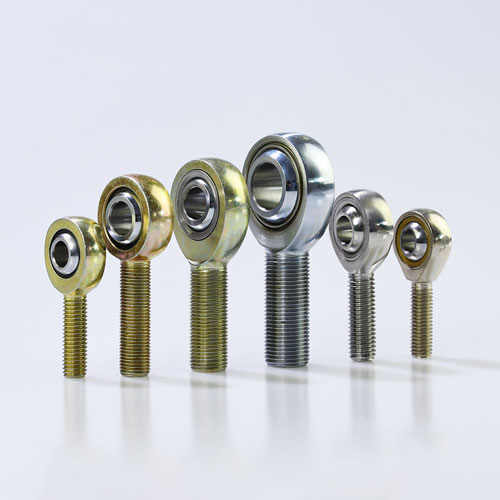
The engineering behind PTFE liners
In precision rod ends like our JMX series, the self-lubricating layer isn’t a simple coating. It is a reinforced fabric or composite liner bonded to the inner diameter of the race.
- Friction Data: According to standard tribology studies, the coefficient of friction for a PTFE liner against a hard-chrome plated ball is typically between 0.05 and 0.10.
- Dry Operation: Because the joint remains dry, it does not attract the grit and silt that typically turn grease into an abrasive grinding compound, which is a common cause of premature failure in off-road environments.
Performance in extreme conditions
According to SAE AS81935 standards (originally for aerospace), self-lubricating joints must maintain their “zero-play” fit over long service intervals.
- Vibration Resistance: The liner helps dampen high-frequency vibrations that can lead to metal fatigue in standard metal-on-metal joints.
- Sealing: While many builders still use rubber boots, the tight fit of a PTFE liner naturally helps scrape away light debris from the ball surface during articulation.
Related reading: The PTFE (Teflon) Liner: How Self-Lubrication Actually Works · The Lubrication Myth: Why You Should Never Grease PTFE-Lined Joints · Nylon Race vs. Metal-to-Metal: Choosing the Right Bearing Interface