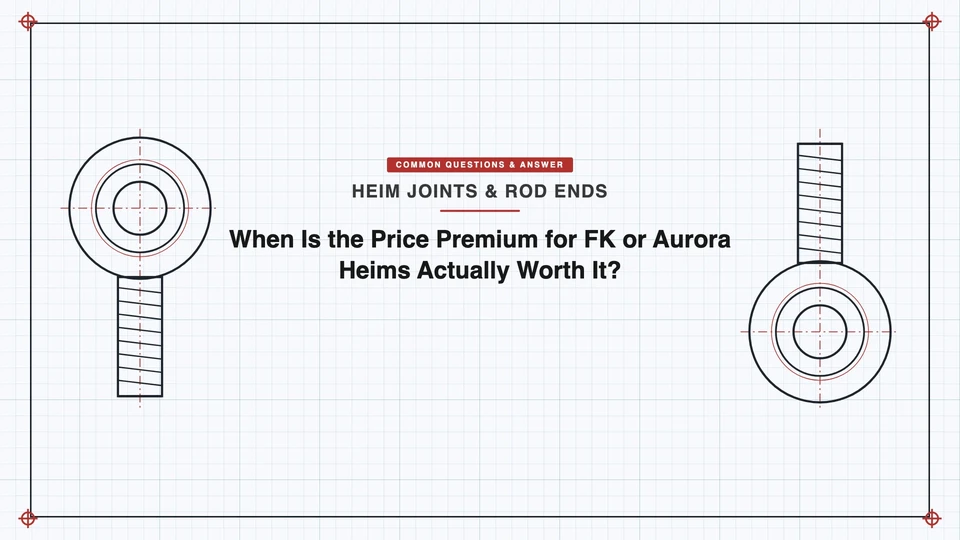
The price gap between a budget rod end and a name-brand one like FK or Aurora isn’t paying for a logo — it’s paying for tighter manufacturing tolerances, better base materials, and a liner construction that holds up longer under real load. Whether that gap is worth paying depends less on the brand name and more on three questions: how bad is the failure if this part lets go, how harsh is the environment it lives in, and how many load cycles will it actually see.
 rock crawler suspension Heims Actually Worth It?” class=”wp-image-31605″ width=”1600″ height=”720″ loading=”lazy” decoding=”async” />
What the Premium Is Actually Buying
Premium rod end manufacturers typically differentiate on a specific set of technical points, consistent with what their own product documentation describes: tighter manufacturing tolerances, heat-treated 4130 chromoly bodies, hardened bearing-steel balls, and a thicker, woven PTFE liner bonded into the race rather than a thin sprayed-on coating. That liner distinction matters more than it sounds — a thin coating wears through to bare metal relatively quickly under grit exposure, while a thick woven liner has more material to wear through before the joint starts developing play.
Four Situations Where Paying More Makes Sense
- Primary steering and suspension linkages. A tie rod, drag link, or track bar failing in service is a control-loss event, not an inconvenience. This is the category where the cost of a cheap part failing early is measured in more than just the part’s replacement cost.
- High-articulation applications. Suspension geometries that push a rod end close to its misalignment limit put more load against the housing’s retaining lip. A lower-quality joint is more likely to reach the kind of edge-loading failure we cover in what "ball pull-out" is and how to design against it — a budget joint with a thinner retaining lip and looser tolerances has less margin before that becomes a problem.
- Harsh environments — mud, sand, grit, road salt. A thin liner wears through to metal-on-metal contact faster than a thick woven one, and once that happens, wear accelerates. In a genuinely dirty environment, that difference compounds over the part’s service life.
- High-cycle applications — desert racing, regular track days, or daily-driven off-road rigs that see constant load reversal. Repeated cyclic loading is what exposes tolerance and material differences that a part might never reveal under occasional light use.
Where It Matters Less
The flip side follows from the same logic: low-frequency use, a non-safety-critical mounting point, and a budget that favors replacing a cheaper part more often over paying more upfront are all reasonable cases for skipping the premium. A rod end on an infrequently-used accessory linkage doesn’t carry the same stakes as one on a steering system, and the case for paying more is correspondingly weaker.
A Caveat on the Specific Numbers You’ll See Cited
You’ll come across specific price ranges and mileage-to-failure figures in enthusiast discussions of budget versus premium rod ends. Treat those as community-reported reference points, not verified specifications — they vary by application, load, and environment, and none of them trace back to a controlled comparison test. The technical distinctions above (material grade, liner construction, tolerance class) are the part of this comparison you can actually verify against a manufacturer’s own documentation; specific failure-mileage numbers generally aren’t.
The Actual Decision Framework
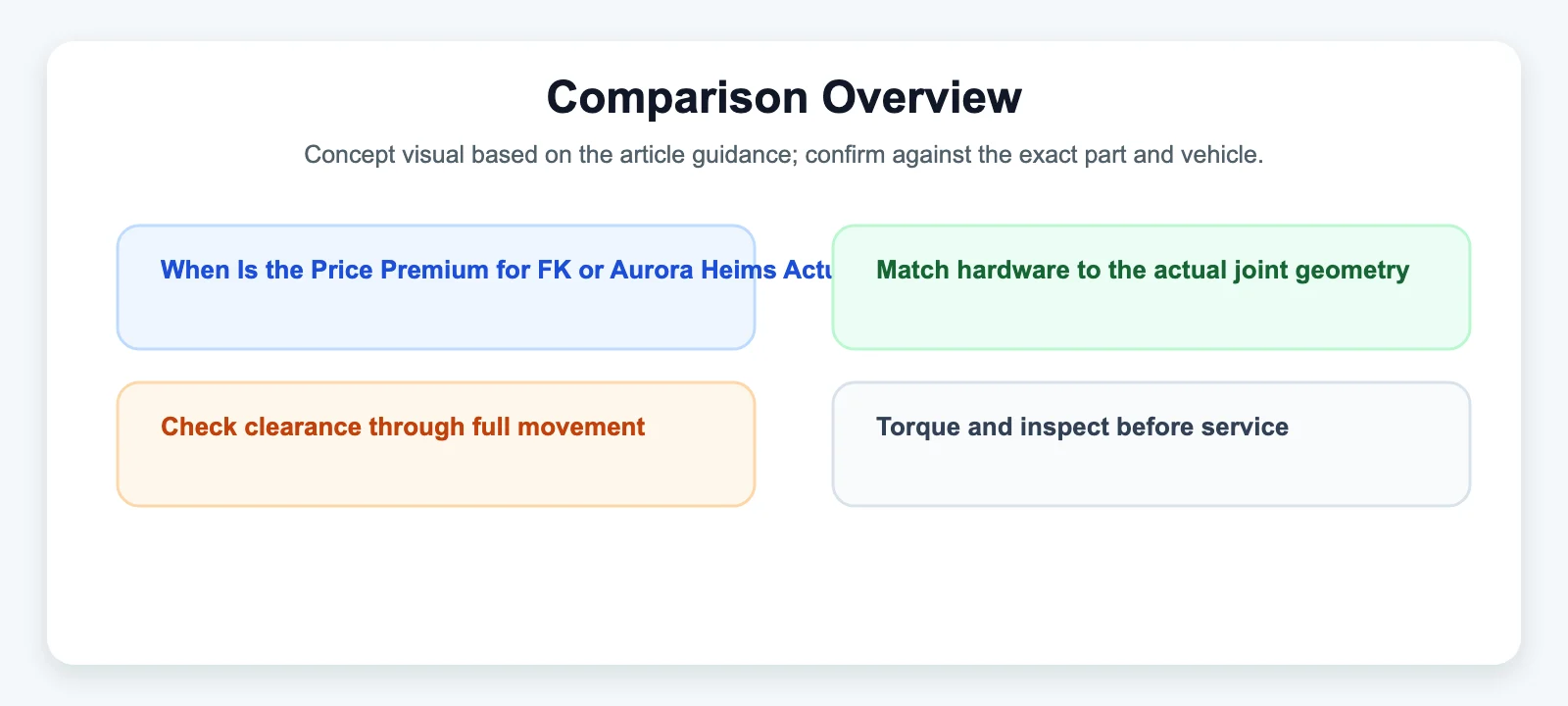
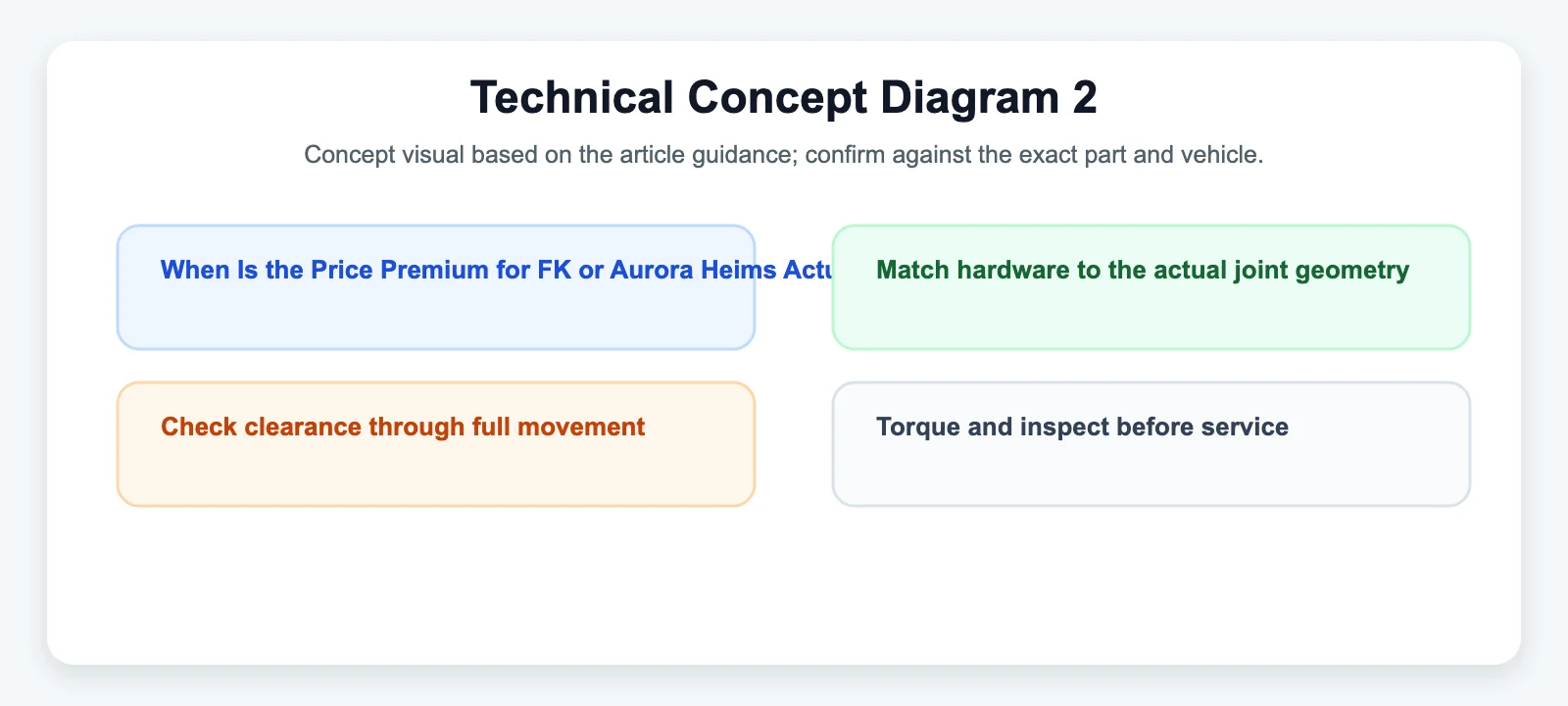
Rather than asking "is FK or Aurora worth it," a more useful question is: what does this specific application actually require? Map your use case against the four factors above — consequence of failure, articulation demand, environmental exposure, and cycle frequency. The higher your application scores across those factors, the more the premium buys you real, usable margin rather than just a name.
Related reading: What Is "Ball Pull-Out" and How Do You Design Against It? · How to Spot Counterfeit or Refurbished Rod Ends