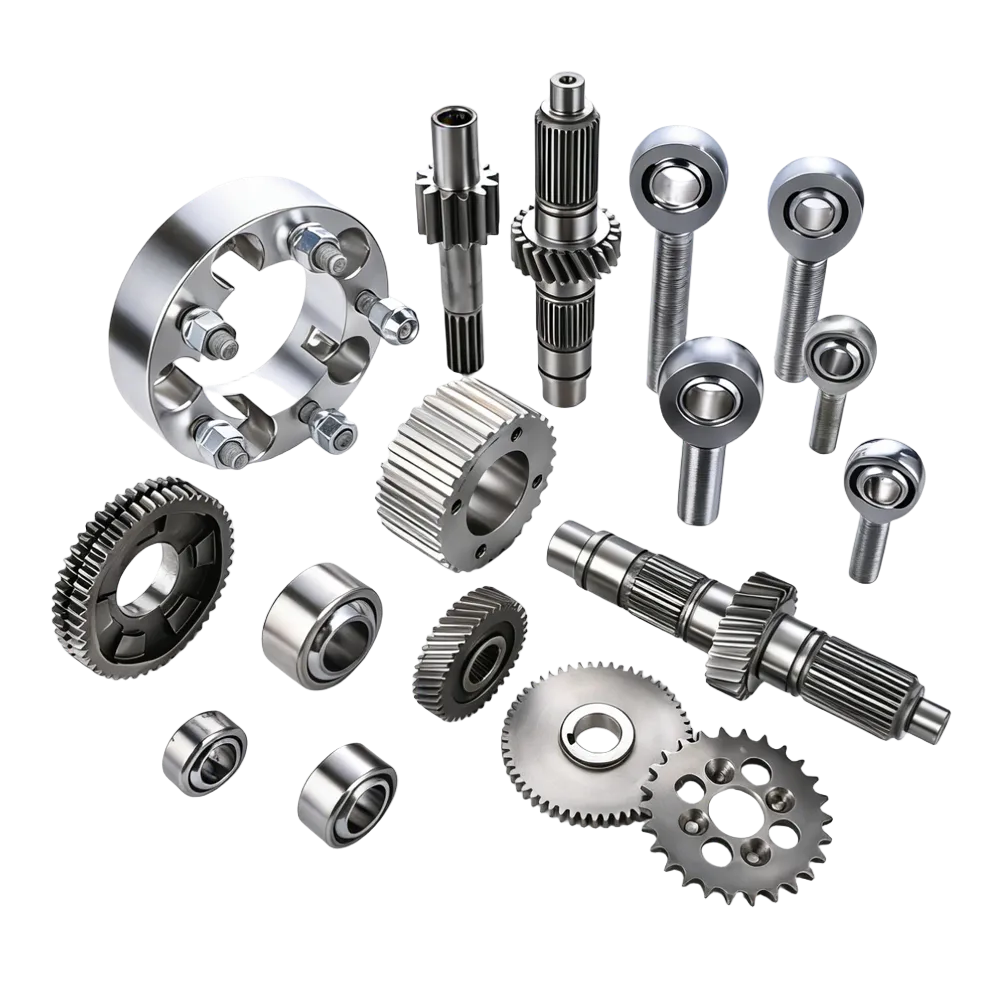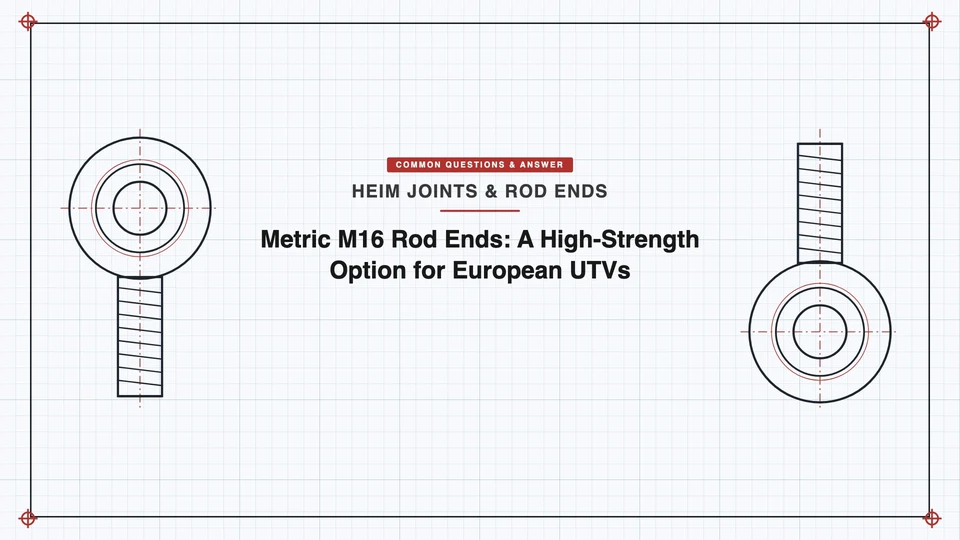
M16 rod ends show up often in European UTV steering and suspension applications — but calling M16 "the standard" overstates it. Replacement UTV steering component listings show both M14 and M16 configurations depending on the specific model, and even within a single model family, the spec can vary. What’s accurate to say is that M16 is a common, high-strength option in this space, not the only one.
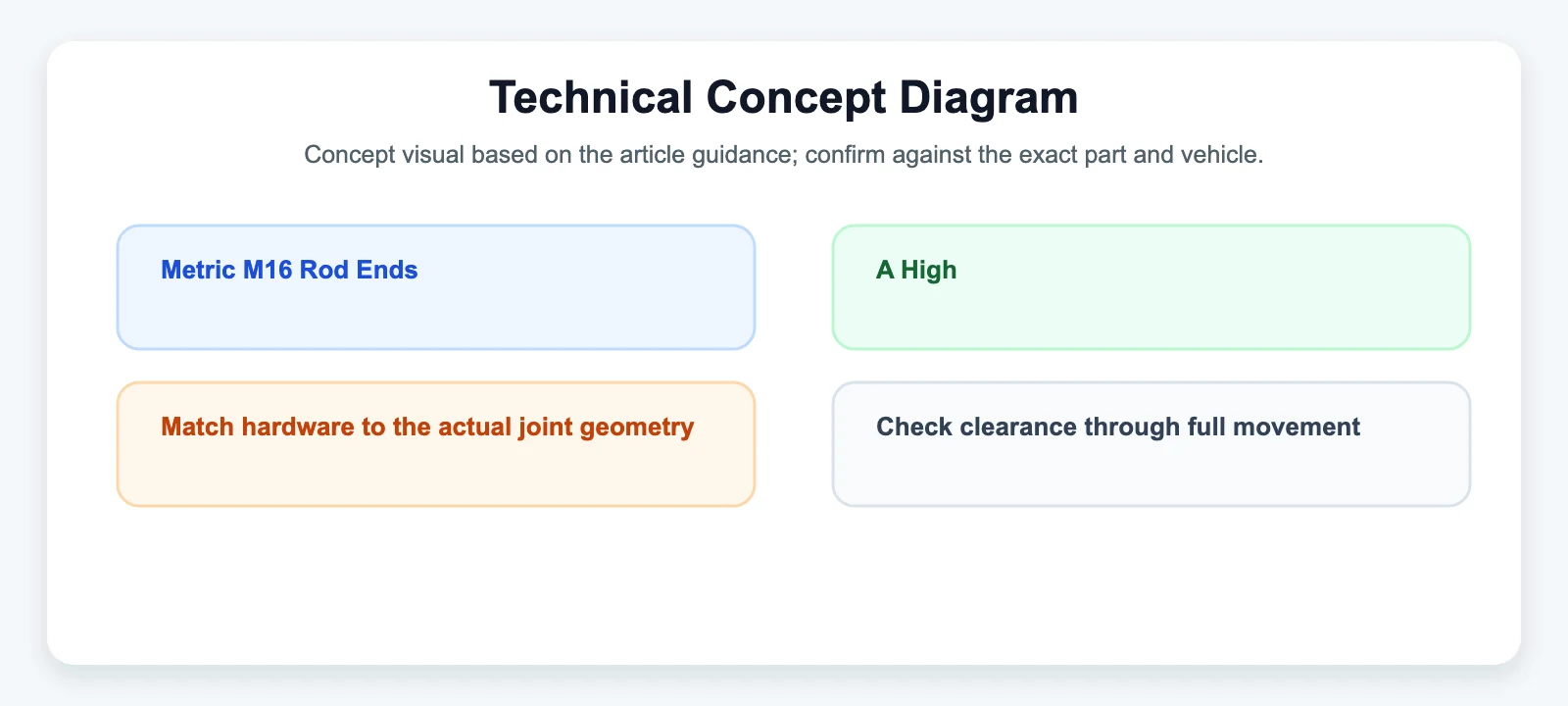
What "M16" Actually Specifies
M16 refers to a 16mm nominal thread or bore diameter — but that alone isn’t a complete specification. Thread pitch, thread direction, shank style, and ball bore all need to be confirmed separately. M16×2.0 and M16×1.5 are both commercially available pitch variants, and they aren’t interchangeable with each other any more than two different thread sizes would be.
Why M16 Is Attractive for Performance Applications
The larger thread section gives an M16 rod end more load-bearing contact area than a smaller thread size at the same design. High-load M16×2 rod ends are available in heat-treated chromoly steel with PTFE or nylon liner options, and conventional steel versions exist as well for less demanding applications. That combination of thread size and material options is what makes M16 a reasonable default choice for steering and suspension linkages where strength and adjustability both matter.
Verify Fitment by Model, Not by Assumption
Don’t infer the correct thread spec from where the vehicle was built. Replacement UTV steering components are sold in both M14 and M16 configurations, and the correct one depends on the specific model — sometimes even on which variant within a model line. Confirm the actual thread spec for your vehicle before ordering, rather than assuming "European" automatically means M16.
Related reading: 3/4-16 vs. 7/8-14: Choosing the Right Shank Size · Cross-Referencing OEM Part Numbers for Rod End Replacement