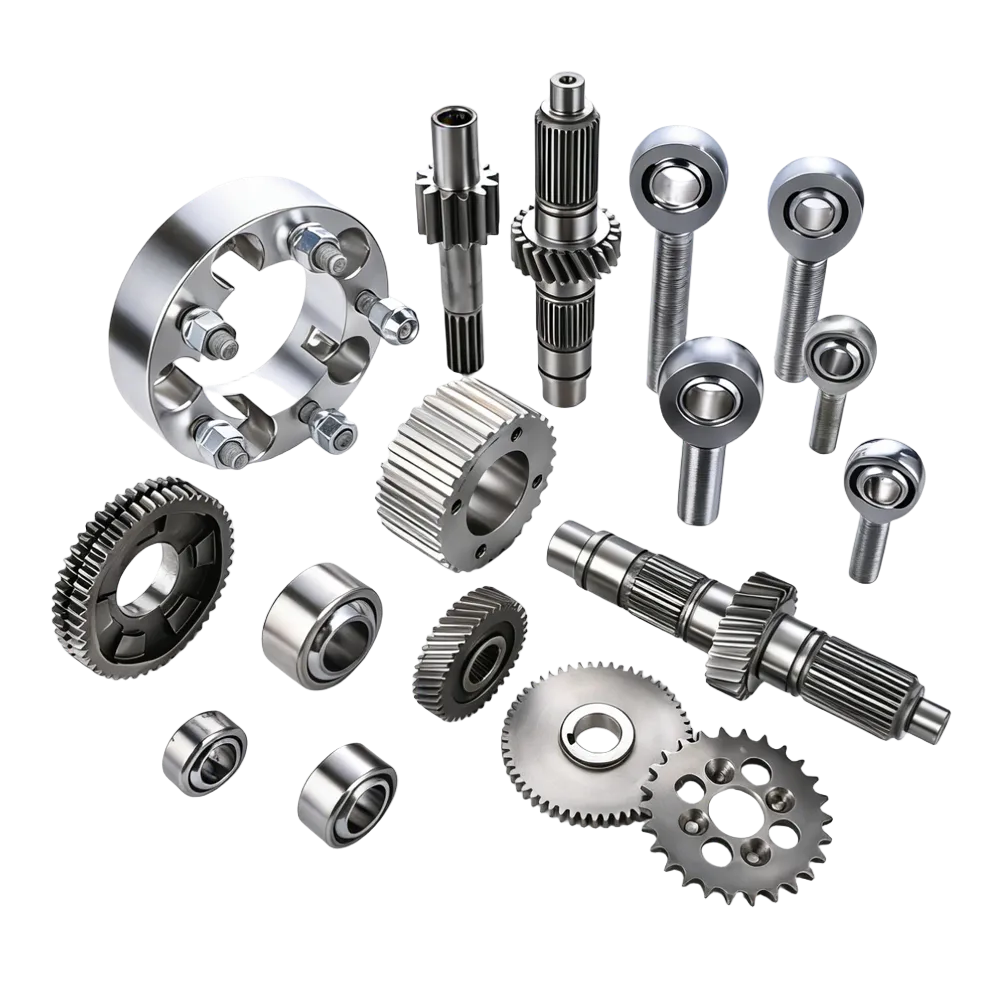
4140 (AISI/SAE 4140) is a low-alloy chromium-molybdenum steel with roughly 0.40% carbon — the “41” identifies the chromium-molybdenum family, the “40” points to the approximate carbon content. It’s commonly sold under the trade name “chromoly” or “chrome-moly steel,” and it’s one of the most widely used medium-carbon alloy steels in industrial and automotive manufacturing.
Chemical Composition
| Element | Content |
|---|---|
| Carbon (C) | 0.38%–0.43% |
| Chromium (Cr) | 0.80%–1.10% |
| Molybdenum (Mo) | 0.15%–0.25% |
| Manganese (Mn) | 0.75%–1.00% |
| Silicon (Si) | 0.15%–0.35% |
| Iron (Fe) | Balance (~96.7%–97.8%) |
Why the Alloying Elements Matter
Chromium raises hardenability and wear resistance; molybdenum keeps strength and toughness consistent through thicker cross-sections and improves hardenability further. Together, they let 4140 respond strongly to heat treatment — quenching and tempering can adjust its hardness and strength across a wide range depending on the part’s requirements.
Mechanical Properties
One source (Gemini’s AI answer) puts heat-treated 4140’s tensile strength at roughly 900–1,200 MPa (130–170 ksi). That’s a single-source figure — the other three research channels described 4140’s strength only in directional terms (“high strength,” “significantly hardenable by quench and temper”) without giving a specific number. Treat the 900–1,200 MPa range as a useful reference point, not a guaranteed spec — actual strength depends heavily on the specific heat-treatment state, and selection decisions should rely on the supplier’s material certification, not a general reference figure.
Typical Applications
| Category | Examples |
|---|---|
| Automotive | Steering knuckles, connecting rods, driveshafts, racing components |
| Industrial machinery | Shafts, gears/sprockets, crankshafts, hydraulic components |
| Tooling | Tool holders |
| Fasteners | High-strength bolts |
| Oil & gas | Downhole and surface equipment |
| Aerospace | Structural components, landing gear |
How 4140 Compares to Adjacent Grades
| Compared to | How 4140 differs |
|---|---|
| 1018 (low-carbon steel) | Significantly higher strength and hardness, but more expensive and harder to weld |
| 4130 (chromoly steel) | Higher carbon content gives 4140 greater achievable hardness/strength; 4130 has better weldability and is lighter, making it the common choice where weldability or weight matters more than peak strength |
| Stainless steel | Mechanically stronger in many cases, but chromium content is far below stainless-grade levels — 4140 does not offer stainless-level corrosion resistance |
Weldability Note
4140’s medium-to-high carbon and alloy content mean it isn’t a forgiving weld — preheating and post-weld heat treatment are generally needed to avoid cracking. This is the same underlying mechanism covered in What Is Carbon Steel?: higher carbon content resists the localized heating and cooling that welding puts a joint through.
Related reading: What Is Carbon Steel? · What Is the Difference Between Carbon Steel and Alloy Steel?