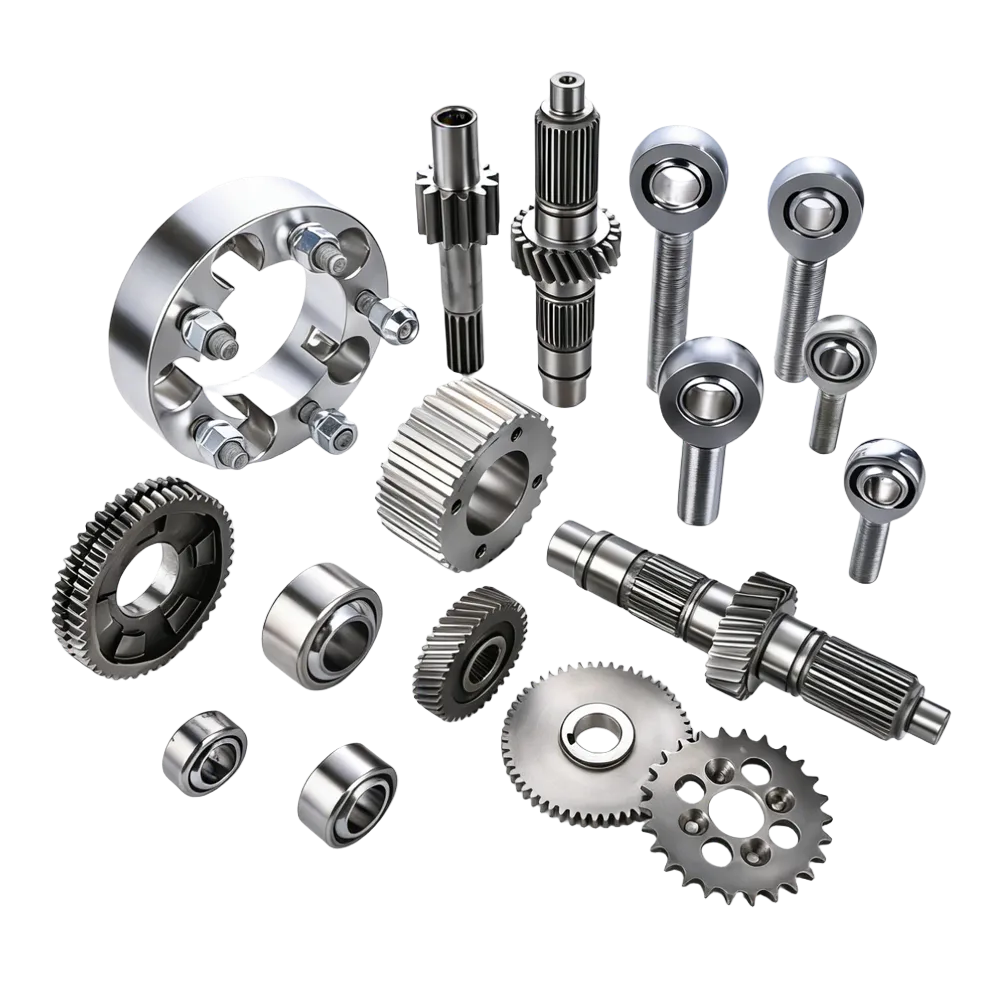

A bushing is a cylindrical sleeve installed between two parts in relative motion to reduce friction, absorb vibration, and take the wear that would otherwise happen directly between more expensive components. That much is covered in more depth in What Is a Bushing? The part worth answering separately is the name itself — because “bushing” isn’t a descriptive modern coinage, it’s a word with a specific mechanical history.
What It Does, Briefly
A bushing sits between a shaft and a housing (or a bolt and a bracket) and either lets the shaft slide against it directly (a mechanical bushing) or lets a rubber/polyurethane layer flex under load (an automotive suspension bushing) — either way, it’s the part designed to wear, flex, or absorb, so the more expensive parts around it don’t have to. For the full breakdown of materials and mechanisms, see What Is a Bushing? and How Do Bushings Work?
Why It’s Called a “Bushing”
The name traces back to an older mechanical word: bush. In its mechanical sense — not the plant — a “bush” referred to a metal lining inserted into a hole, historically used to line the axle hole of a wheel so the wood or metal of the hub itself didn’t wear directly against the axle. That usage dates back roughly to the 1500s.
Where “bush” itself came from is less settled — sources trace it to an older word meaning roughly “box” or “tube” (accounts vary on the exact language of origin, with some pointing to Middle Dutch and others to related Germanic roots), but the core idea across all of them is consistent: a hollow lining fitted inside an opening. From there, the modern spelling “bushing” — essentially “a little bush,” using the sleeve/lining sense of the word — became established in English by the late 1700s to early 1800s, and it’s the term that stuck in mechanical and engineering usage.
So when a mechanic says “replace that bushing,” they’re using a term with roughly two centuries of unbroken mechanical meaning behind it: replace the lining that provides the correct surface for this part to move against.
The Name and the Function Line Up
That’s a useful thing to hold onto, because unlike a lot of technical terms, “bushing” hasn’t drifted far from its original meaning. It started as “a lining inserted into a hole” and it still means essentially that — whether the modern version is a sintered bronze sleeve on a motor shaft or a rubber-and-metal sandwich in a control arm.
Related reading: What Is a Bushing? Definition, Materials, and How It Works · How Do Bushings Work? · What Do Bushings Look Like?