Three different upgrades get grouped under "aftermarket tie rods," and they solve three different problems. If your vehicle is stock-height and daily-driven, you probably need none of them. If it's been lowered, lifted, widened, or built for drift, the answer changes — and for one of these three, it stops being optional.
The three types
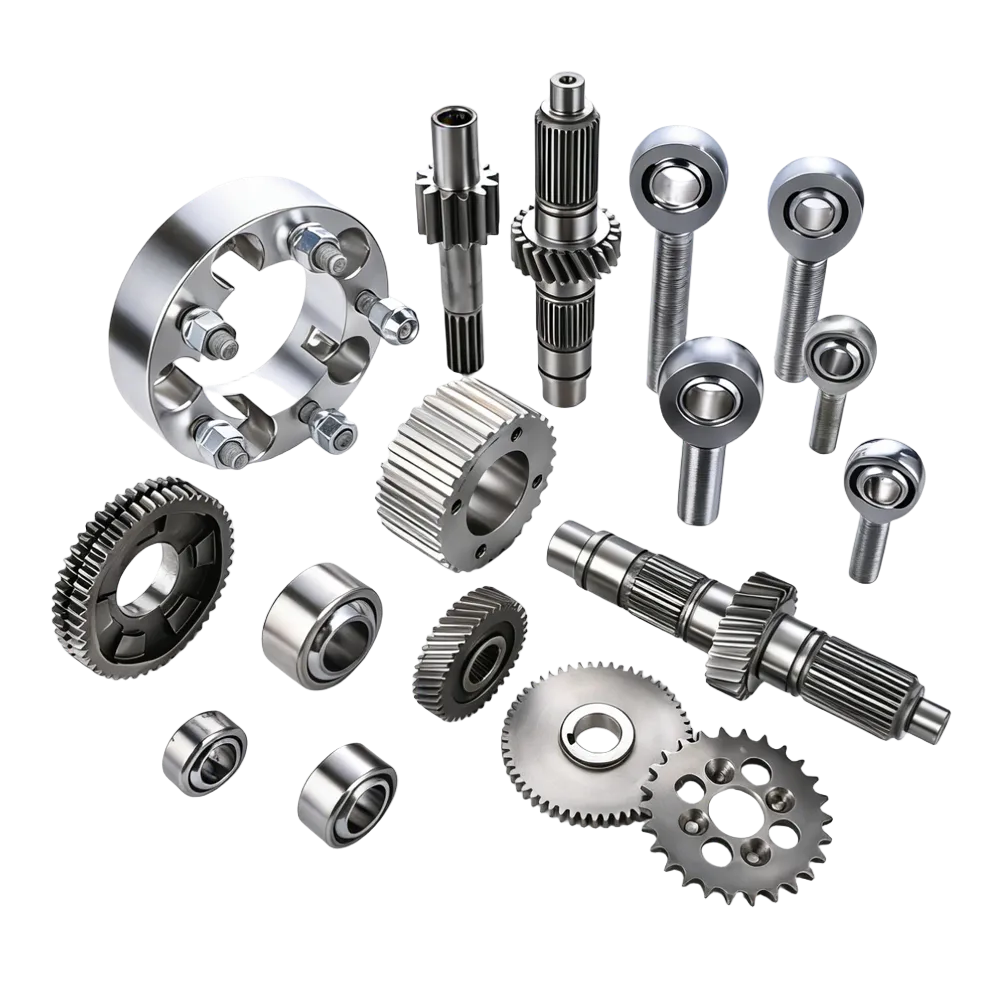
Adjustable tie rods (bump-steer kits) — threaded turnbuckles with heim-joint-style ends and stackable spacers. Their job is correcting bump steer: when a vehicle is lowered or lifted, the tie rod's angle relative to the lower control arm changes, which makes the wheel toe in or out on its own as the suspension compresses — a twitchy, unpredictable feeling at speed. The spacers let you reposition the tie rod's mounting point so it stays parallel to the control arm through the suspension's full range of motion again.
Extended tie rods — simply longer than stock. These become necessary when you've installed extended lower control arms to widen the front track for stability, clearance, or a widebody fender fitment. This one isn't a preference upgrade: without an extended tie rod, a stock-length one either won't reach the knuckle or will only catch a few threads of engagement — a real structural safety hazard, not a cosmetic shortfall.
Quick-steer / high-angle tie rods — repositioned mounting points that shorten the steering arm's effective leverage, so less steering wheel input produces more wheel angle. Used for faster steering response, mostly in drift and high-steering-angle builds.
Do you actually need one?
| Your setup | Worth it? |
|---|---|
| Stock-height daily driver | No. Factory tie rods are sealed, cheap, and routinely last 100,000+ miles without issue. |
| Lowered or lifted, no other changes | Adjustable/bump-steer kit — worth it if you're seeing bump steer or need toe adjustment range beyond factory limits. |
| Widened front track (extended control arms) | Extended tie rod — required, not optional. A stock-length rod physically can't do this job safely. |
| Drift or high-steering-angle build | Quick-steer — standard as part of the overall steering setup, not a standalone upgrade. |
The point most people get wrong: "adjustable" doesn't mean "better"
A stock tie rod on an unmodified vehicle already provides all the adjustment range needed to set toe correctly. Spending money on an adjustable unit won't make a stock car steer better — it only becomes valuable once the suspension geometry itself has changed (lowered, lifted, widened) and the factory part can no longer reach the correct setting.
What you're trading for the upgrade
Longer or reinforced tie rods redirect load into the rest of the steering system — if the rest of your steering components (rack, knuckles, other linkage) aren't matched to the upgrade, you can end up with reduced smoothness or accelerated wear elsewhere. And like any heim-joint-style rod end, these need periodic inspection for cracks or wear rather than being treated as fit-and-forget — the same maintenance discipline that applies to heim joints generally (see Heim joints vs. tie rod ends: the failure-mode question for more on why that matters).
Related reading: Heim joints vs. tie rod ends · How much are tie rods?