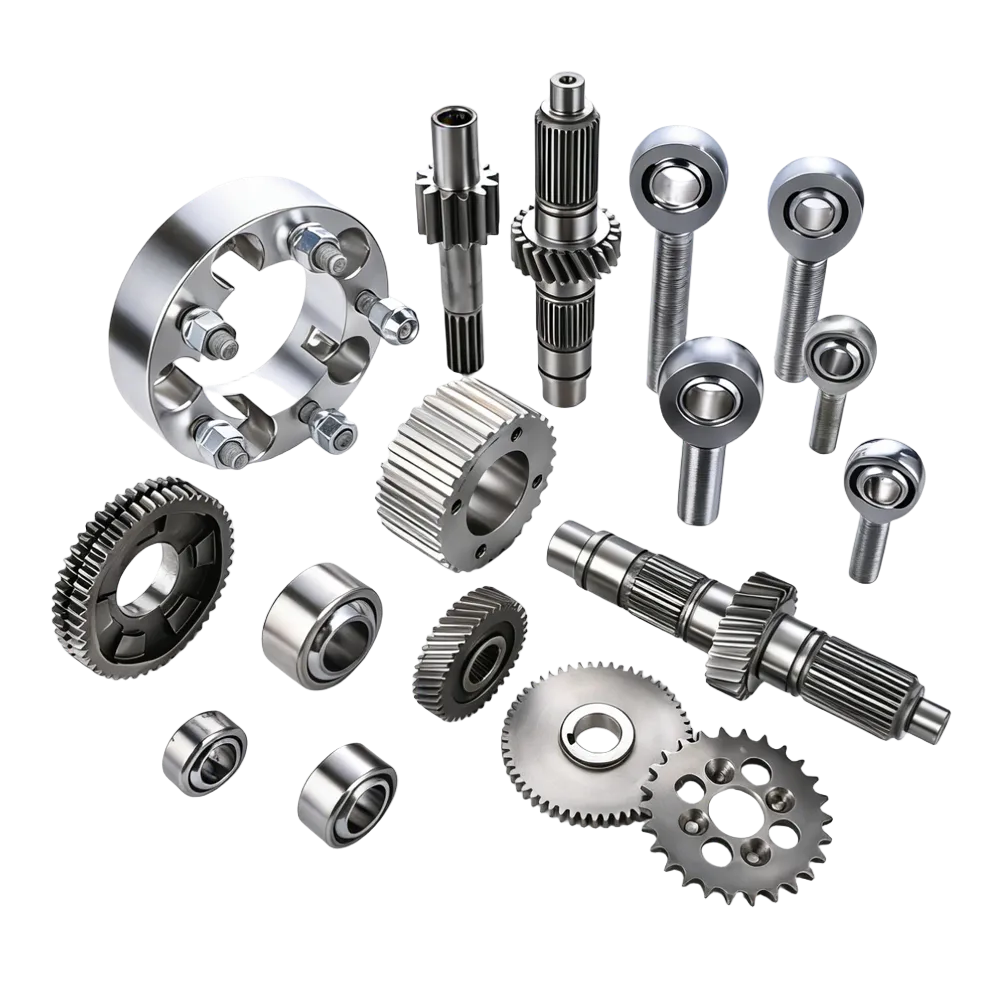
A single tie rod end (part only) runs $29–$87 for most passenger vehicles. Installed — with labor — that jumps to $150–$550 per side, because the number you find online usually already includes labor whether the source says so or not. That's the first thing to sort out before comparing prices: are you pricing the part, or the repair?
Part price vs. installed price — two different numbers
Retail listings for a single tie rod end (AdvanceAutoParts' catalog, mostly MOOG/Carquest/Driveworks brands) cluster between $29.49 and $86.99, with an average around $77. Best-selling SKUs span a wider $8.59–$206.99 range once you include both economy and high-end/luxury-vehicle parts.
Ask ChatGPT, Perplexity, or Gemini "how much are tie rods," though, and all three default to answering the installed cost — parts plus labor — without saying so explicitly:
| Source | Quoted range | What it includes |
|---|---|---|
| ChatGPT | $150–400 (outer, one side) / $200–550 (inner, one side) | Parts + labor |
| Perplexity | $150–450/end (parts) + $50–150/end (labor) | Parts + labor, itemized |
| Gemini | $150–400/side, $300–750 both sides | Parts + labor |
| Moog (official manufacturer page) | $70–240 | Parts + labor, but lower — different sample/region than the AI figures above |
The AI answers and the manufacturer's own cost page don't agree with each other — not because one is wrong, but because they're pulling from different vehicle samples, regions, and years. Don't average them into one number; know which one you're looking at.
Why the range is so wide
Four variables drive most of the spread, based on what the research turned up:
- Vehicle class — economy sedan vs. luxury car vs. truck changes the base part price significantly.
- Inner vs. outer — inner tie rods typically cost more and often need specialty tools to install.
- OEM vs. aftermarket — dealership parts run higher than aftermarket equivalents like MOOG.
- Regional labor rates — the same job costs more in high-labor-cost markets.
Exactly how much weight each factor carries wasn't something the research pinned down with hard numbers — that's a fair question for your own shop's quote, not something a general price guide can promise.
The one price bracket most guides skip: off-road upgrade kits
Every mainstream repair-cost source treats this as a stock-replacement question. None of them mention what happens when you're not just replacing a worn part but upgrading it — a scenario that's common in off-road and lifted-vehicle builds. A heavy-duty tie rod assembly built for a lifted Jeep JK — forged SAE 4140 ball studs, forged 1045 housing, adjustable sleeve — runs around $595 as a complete kit. That's roughly 6–8x a stock consumer part, and the price difference is the material and structure, not markup: a forged 4140 ball stud is built for repeated off-road shock loading in a way a stamped steel stock part isn't engineered for.
That's not a number to be alarmed by — it's a different product category answering a different question ("what do I need for this application") than "what does a stock replacement cost."
Related reading: How much to change tie rods? (labor + alignment cost) · Full tie rod replacement cost — parts, labor, and does it vary by vehicle?