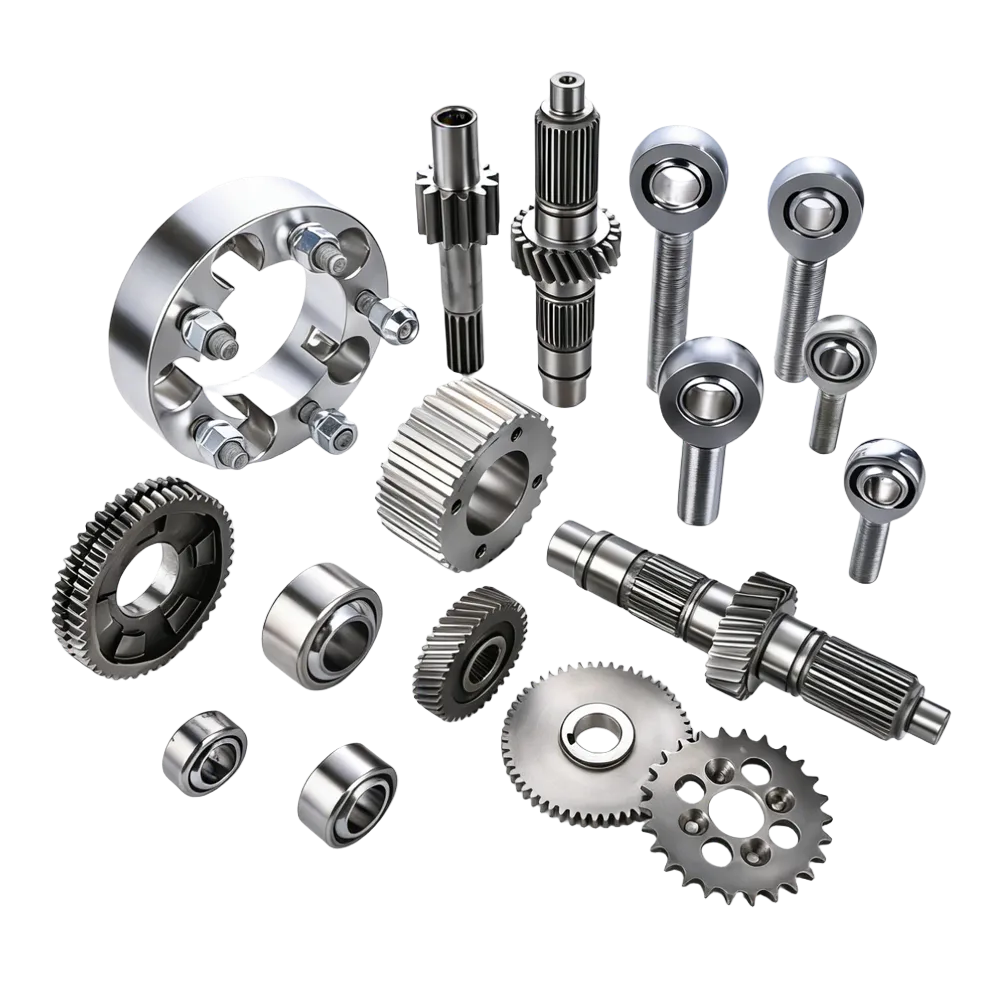
A tie rod is the steering linkage that carries your steering input from the steering rack to the wheel — every time you turn the wheel, it's the tie rod that pushes or pulls the steering knuckle into the new angle. The full chain runs: steering wheel → steering rack → inner tie rod → outer tie rod end → steering knuckle → wheel. Each link in that chain has a job, and knowing which piece is which is the difference between diagnosing a problem and just guessing.
Two parts, one name
"Tie rod" gets used loosely, but it's actually two distinct parts working together:
- Inner tie rod — threads directly into the end of the steering rack (or steering gear), tucked inside a rubber accordion boot. You won't see it without pulling the boot back.
- Outer tie rod end — the ball-joint connector at the far end, bolting to the steering knuckle. This is the exposed part most people picture when they hear "tie rod end."
That's the short version — a full breakdown of how to tell which one is failing lives in Inner vs. outer tie rod ends: how to tell which one you need; this page just needs you to know they're two different parts before anything else makes sense.
Why it's a ball joint, not a fixed connection
Here's the part most explainer pages skip: the outer tie rod end has to be a ball-and-socket joint, not a rigid link — for the same reason a shopping cart's front wheels swivel on a pivot instead of being welded straight. As your suspension moves up and down over bumps, the angle between the tie rod and the steering knuckle constantly changes. A rigid connection would bind or snap under that motion; the ball joint lets the steering linkage keep working through the wheel's full range of suspension travel.
It's also your toe-angle adjustment point
The outer tie rod end threads onto the inner tie rod, and that threaded connection is exactly where mechanics set your front wheels' toe angle during an alignment. Turning that connection lengthens or shortens the assembly, tilting the wheel in or out slightly. This is why any tie rod replacement — even a like-for-like swap — requires a follow-up alignment: you can't reinstall the old setting by eye.
What happens when it wears out
Wear here shows up as loose or vague steering feel, clunking over bumps, and uneven tire wear from a toe angle that's drifted out of spec — the mechanism above explains why: a worn ball joint has play, and that play changes your toe angle even while parked. For the full symptom list and how urgent it is, see What are the symptoms of a bad tie rod? and Can you drive with a bad tie rod?
Related reading: Inner vs. outer tie rod ends: how to tell which one you need · What are the symptoms of a bad tie rod? · Can you drive with a bad tie rod?
SYZ Rod Ends manufactures custom and OEM-spec tie rods for off-road and industrial applications — see the tie rod product line for spec details.