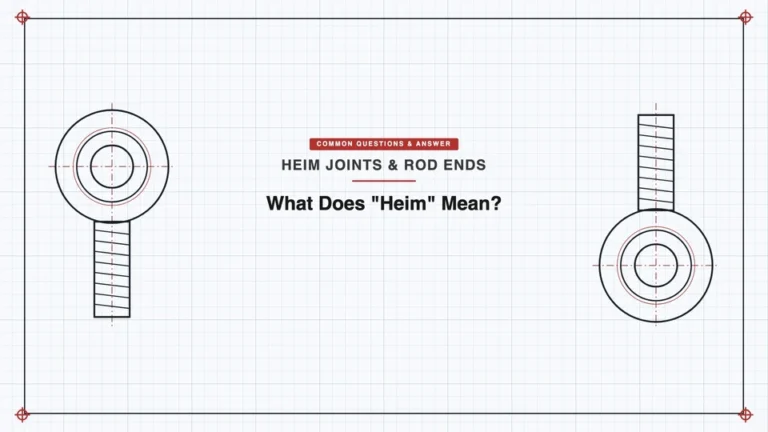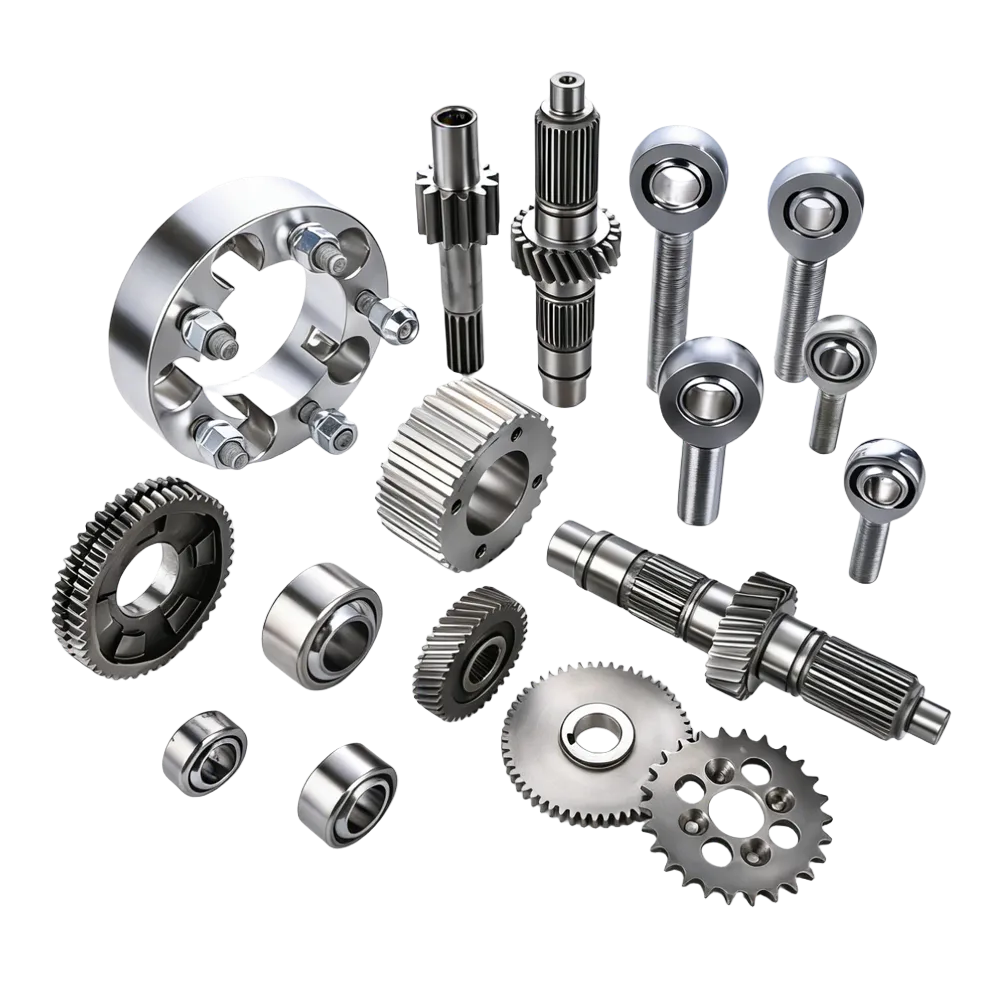

The origin of the spherical rod end
The joint was patented by the Heim Company during World War II to solve a specific problem in aerospace engineering: how to allow a control rod to move smoothly even when the mounting points are not perfectly aligned. Today, this design is the industry standard for any application requiring high-strength articulation.
Key mechanical characteristics
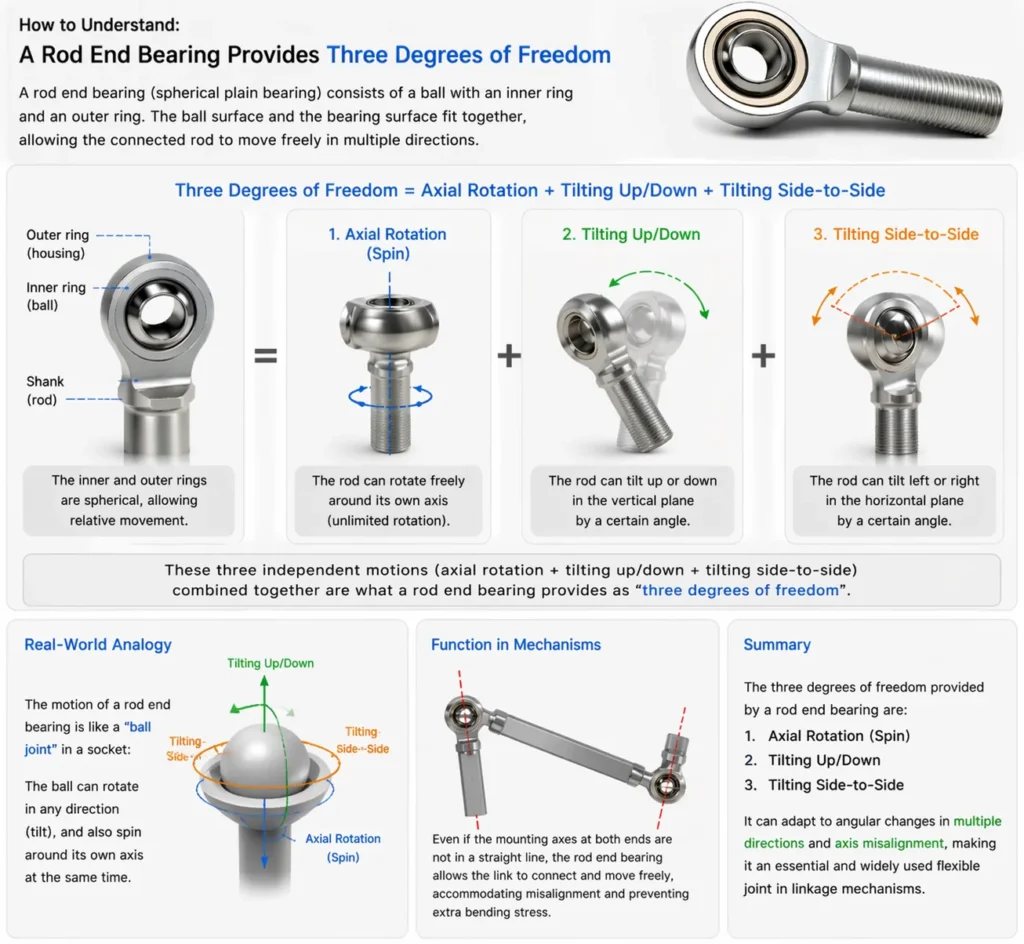
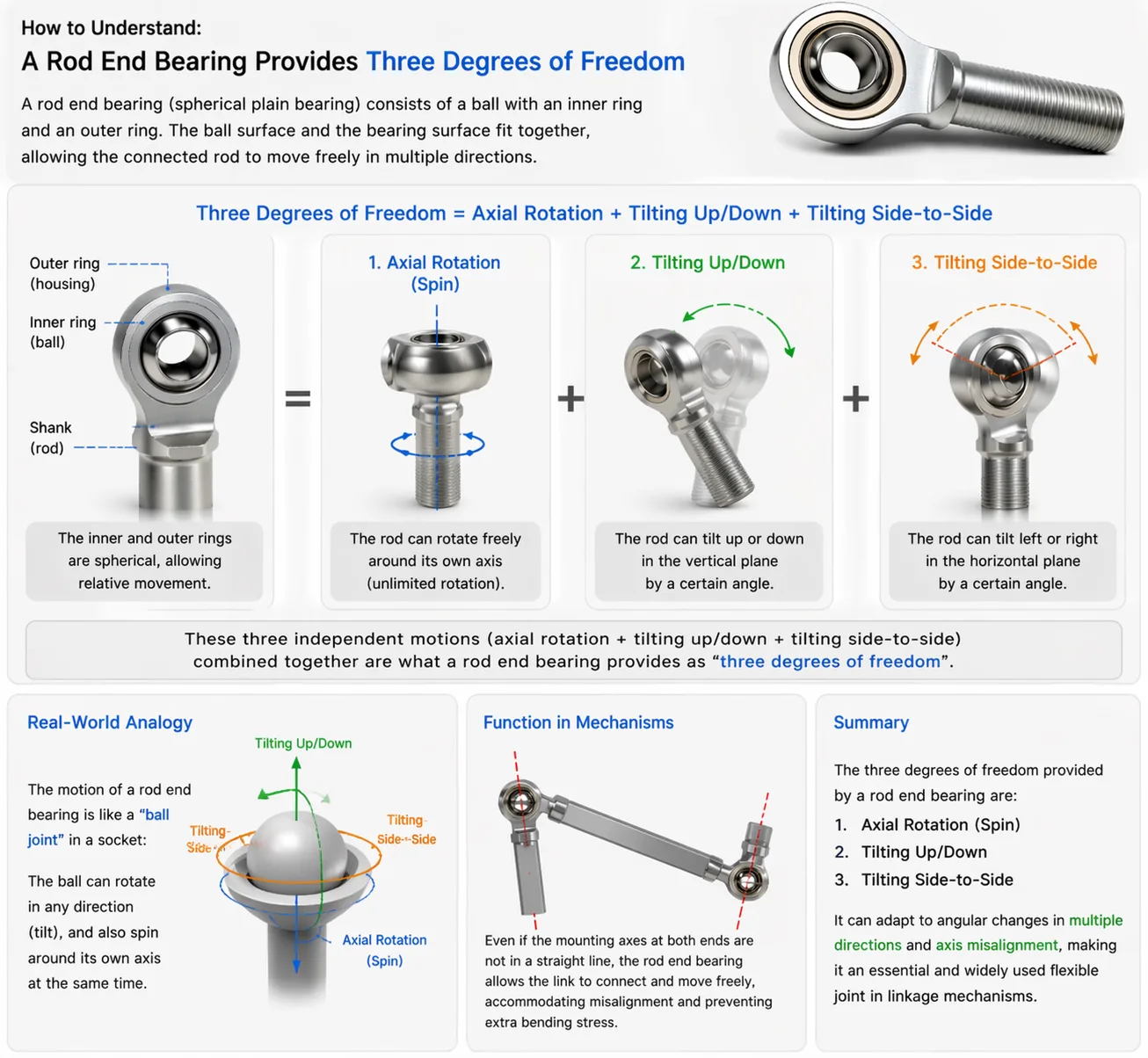
Unlike a standard ball joint or a rubber bushing, a Heim joint offers three degrees of freedom. This means the connected link can rotate around its axis while also tilting up, down, or side-to-side.
- Precision: Because there is no rubber to compress, the joint offers "zero-deflection," which is critical for maintaining exact suspension geometry in racing.
- Strength: A high-quality 3/4" Chromoly joint can handle over 40,000 lbs of static radial load, according to SAE J1120 testing standards.
Related reading: Heim joint vs. Rod end vs. Rose joint: clearing the confusion · Anatomy of a rod end: understanding the housing, ball, and race · Understanding articulation and spherical bearing motion