Wholesale Aftermarket Parts & Accessories for ATV/UTV, Off-Road
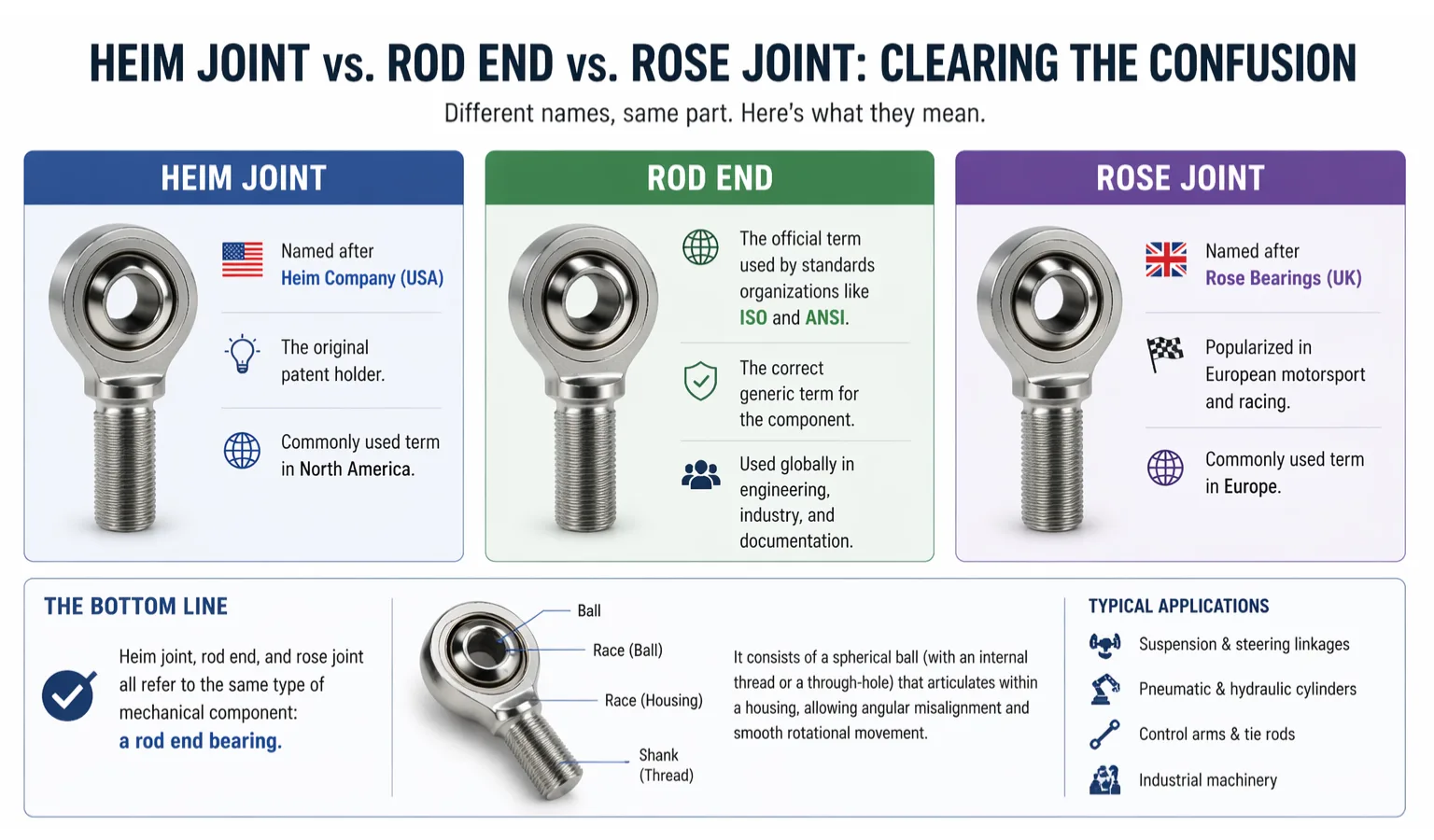
Saltwater does not care how strong a part is — it cares what it is made of. We machine the corrosion-critical components that go into marine builds: 440C stainless spherical bearings, stainless rod ends and heim joints for marine and food-grade use, hard-chromed and stainless cylinder rods, linkage hardware and custom CNC parts in stainless and titanium. Built to drawing, built to survive the environment.
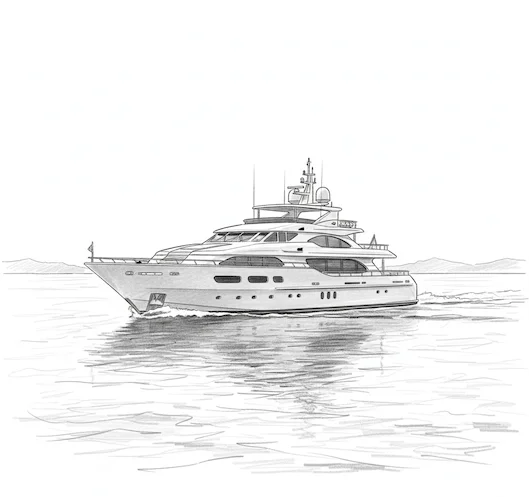
Marine is the one category where being precise about scope saves everybody time, so here it is plainly. We are a precision machining manufacturer, and on the water our work is corrosion-critical metal components rather than complete systems.

We machine stainless spherical bearings and uniballs, stainless rod ends and heim joints, hard-chromed and stainless cylinder and damper rods, control and throttle linkage rods, bushings, spacers, weld-in hardware, and one-off CNC parts in stainless, aluminium and titanium.
The common thread: load-bearing or motion-critical metal parts where corrosion, not strength, is what eventually ends their service life.
If you build, refit or maintain watercraft and need corrosion-specified metal components, send the drawing, sample or failed part. We will quote the material, liner, tolerance and finish around the real exposure condition.
Yachts, personal watercraft and fishing boats all use corrosion-critical metal hardware, but marine components are specified by drawing, dimension and environment rather than by a model fitment list. The examples below show the vessel segments we can support when the component, material and exposure conditions are clearly specified.
Sportfishing yachts running hard offshore. Continuous salt exposure combined with real mechanical load is the toughest brief in the category.
Motor yachts where finish quality is judged as closely as function. Stainless with a specified surface, not stainless as an afterthought.
Another builder where refit and replacement work drives most of the component demand, often years after the original part was specified.
Superyacht territory, where a single custom component is normal and a fitment list is meaningless. Made to drawing is the only route.
Personal watercraft see the harshest duty cycle of anything on this list — constant immersion, high vibration, and owners who ride hard.
The utility end of PWC, used for fishing and touring. Control linkage and articulating hardware take a beating and get replaced.
High-performance PWC, where vibration loading is the failure mode that finishes a joint before corrosion has a chance to.
Serious offshore centre console. Corrosion-resistant hardware is not an upgrade here, it is the baseline specification.
Alongside Skeeter and similar craft — workboat-simple, heavily used, and bought on replacement cost as much as on specification.
If your vessel is not listed it changes nothing — our team quotes from the part rather than the badge, or makes it to your drawing. Contact us for a technical consultation.
How to get a fast, accurate quote: send the failed component, or a drawing with bore, thread, overall length and the material you want. On marine work the environment matters as much as the dimensions, so tell us whether the part sits in constant immersion, in spray, or in an enclosed bay — that is what decides between a coated alloy and full stainless. How to measure a rod end properly covers what to write down.
The same joint that runs for years on a race car can seize in a season on a boat. Not because the load is higher — it usually is not — but because the failure mode is completely different.
Zinc plating, phosphate and black oxide all protect a surface until that surface is scratched, worn or cut through at an edge. In constant salt exposure the coating becomes the weak point rather than the protection, which is why full stainless construction exists as a separate option rather than as an upgrade to the coating.
A marine joint rarely wears out. It corrodes in place, stops articulating, and then something else breaks because the motion has to go somewhere. That is why liner choice matters as much as body material — a self-lubricating PTFE liner keeps moving when a metal-to-metal interface has bonded itself together.
A stainless housing with an alloy steel race is still an alloy steel part where it counts. We offer stainless races and PTFE liners as separate specifications precisely because the inside of the joint is where the trouble starts. What self-lubricating actually means is worth reading before choosing.
The practical version: for constant immersion or heavy spray, specify full stainless construction with a PTFE liner. For sheltered or intermittent exposure, a stainless race in an alloy body with a good surface treatment is usually enough and costs noticeably less. We will tell you which one your application needs rather than defaulting to the expensive answer — and if you are still choosing between joint types, heim joint vs. tie rod end is the right starting point.
Six families, all produced through our own Ningbo facility and affiliated Jiangsu production bases. This is a focused range rather than a broad one, and deliberately so — these are the parts where our corrosion specification and tolerance control are worth paying for.
All-stainless construction with a PTFE liner, built for resistance to moisture, chemicals and saltwater exposure. Full stainless is offered as a distinct specification for marine, chemical and extreme outdoor applications where standard alloy steel plus surface treatment simply is not sufficient. Three radial clearance grades and custom values available.
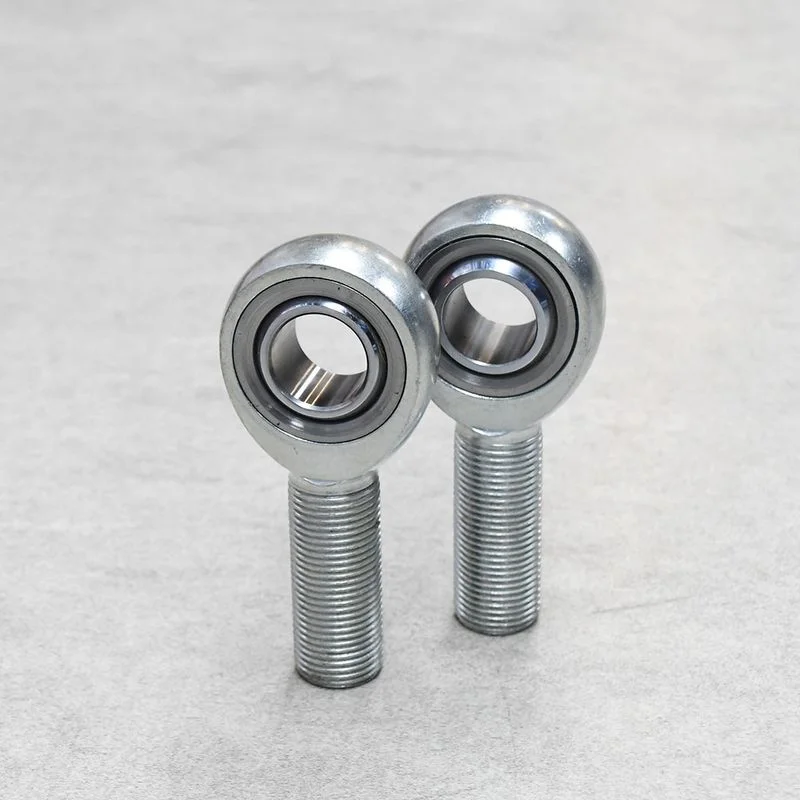
Stainless steel rod ends made specifically for marine and food-grade applications — excellent corrosion resistance, high stability, rust-free performance. Available with stainless or PTFE-lined races as a separate specification from the body material, in male and female with left- and right-hand thread throughout. Aluminium and titanium are available where weight matters more than cost.
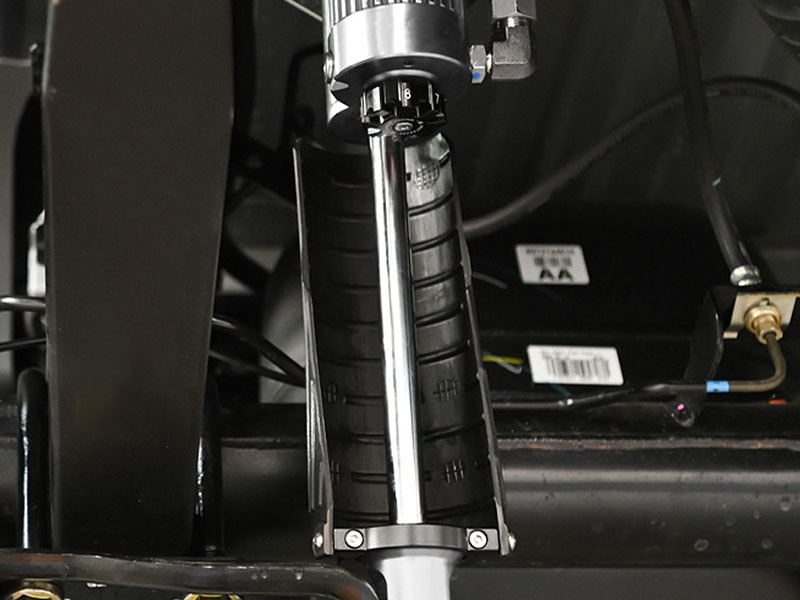
Stainless rods for wet-environment service, or 1045 and 4130 hard chromed to HV800–1200 at 15–30µm, finished to Ra ≤ 0.2µm with straightness inside 0.05mm. Surface finish is what decides seal life, and on a marine hydraulic or damper rod a rough chrome surface is a leak waiting to happen. Matching eyelets and mounts are made alongside.

Adjustable rods for throttle and control linkage, CNC-machined so the action stays smooth and repeatable instead of developing slack. Length, joint size and material are specified by you, and left- and right-hand thread at opposite ends lets the rod be adjusted in place rather than dismantled — which on a boat usually means in an awkward space.

Weld-in tube inserts, jam nuts, misalignment spacers and washers — the small hardware that turns a joint into an assembly. Easy to leave off a quote and awkward to source separately once the rest has shipped, so ask for it on the same line. Available in stainless where the assembly demands it.
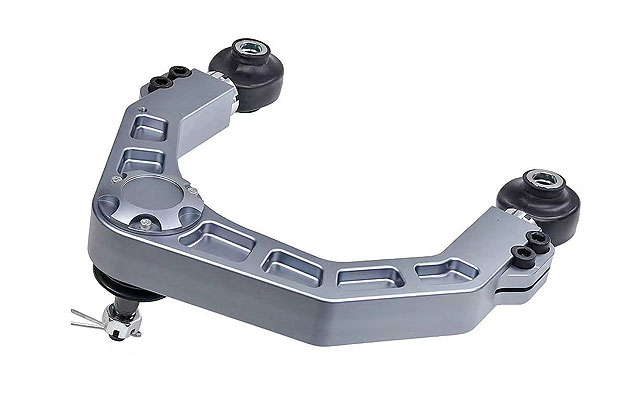
The part that no longer exists, or never did — a bracket, a bushing, a fitting for a refit where the original supplier is long gone. Send a drawing or the failed component and we machine it, with material, tolerance and surface treatment specified together. On marine work this is often the whole job rather than a sideline.
What to specify, and roughly when. Anything outside this is a custom job rather than a refusal — send the drawing and we will quote against it.
| Material | Properties | Typical Marine Use |
|---|---|---|
| 440C Stainless bearing grade | Heat treated; resists moisture, chemicals and saltwater exposure; precision-machined for smooth articulation | Spherical bearings and uniballs in constant immersion or heavy spray |
| Stainless Steel | Excellent corrosion resistance, high durability and stability, rust-free performance | Marine and food-grade rod ends, linkage, fittings, custom parts |
| Stainless Race | Corrosion-resistant, high durability under wet environments, stable performance | Inside a joint whose body is alloy — sheltered or intermittent exposure |
| PTFE / Teflon Liner | Self-lubricating, zero-maintenance, smooth articulation under load, anti-wear | Anti-seize anywhere the joint must keep moving after a season in salt |
| Titanium | Highest strength-to-weight ratio, excellent corrosion resistance, premium material | Weight-critical or high-value components where cost is secondary |
| Aluminium 6061 / 7075 | Lightweight, good corrosion resistance, anodised in multiple colours | Above-deck hardware and non-immersed brackets and fittings |
| Chromoly & 1045 + Hard Chrome | HV800–1200 at 15–30µm; Ra ≤ 0.2µm; straightness ≤ 0.05mm | Cylinder and damper rods where seal life depends on surface finish |
| Surface Treatments | Phosphate, zinc, black oxide, anodising, hard anodising | Sheltered locations only — a coating is a barrier, not a material property |
Two more specs worth deciding deliberately: misalignment angle, which determines whether a joint binds at the end of its travel; and which sizing system you are working in, because marine assemblies mix inch and metric more than almost any other category — metric vs. inch, and how to choose explains the trap.
Four things that decide whether a marine component is worth putting your brand on — and what we actually do about each.

We started in 1999 — since 1999 of precision manufacturing, trusted worldwide for quality and reliability. On marine work that experience shows up as knowing when full stainless is genuinely required and when it is an expensive way to solve a problem a liner would have solved.

Complete customisation from materials and finishes through to dimensions. On a yacht refit or a branded boat programme there usually is no catalogue part — there is a drawing, or a corroded component and a deadline. Both are a normal starting point here.

From 100-300 pieces per item per order, so you can test a component and scale it without a heavy initial commitment. Marine volumes are often smaller than automotive ones, which is exactly why a low minimum matters more in this category than in most.

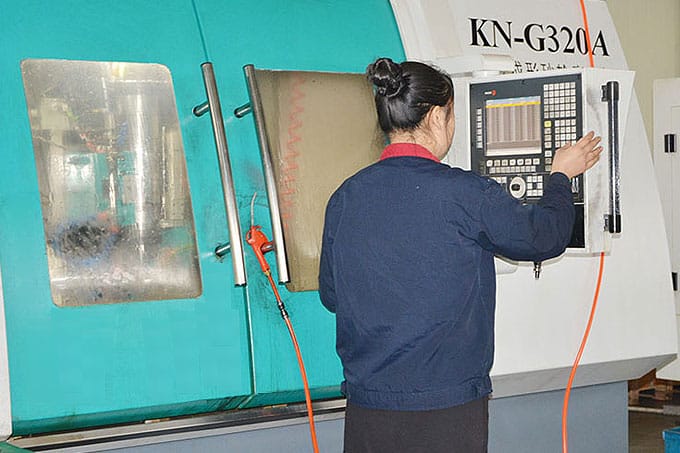
Our own factory plus about 30 qualified long-term partner workshops, mainly around Ningbo and Taizhou, help hold delivery dates on mixed orders instead of shipping the easy lines first. ISO 9001 certified, with RoHS 2.0 test report documentation and SGS test documentation available where required.
The commercial questions every buyer asks first, answered up front rather than after three emails.
Our minimum order quantity is 100-300 pieces per item. It flexes by line and by whether the part is catalogue or custom — tell us the component and target volume and we will give you a specific figure rather than a policy.
A 30% deposit with the 70% balance before shipment — flexible enough to work with while keeping supply stable at our end. Longer-term partners can discuss terms once there is an ordering history behind the account.
We support sample orders. For marine work you will need to provide a drawing or a physical sample for reference — the environment and the fit both matter too much to work from a description. Contact us for detailed arrangements and technical consultation.
Models, materials and surface finishes are all customised to your requirement. Send a drawing or the failed component and our engineering team works from that, with corrosion specification decided together based on where the part actually sits on the vessel.
Our factory is ISO 9001 certified. RoHS 2.0 test report documentation, SGS test documents, material certificates and dimensional reports are available when your project or downstream customer requires them.
We ship globally, and our logistics network delivers to your port or warehouse with export documentation prepared here. Packaging can be specified as neutral, branded or protective for long ocean transit.
Factory with a supply network: in-house production for what we machine ourselves, plus about 30 qualified long-term partner workshops for supplemental capacity, special processes and long-tail custom parts. That hybrid structure is what lets us hold consistent quality across a mixed order — and it means a technical question goes to the people who made the part rather than through a trading desk.
We manufacture and customise watercraft parts and accessories. Contact us for catalogues, technical support or a custom solution.
Send the drawing, the sample or the failed part, plus where on the vessel it sits. On marine work the exposure condition is as important a specification as the dimensions.
Our engineers confirm material, liner, thread and dimensions against the actual application, then send a specific quote within 24 hours — including where a cheaper specification would do the same job.
Sample approval, production under strict quality control, protective packaging for ocean transit and full export documentation. Before or after the sale, the same team stays on your account.
Request the watercraft parts catalogue and a factory quote — answered within 24 hours.
Feedback from the distributors, boat builders and dealers who order from us regularly.
“We have sourced watercraft parts from this factory for over three years. The quality is consistent, pricing is fair, and their low MOQ policy allows us to test new product lines without risk.”
“As a marine parts distributor, reliable supply is everything. Their combination of in-house production and qualified long-term partner workshops helps keep mixed marine orders moving. The ISO certifications give extra confidence to our clients.”
“We required customized linkage hardware and steering components for our branded fishing boats. The engineering team quickly understood our requirements and delivered perfectly matched parts. Excellent partner for OEM projects.”
“Timely delivery and strong packaging impressed us the most. Even after long-distance shipping, the watercraft parts arrived in perfect condition. We now include their products in our regular purchasing schedule.”
“Our market demands premium yacht and jet ski accessories. Their factory-direct supply chain offers both flexibility and reliability. The samples we received matched production quality exactly, which is rare in this industry.”
What distributors, builders and refit yards ask most often before opening an account.
We support custom machined components for yachts, personal watercraft, fishing boats and refit projects when the part can be specified by drawing, sample, dimensions and exposure environment. Vessel names such as Viking, Princess, Azimut, Benetti, Yamaha WaveRunner, Sea-Doo, Kawasaki Ultra, Boston Whaler and Carolina Skiff are application examples, not a fixed fitment catalogue. Send the part details and our team will confirm whether it is within our machining scope.
For constant immersion or heavy spray, full stainless construction — 440C heat-treated stainless in bearings, stainless steel bodies in rod ends, and a PTFE liner so the joint keeps articulating rather than seizing. For sheltered or intermittent exposure, a stainless race inside an alloy body with a good surface treatment usually does the job at noticeably lower cost. Titanium and aluminium are available where weight matters. Tell us where the part sits on the vessel and we will specify it properly.
Our minimum order quantity is 100-300 pieces per item, with 30/70 payment terms — 30% deposit and 70% balance before shipment. That keeps things flexible for buyers while keeping supply stable at our end, and it matters more in marine than in most categories because order volumes here tend to be smaller.
Yes — we ship worldwide. Our logistics network handles safe and timely delivery to your port or warehouse, with export documentation prepared here. Packaging can be specified as protective for long ocean transit rather than standard, which is worth asking for on machined surfaces.
Yes, and on marine work it is usually the better route. We customise models, materials and surface finishes to your requirement, working from a drawing or a physical sample. On a refit there often is no catalogue part — just a corroded component and a deadline — and that is a perfectly normal starting point here.
A factory, manufacturing since 1999, supported by 38 reliable external suppliers for the lines we do not machine ourselves. That hybrid structure is deliberate: it lets us hold consistent quality on what we make while still meeting a broader range of demand, and it means a technical question reaches the people who cut the metal.
Yes — our factory is ISO 9001 certified. RoHS 2.0 test report documentation, SGS assessment reports, material certificates and dimensional inspection records are available on request, so the evidence exists before a downstream customer asks for it.
Yes, we support sample orders. You will need to provide drawings or a physical sample for reference — on a corrosion-specified component, working from a description alone is how the wrong part gets made. Contact us directly for detailed arrangements and technical consultation.
Let’s build your solution together. We specialise in manufacturing and customising watercraft parts and accessories — contact us for product catalogues, technical support or a custom solution. Rm.701, No.23, Lane 466, YinDu Rd. SH, CN · 0086-21-34689886 · [email protected]