
A right-hand (RH) thread tightens clockwise and loosens counterclockwise — this is the standard used on the vast majority of bolts, nuts, and screws. A left-hand (LH) thread is the mirror image: it tightens counterclockwise and loosens clockwise. The two aren’t interchangeable — a right-hand nut will not thread onto a left-hand bolt, and forcing it will cross-thread and damage both parts.
How to Tell Them Apart by Eye
Hold the fastener upright with the head down. Look at how the ridge of the thread spirals up the shank:
- If it slopes upward to the right, it’s a right-hand thread.
- If it slopes upward to the left, it’s a left-hand thread.
A simpler version of the same test: rest the fastener between your thumb and index finger, head on your thumb, tip against your finger. If the visible thread runs diagonally up and to the right, it’s RH; up and to the left, it’s LH.
Because this visual check isn’t always obvious at a glance on a standard hex profile, manufacturers often mark left-hand parts explicitly — a letter “L” or “LH” stamped into the head, or a notch/groove cut into the flats of a hex nut or bolt head. On engineering drawings, a left-hand thread callout typically carries an “LH” suffix (M8×1.25LH, or 1/4-20 UNC-LH). Right-hand threads are almost never marked, precisely because they’re the default — if you don’t see a direction called out anywhere, assume right-hand.
Comparison Table
| Right-Hand Thread (RH) | Left-Hand Thread (LH) | |
|---|---|---|
| Tighten direction | Clockwise | Counterclockwise |
| Loosen direction | Counterclockwise | Clockwise |
| Thread slope (viewed upright) | Up and to the right | Up and to the left |
| Share of fasteners in general use | Vast majority (roughly nine in ten, depending on source) | Minority — specialty applications only |
| Typical marking | None (it’s the default) | “L”/”LH” stamp, or a groove/notch on the flats |
| Manufacturing cost | Standard tooling | Slightly higher — needs dedicated left-hand tooling |
| Interchangeable with the other hand? | No — threads will cross and fail to engage | No |
Why Left-Hand Thread Exists at All
Right-hand thread isn’t “better” — it’s simply the ergonomic default, because most people are right-handed and the wrist naturally rotates clockwise when tightening by hand. Left-hand thread exists for one specific reason: to prevent a fastener from loosening itself under a rotational force that would otherwise back out a right-hand thread. Common places you’ll actually run into it:
- The left pedal of a bicycle. Pedaling motion applies a slight rotational force to the pedal spindle. On a right-hand thread, that force would slowly unscrew the pedal over thousands of rotations; a left-hand thread tightens further instead.
- Propane and other compressed-gas fittings. Left-hand threads on flammable-gas connections are a deliberate safety design — they physically prevent a flammable-gas hose from being connected to a standard (right-hand) fitting meant for a different gas, catching a wrong connection before it happens rather than relying on a warning label.
- Rotating machinery and turbine components. Where the operating rotation direction would loosen a standard thread, the fastener is specified left-hand instead — grinder and circular-saw blade nuts follow the same logic.
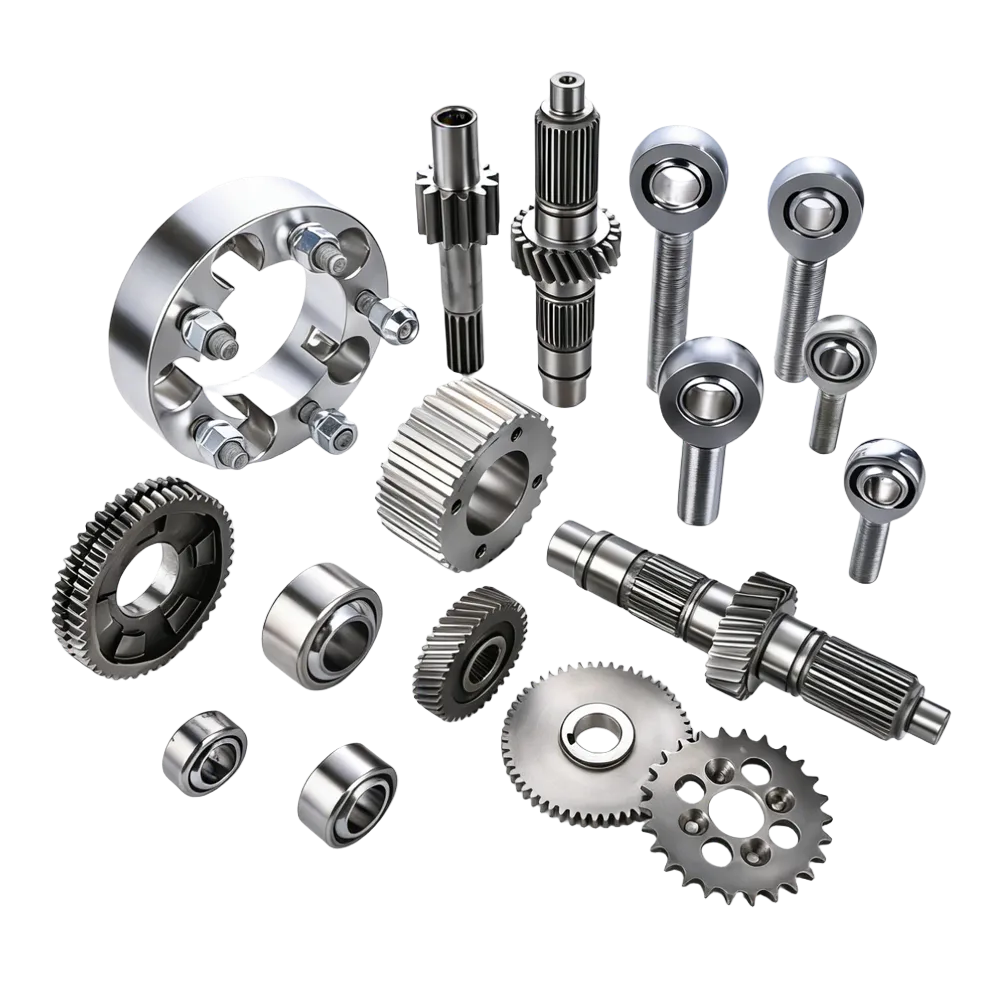
- Automotive tie rod ends and ball joints. Left-hand thread is used on one side of a steering linkage specifically to resist loosening from wheel rotation, and — on adjustable linkages — to let a single center sleeve lengthen or shorten both ends at once by turning it one way. (If you’re working on a tie rod’s jam nut specifically, our jam nut sizing and turning-direction guide covers that application in detail.)
What This Means in Practice
If you’re identifying an unmarked fastener, right-hand is the safe default assumption — check for a groove, notch, or “LH” stamp before assuming otherwise. If you’re specifying or ordering a left-hand part, always call out the direction explicitly (LH suffix on the thread spec) since it’s never assumed. And never try to force a mismatched pair together — if a nut won’t start onto a bolt by hand, verify both parts’ handedness before applying more torque.
Related reading: What Is Left-Hand Thread? · What Does Right-Hand Thread Mean? · Where to Buy Left-Hand Thread Nuts · What Is a Jam Nut on a Tie Rod End? · The Engineer’s Guide to RH and LH Threads (rod-end/suspension linkage application) · Using LH/RH Threads for Quick Linkage Adjustments