
No — a wheel spacer doesn't directly change camber, caster, or toe, the three angles a shop actually measures during an alignment. Those angles are set by your control arms, tie rods, and suspension mounting points, and a spacer doesn't touch any of them. What a spacer does change is scrub radius — where the tire's contact patch sits relative to the steering axis — which is a different concept that gets blamed for "alignment problems" more often than it should be.
What Actually Stays the Same
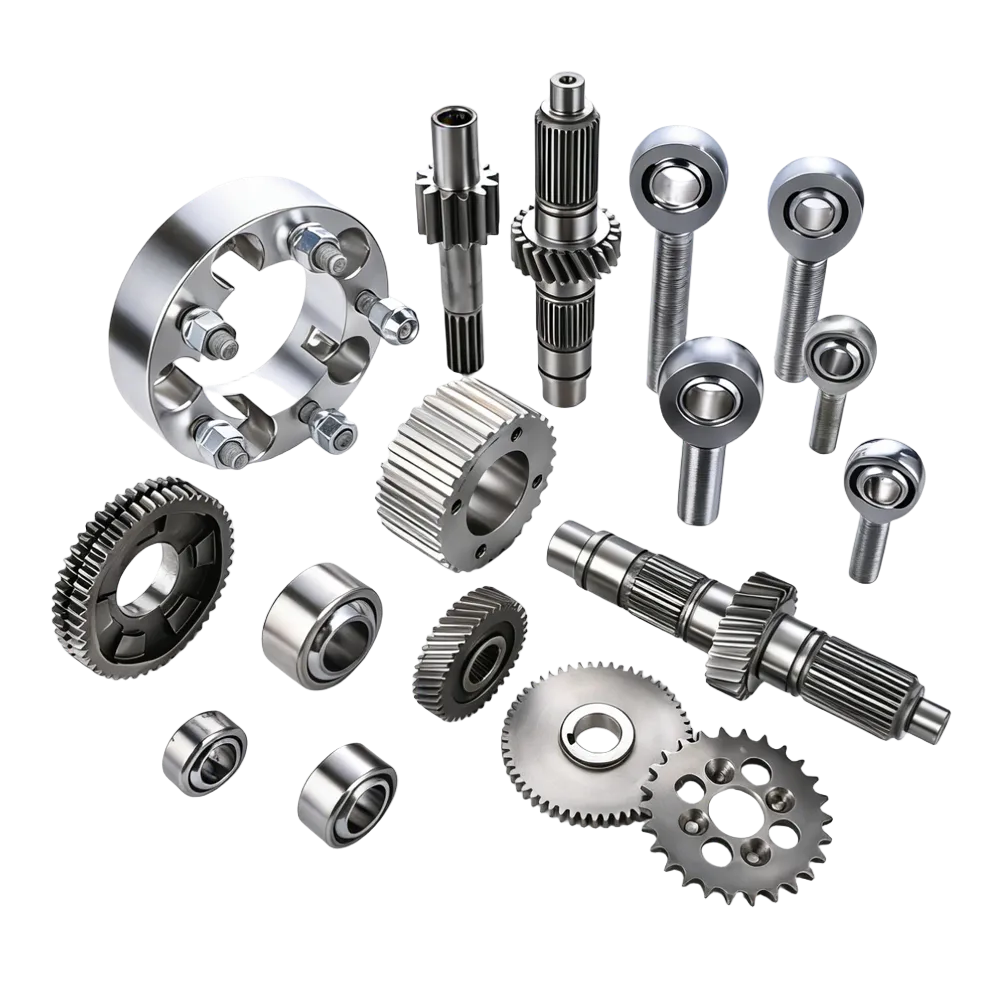
Camber (the tire's inward/outward tilt), caster (the steering axis's forward/backward lean), and toe (whether the tires point slightly in or out) are all set by suspension geometry — where control arms pivot, where tie rods connect, where the strut or spring mounts sit. A spacer is a flat spacer plate or block that sits between the hub and the wheel; it pushes the entire wheel assembly straight outward along the hub's axis. It doesn't move a single one of those mounting points, so it doesn't change any of the three angles an alignment rack measures.
What Actually Changes: Scrub Radius
Scrub radius is the horizontal distance, viewed from the front of the car, between where the steering axis (the line through your upper and lower ball joints, or strut mount) meets the ground and where the tire's contact patch center sits. Pushing the wheel outward with a spacer moves the contact patch further from that steering axis — which increases scrub radius, even though camber/caster/toe haven't moved at all.
You'll typically notice this as:
- Heavier steering effort, especially at low speed or when parking
- More kickback through the steering wheel over bumps and potholes
- A more noticeable "scrubbing" feel at the front tires during a tight, full-lock turn
None of that is an alignment problem in the sense a shop can fix by adjusting toe. It's a geometry change that comes from moving the wheel outward, and it's an inherent trade-off of running a spacer at all — not a sign something is broken.
When You Actually Do Need an Alignment Check
Spacers themselves don't require a fresh alignment. But a few situations that often come bundled with a spacer install do:
- You lifted or lowered the vehicle in the same round of work. Ride height changes shift control arm angles and can genuinely move camber and caster — that's the lift/lowering kit's effect, not the spacer's, but they often get installed together and the blame lands on the spacer.
- Suspension components were already worn before the spacer went on. Loose ball joints or torn bushings let camber/toe drift under load even without a spacer; adding leverage from a spacer can make an existing marginal component's play more noticeable.
- The vehicle pulls to one side, the steering wheel sits off-center, or tires are wearing unevenly. These are the actual symptoms that warrant an alignment check — not "I installed spacers" by itself.
The Symptom That Gets Misdiagnosed: Vibration, Not Alignment
The most common reason people think their alignment "got ruined" by spacers isn't scrub radius — it's vibration from a spacer that isn't centering correctly on the hub. A cheap or generic (lug-centric) spacer relies only on the lug nuts to hold the wheel centered, instead of using a machined lip that matches your hub bore exactly. That mismatch shows up as high-speed wheel wobble or a steering shake that feels a lot like "something's out of alignment" — but it's a centering problem at the hub-to-spacer-to-wheel interface, not a change in suspension angles. A shop can put the car on an alignment rack all day and find nothing wrong, because there's nothing wrong with the alignment — the fix is a properly hub-centric spacer correctly seated, not a toe adjustment.
If you're chasing this symptom, our guide to how wheel spacers actually work covers hub-centric fit in more depth, and it's the first thing worth checking before assuming your suspension needs work.
Quick Reference
| What people ask about | Does a spacer change it? |
|---|---|
| Camber | No |
| Caster | No |
| Toe | No |
| Scrub radius | Yes — increases with spacer thickness |
| Steering feel/kickback | Indirectly, via scrub radius |
| High-speed vibration | Only if the spacer isn't hub-centric or isn't seated correctly — not an alignment issue |
Related reading: What Does a Wheel Spacer Actually Do? · Are Wheel Spacers Safe? Thickness, 4×4 Trucks, and Why You Never Stack Two