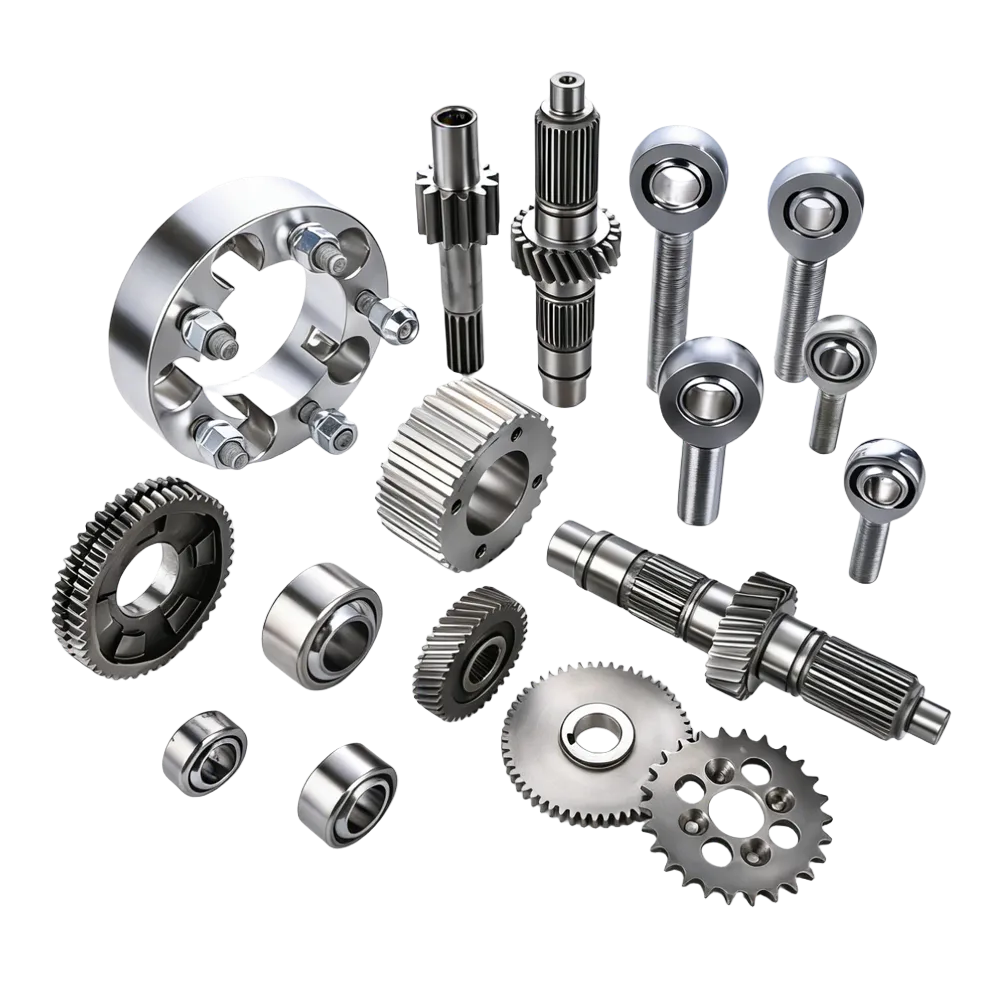

In most cases, yes, you technically can press out just the worn bushing and press a new one in without touching the rest of the part it’s mounted in. Whether you should comes down to three things looked at together, not one: the condition of the part the bushing sits in, the condition of whatever else is attached to it, and whether you actually have access to a press. Skip any one of those checks and the “cheaper” option can end up costing more.
The Three-Step Check
1. Is the component itself sound? A bushing housing that’s bent, cracked, or heavily corroded isn’t worth pressing a new bushing into — the housing is the thing that’s actually failing, and a new bushing won’t fix that.
2. Is everything else attached to it still good? Many components that carry a bushing also carry another wear part — most commonly a ball joint, on a control arm. If that other part is worn and isn’t separately serviceable, you’re replacing the whole assembly regardless of what you decide about the bushing.
3. Do you have access to a press? This isn’t a minor convenience — it’s the deciding factor for whether bushing-only is realistic at all. Pressing a bushing out and back in requires a hydraulic press or a proper press kit; without one, the “cheaper” bushing-only path usually isn’t actually cheaper once you account for a shop’s press-labor charge or the cost of tools you’ll use once.
If all three check out — sound housing, good attached parts, press access — replacing just the bushing is a reasonable call. If any one of them doesn’t, replacing the whole component is usually the more sensible path.
Why the Economics Favor “Whole Component” More Often Than You’d Expect
A standalone bushing is cheap — commonly $10–$40 for the part. A complete assembly with the bushing pre-installed costs more, often $50–$300+. On parts price alone, bushing-only wins every time. But parts price isn’t the full picture:
- Labor time flips the math. Pressing a bushing requires pulling the component off the vehicle, setting it up on a press, pressing the old one out, pressing the new one in, and reinstalling — meaningfully more labor than a bolt-on swap. For a real-world reference point: detroitaxle.com quotes pressing a new bushing into an existing control arm at $150–$350 per side (parts + labor combined), versus $250–$650 per side for a complete arm with the bushing already installed — a $100–$300 gap per side that can go either way depending on your specific shop’s labor rate and press setup. (Full cost breakdown, including other bushing locations: How Much Does It Cost to Replace Bushings?)
- A whole-component swap often solves a second problem at the same time. When the bushing housing also carries a wear part like a ball joint, buying the assembly gets you both new parts in one transaction and one labor charge — not just a new bushing sitting next to an old, soon-to-fail joint.
This Isn’t Just a Control Arm Question — But That’s Where the Evidence Is
The logic above — housing condition, attached-part condition, press access — applies to any press-fit bushing, not just the ones on control arms: subframe bushings, sway bar end-link bushings, and similar mounts all involve the same three-variable decision. Worth being upfront about the research behind this article, though: the real-world discussions this article draws on are almost entirely about control arm bushings specifically. That’s not a coincidence — control arm bushings are the most common place drivers actually run into this decision, since the housing (the arm) is expensive enough to make people stop and think, and it’s a design that frequently pairs the bushing with a ball joint. Other bushing locations tend to be either cheap enough that nobody weighs the decision this carefully, or non-serviceable by design (no bushing-only option exists).
For Control Arm Bushings Specifically
If your situation is a control arm — which, per the research behind this article, is the case for most people asking this question — the Custom Control Arms hub has a dedicated, more detailed breakdown built specifically around control arm bushings and ball joints, including a fuller comparison table of tools, cost, and DIY difficulty for that exact scenario: Should You Replace Just the Control Arm Bushing, or the Whole Arm?
SYZ Machine supplies both standalone bushings and complete control arm assemblies, so whichever path the check above points you toward, both are sourceable from the same place.
The Decision, Simplified
- Sound housing + good attached parts + press access → replace just the bushing.
- Damaged housing, or a worn attached part that isn’t separately serviceable, or no press access → replace the whole component.
Whichever you choose, budget for a wheel alignment afterward — removing and reinstalling the mounting component shifts suspension geometry either way. Not found in research: verified evidence of this same decision playing out for non-control-arm bushing locations — the three-step logic is a reasonable extension of what the sources do show, but it’s not independently confirmed for, say, sway bar end links the way it is for control arms.
Related reading: How Much Does It Cost to Replace Bushings? · How to Remove, Press, and Install Bushings Yourself · Cross-hub: Should You Replace Just the Control Arm Bushing, or the Whole Arm? (Custom Control Arms hub)