No, they're not the same part, even though they look similar and get called by each other's names constantly. A wheel spacer keeps your vehicle's original bolt pattern and simply pushes the wheel outward. A wheel adapter changes the bolt pattern — it lets you mount a wheel whose lug holes don't match your vehicle's hub at all. Both happen to push the wheel outward as a side effect, which is exactly why the two get confused.
The One Question That Tells You Which One You Need
Does the wheel you're trying to mount have the same bolt pattern as your vehicle?
- Yes, same bolt pattern, you just want it pushed out → spacer.
- No, different bolt pattern, it physically won't bolt up as-is → adapter. A spacer can't fix this; the lug holes on the wheel don't line up with your studs at all, regardless of thickness.
A concrete example: converting a hub with a 5×114.3 bolt pattern to accept a wheel drilled for 5×120 requires an adapter — a wheel bolted for 5×120 simply has no way to seat on 5×114.3 studs, no matter what you put between them. A spacer only works when the pattern already matches and you just want distance.
Why They Get Confused
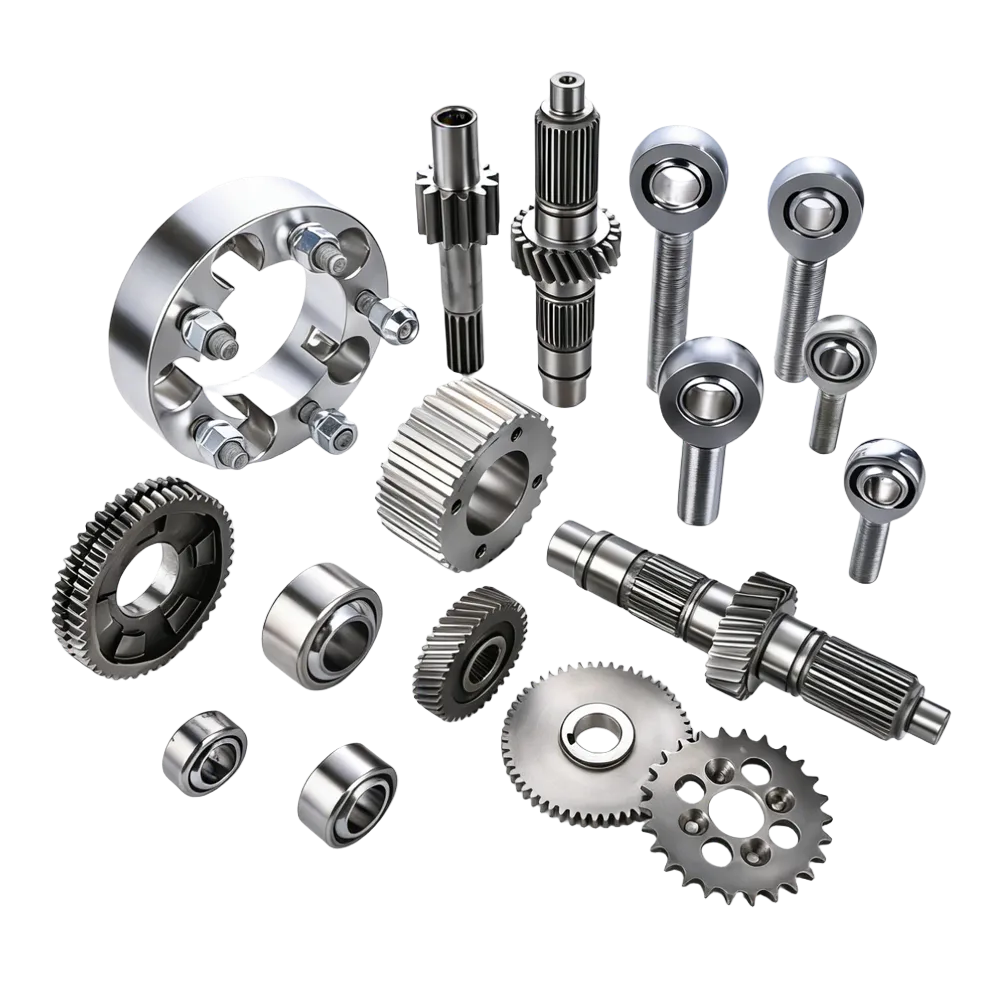
Structurally, an adapter and a thick bolt-on spacer look almost identical: both bolt to your factory hub using the factory bolt pattern, and both carry their own independent set of studs for the wheel to mount to. The difference is entirely in what that new set of studs is drilled to. On a bolt-on spacer, the new studs repeat your factory bolt pattern. On an adapter, the new studs are drilled to a different pattern — that's the part doing the actual "adapting."
Because the physical shape and installation process are so close, retailers and forum posts routinely use "spacer" and "adapter" interchangeably, or write "wheel spacer adapter" as a catch-all term. That's a naming habit, not a technical distinction — when you're actually buying one, the product spec sheet's bolt pattern field is what tells you which one you're looking at, not the word in the listing title.
Side-by-Side
| Wheel Spacer | Wheel Adapter | |
|---|---|---|
| Primary function | Increases track width / clearance | Changes bolt pattern to fit different wheels |
| Bolt pattern | Same as your vehicle | Different from your vehicle |
| Structure | Can be slip-on (thin) or bolt-on (thick) | Almost always bolt-on — it needs a second, independent stud pattern |
| Typical thickness | 3mm–25mm+ | Usually thicker, 15mm–50mm+, to house both stud sets |
| Use case | Wider stance, brake/suspension clearance, minor offset correction | Mounting wheels designed for a different vehicle's bolt pattern |
What This Means When You're Shopping
If a wheel you already own or want to buy is drilled for a bolt pattern your vehicle doesn't have, that's an adapter question, not a spacer question — no amount of spacer thickness changes a mismatched bolt circle. If your existing wheels already fit and you just want them pushed out for stance or clearance, you're shopping for a spacer, and the thickness (not the bolt pattern) is what you need to nail down — see our guide to choosing wheel spacer thickness for that measurement.
Either way, hub-centric fit still matters — an adapter with an imprecise center bore causes the same high-speed vibration problems as a non-hub-centric spacer does, for the same reason: the wheel isn't centering on the hub, it's relying on the studs to hold position.
Related reading: Why Do You Need Wheel Spacers? · How to Choose Wheel Spacer Size Correctly · Wheel Spacer Types: Bolt-On, Slip-On, and Hub-Centric