A bad sway bar link makes a sharp clunk, knock, or rattle — a distinct metal-on-metal sound, not a hum, squeal, or grinding noise. It shows up almost exclusively over bumps and uneven pavement at low speed, not during smooth, straight highway driving. That last part is a useful negative signal: if your noise happens at constant highway speed on smooth pavement, it's probably not a sway bar link.
What It Actually Sounds Like
Sources describing this symptom converge on the same small set of words: clunk, knock, thunk, rattle. It's a hard, metallic sound rather than a soft or rubbery one — the noise comes from the small ball joint or bushing at each end of the link developing enough internal play that its components can knock against each other as the suspension moves.
When You'll Hear It
- Driving over speed bumps, potholes, or rough pavement, particularly at low speed where the suspension is compressing and extending noticeably.
- One wheel dropping into a dip or crossing an obstacle while the other wheel stays relatively level — this is when the link is under the most differential motion, so it's often the clearest trigger.
- Slow, sharp turns — pulling into a driveway, crossing a curb cut, or turning the wheel back and forth at low speed in a parking lot.
What you generally won't hear it doing: making noise on a smooth, straight road at steady speed. If your noise is constant rather than bump-triggered, look elsewhere before assuming it's the link.
Why It Makes That Sound
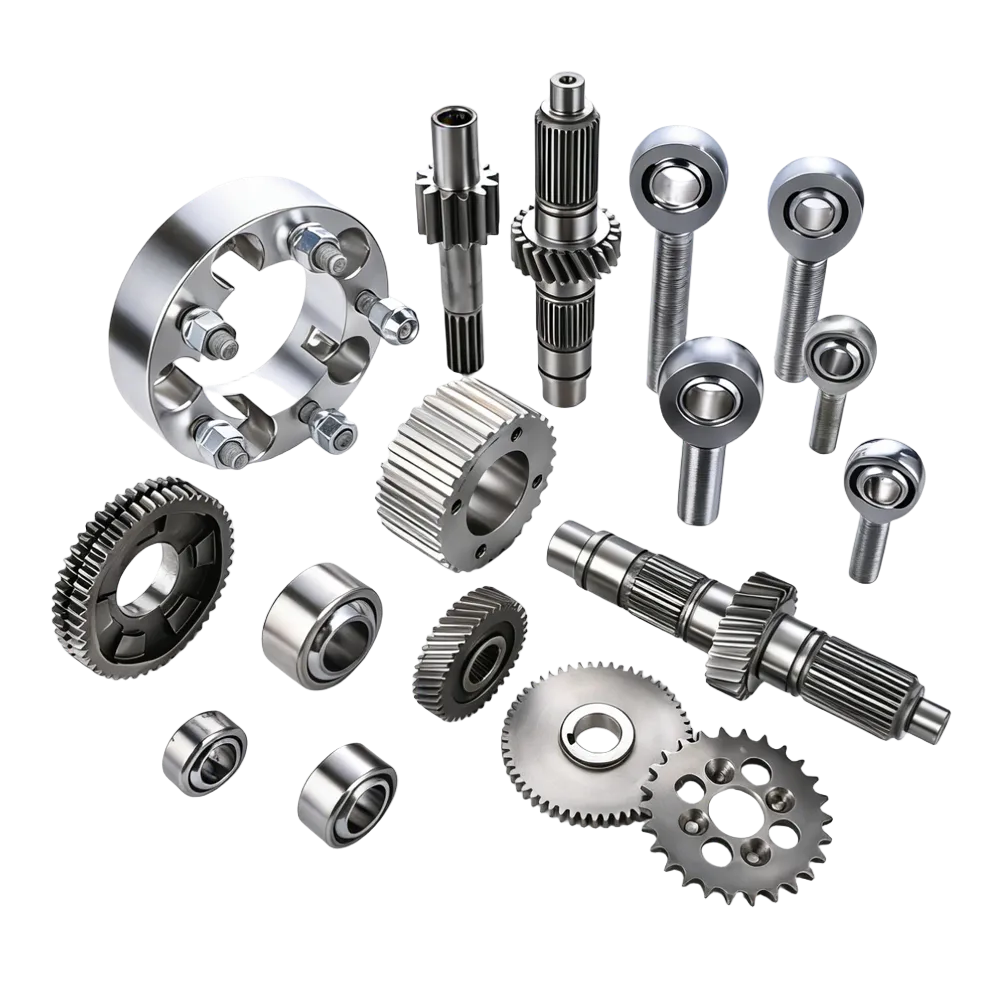
Each end of a sway bar link has a joint — either a small ball-and-socket sealed under a rubber boot, or a rubber/polyurethane bushing — that lets the link pivot slightly every time the suspension moves. As the boot cracks or the bushing wears, the joint develops play: a small gap the internal parts can move through before contacting each other again. Every time the suspension compresses or rebounds, that gap lets metal (or metal-against-bushing) components knock together, and that impact is the sound you hear. It's the same basic wear mechanism described in the full symptom guide — see What Are the Symptoms of a Bad, Worn, or Broken Sway Bar Link? for the complete picture including handling and visual signs, which this article intentionally doesn't repeat.
Telling Sway Bar Link Noise Apart From Other Suspension Noises
This is the part that actually helps you self-diagnose, since several worn components produce similar-sounding clunks:
| Component | Typical sound | Distinguishing detail |
|---|---|---|
| Sway bar link | Sharp clunk / knock / rattle | Bump-triggered, low speed, often traceable to one corner |
| Sway bar bushing (the center mount, not the link) | Duller thump, or a squeak/creak | Less sharp than a link clunk; sometimes accompanies the link symptom rather than replacing it |
| Strut or shock | More of a thud, often paired with poor damping (excess bounce after a bump) | Not usually a sharp metallic clunk on its own |
| Ball joint or tie rod end | Can also clunk | Usually comes with other symptoms — looser steering, wandering, uneven tire wear — that a sway bar link alone doesn't cause |
If the noise is accompanied by the car pulling to one side, vague/wandering steering at speed, or a grinding or humming sound, treat those as signs to look beyond the sway bar link — those point toward tie rods, ball joints, or wheel bearings instead.
A Basic Self-Check
Confirming this by ear alone isn't always reliable, since several components can produce a similar clunk. Two things narrow it down without a full inspection:
- Listen for the trigger pattern. Bump-specific and low-speed-turn-specific noise supports a sway bar link; noise that's constant or speed-dependent (worse the faster you go) usually points elsewhere.
- Have someone watch the link's mounting points while you turn the wheel. With the vehicle safely lifted and the engine off (key on if you need power steering assist), have a second person slowly turn the wheel while you watch the link at both ends — visible movement confirms it.
A full hands-on inspection — grabbing and shaking the link, checking the boot, checking for play — is covered along with the rest of the visual/tactile symptoms in What Are the Symptoms of a Bad, Worn, or Broken Sway Bar Link?.
Related reading: What Are the Symptoms of a Bad, Worn, or Broken Sway Bar Link? · What Is a Sway Bar Link and What Does It Do? · How Urgent Is It to Fix a Bad Sway Bar Link?