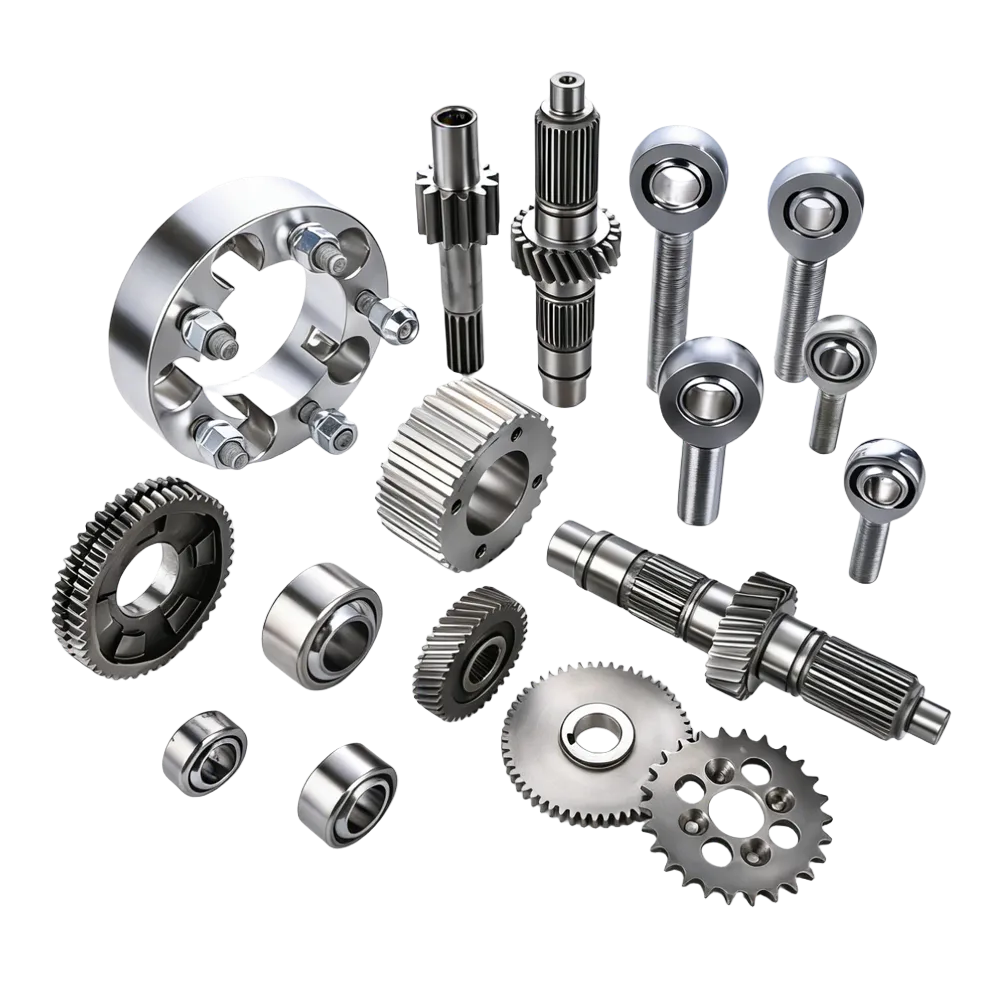

A bad sway bar link shows up in three ways: a clunking or knocking noise over bumps, more body lean and looser steering feel in turns, and — if you look — visible play, a torn dust boot, or corrosion at the joint. Any one of these on its own is worth a closer look; two or more together is a strong sign the link needs replacing.
Noise: The Symptom Most People Notice First
The most common early sign is a clunk, knock, or rattle from the suspension, almost always tied to a specific trigger rather than being constant:
- Driving over speed bumps, potholes, or uneven pavement, especially at low speed
- One wheel dropping into a dip or rolling over an obstacle while the other stays level
- Slow, sharp turns — pulling into a driveway, crossing a curb cut
The noise happens because the ball joint or bushing at each end of the link has worn enough to develop play — a small gap the metal (or metal-and-bushing) components can move through before they're loaded again, and that movement is what you hear as a knock. This symptom is common enough, and specific enough, that it gets its own deeper breakdown — see What Noise Does a Bad Sway Bar Link Make? if this is the symptom you're trying to confirm.
Handling: What Changes When the Link Stops Doing Its Job
- More body roll in turns. The vehicle leans more than it used to when cornering, especially noticeable on highway on/off-ramps or during a quick lane change.
- Looser or less precise steering feel. The car can feel slightly vague or slow to respond when you turn in, without there being an obvious cause like low tire pressure.
- A generally "unsettled" feeling over rough roads. The suspension seems to take longer to calm down after a bump or a quick direction change.
These handling changes happen because the sway bar link's job is to let the sway bar resist body lean (see What Is a Sway Bar Link and What Does It Do? for the full mechanism) — once the link has play or has failed, the sway bar can't fully do that job on that side.
Visual and Hands-On Signs
If you're inspecting the vehicle directly (or asking a shop what they found), these are the things a bad link shows physically:
| What to check | Sign of a problem |
|---|---|
| Rubber dust boot at each end of the link | Torn, cracked, or missing — lets grease out and dirt/water in |
| Link rod itself | Visible rust, corrosion, or a bent/deformed rod |
| Play at the joint | With the wheel off the ground, grab the link by hand and try to move it — noticeable side-to-side or rotational play means it's worn |
| Mounting hardware | Loose, missing, or heavily corroded bolts at either end |
A Lower-Frequency, Secondary Sign
Uneven tire wear shows up in some sources as a symptom of a bad sway bar link, but it's an indirect effect — the link isn't a tire-contact component, so this sign is weaker and slower to develop than the noise and handling symptoms above. Don't wait for tire wear to confirm a diagnosis; treat it as a secondary confirming detail at most, not a primary one.
Telling It Apart From Other Suspension Noises
Sway bar link symptoms overlap with several other worn parts, so a few quick distinctions help before you assume it's the link:
- Noise mainly over bumps, no pulling or wandering → sway bar link is a common suspect.
- Clunk specifically under braking or acceleration → more likely control arm bushings, ball joints, or engine/motor mounts, not the sway bar link.
- Grinding, vibration, or a wheel that feels loose when rocked → look at wheel bearings or CV joints instead; these aren't sway bar link symptoms.
If you're not sure which of these you're hearing, or you want a deeper walkthrough specifically on the clunking-noise symptom, see What Noise Does a Bad Sway Bar Link Make?.
What This Means for Timing
A worn sway bar link is rarely a "stop driving now" problem — see How Urgent Is It to Fix a Bad Sway Bar Link? for how to think about the actual repair timeline once you've confirmed one or more of these symptoms. If you're trying to figure out whether your links are simply at the end of a normal service life or failed early, What Is the Average Lifespan of a Sway Bar Link? covers the typical mileage range and what shortens it.
Related reading: What Is a Sway Bar Link and What Does It Do? · What Noise Does a Bad Sway Bar Link Make? · How Urgent Is It to Fix a Bad Sway Bar Link? · What Is the Average Lifespan of a Sway Bar Link? · What Happens If a Sway Bar Link Breaks While Driving?