
A ball joint exists to solve one specific engineering conflict: a wheel needs to pivot for steering and travel up and down with the suspension, while still staying rigidly connected to the vehicle so it can carry load and transmit force. A single fixed pin can't do both — it would either bind under load or wear out fast under constant multi-directional motion. The ball-and-socket shape solves it in one part.
Why Not Just Use a Fixed Pin?
A rigid pin connection (like a hinge) only pivots cleanly around one axis. Steering and suspension movement happen around two axes at once — turning left/right and moving up/down — plus the joint has to keep taking the vehicle's weight and road impact loads the whole time. MOOG's own description of the part frames the purpose in terms of the outcome, not just the mechanism: allowing suspension movement "maximizes the tire's contact with the road, providing optimum vehicle control and tire wear." The ball-and-socket geometry is what makes that possible without the connection point itself becoming the weak link.
It's Not the Only Way to Connect a Wheel to a Control Arm
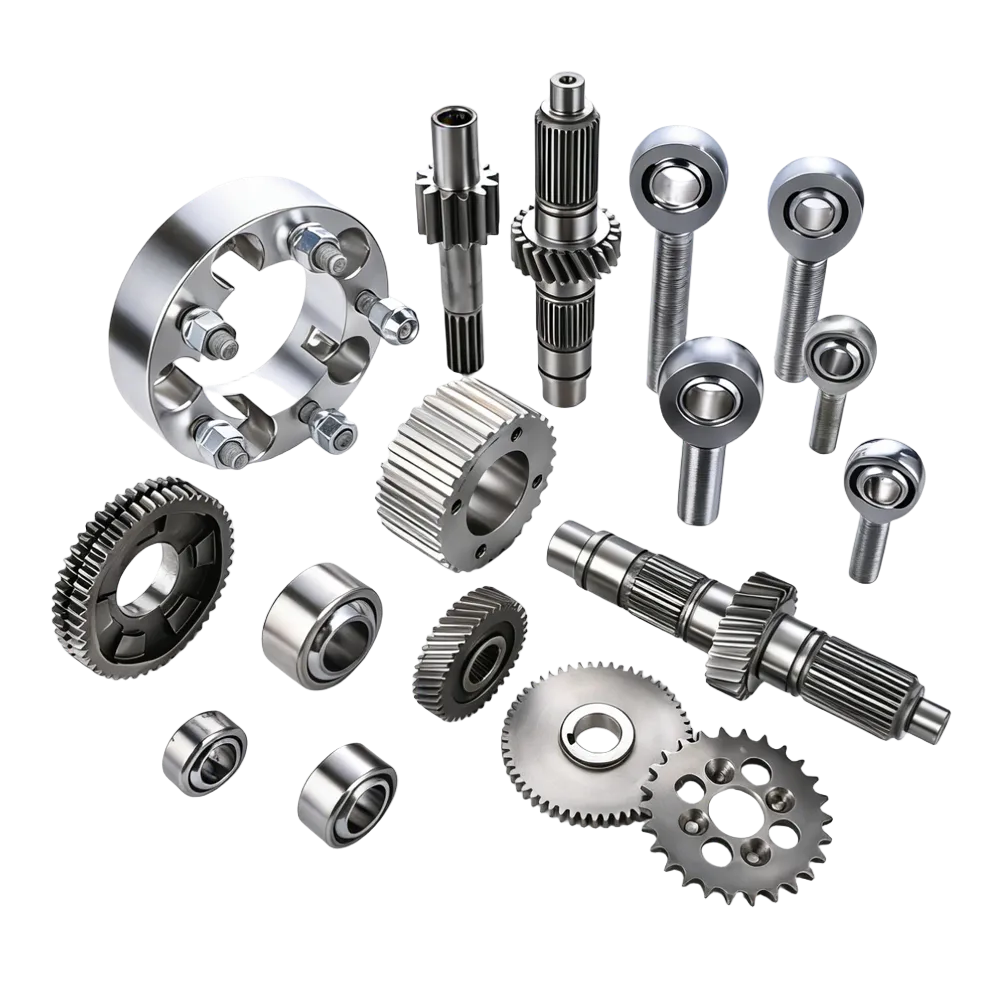
Other suspension joints — heim joints, bushings — solve a related positioning problem with different trade-offs in tolerance, service life, and how much noise or play they develop over time. That comparison is its own topic; the point here is narrower: within a standard OEM/aftermarket ball joint, this is the specific job the part is doing.
Related reading: What Is a Ball Joint on a Car? (full definition and structure) · What Is the Function of the Ball Joint? (how it actually moves)