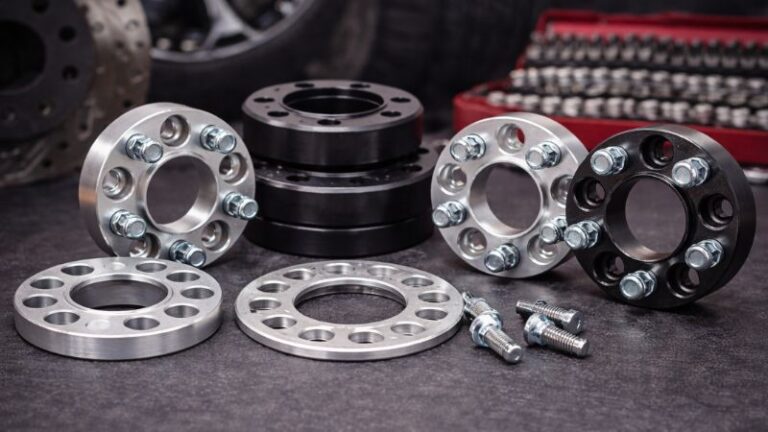
I saw a forum post that really drives the point home: someone bought a set of “aerospace aluminum” wheel spacers, and after six months pulled them off to find white powdery corrosion all over the surface. Worse, there were obvious galvanic corrosion marks around the bolt holes. The culprit? Bare aluminum with zero surface treatment. This case highlights something many people overlook—even with premium materials, inadequate surface finishing tanks both lifespan and safety.
Why Surface Treatment Is Mission-Critical
Aluminum alloys have a natural trait: they form an extremely thin oxide layer (about 2-3 nanometers) to protect the underlying metal. But this natural oxide layer’s protective capacity is severely limited—under the assault of salt spray, de-icing chemicals, and high-temp brake dust, this protective film breaks down fast. Once corrosion starts, aluminum strength drops rapidly.
From real-world cases, untreated aluminum wheel spacers in coastal regions or northern areas with heavy de-icing salt use might not last two years. But the same product with proper surface treatment? Still performing well at 5-8 years. That’s the value of surface treatment—it’s not about aesthetics, it’s structural safety insurance.
Beyond corrosion resistance, surface treatment affects other performance metrics. Take hardness: after hard anodizing, aluminum surface hardness can hit HV400-600 (Vickers hardness), approaching some tool steels. That means better scratch resistance, a clear advantage when you’re frequently mounting and dismounting tires.
The market has three mainstream surface treatments: hard anodizing, powder coating, and Dacromet treatment. Each has its own use cases and cost implications. Choose wrong, and you either waste money or leave safety gaps.
Hard Anodizing - The Science of Premium Solutions
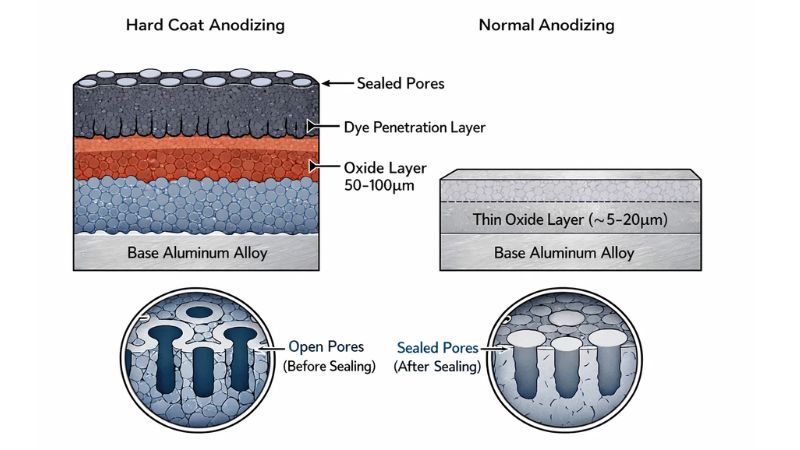
Anodizing is an electrochemical process that places aluminum alloy as the anode in an electrolyte solution, growing a controllable-thickness oxide layer on the surface. This layer isn’t “coated” on—it literally “grows” from the aluminum base. That’s the fundamental difference from coatings.
Normal Anodizing vs Hard Anodizing
Normal anodizing (Type II) creates an oxide layer about 5-25 micrometers thick, mainly for decoration and light protection. Hard coat anodizing (Hard Coat Anodizing / Type III) is a completely different animal:
- Oxide layer thickness: 50-100 micrometers (4-10x thicker than normal)
- Surface hardness: HV400-600 (normal anodizing only HV200-300)
- Corrosion resistance: Neutral salt spray tests exceed 1000 hours (normal anodizing ~300 hours)
- Wear resistance: 10-20x better than untreated aluminum
The process difference lies in current density and electrolyte formula. Hard anodizing uses higher current density and low-temperature electrolyte (typically 0-5°C), making the oxide layer grow denser and thicker. Cost goes up accordingly—same-spec spacers with hard anodizing cost 30-50% more than normal anodizing.
The Black Hard Anodizing Advantage
The black surface you see on premium wheel spacers typically uses black hard anodizing. This process, after oxide layer formation, uses dye penetration and sealing to “lock” color inside the oxide layer. So it won’t peel or fade like paint.
From professional wheel spacer factory practice, black hard anodizing isn’t just about looks—there’s a functional edge: black hard anodized layers have excellent radiant heat dissipation efficiency, helping spacers shed heat faster under heavy braking loads, reducing the risk of heat-induced material softening. For performance car owners and aggressive drivers, that’s a real benefit.
Hard Anodizing Limitations and Design Considerations
It’s not perfect. First, it only works on aluminum—steel can’t be anodized. Second, if the oxide layer gets seriously scratched or chipped, the exposed aluminum base will still corrode—though the oxide layer itself won’t peel off in sheets like coatings do.
There’s also a professional detail worth noting: hard anodizing layers have thickness (usually bidirectional growth—half penetrates the base, half grows outward). Quality spacers account for this tolerance at the design stage, ensuring that after treatment, center bore and PCD hole dimensional accuracy remains within ±0.02mm tolerance. This demonstrates coordinated control of CNC precision and surface treatment.
Cost-wise, surface treatment for a 4-piece hard anodized wheel spacer set accounts for about 15-20% of total cost. That’s why budget products rarely use this process.
Powder Coating - The Practical Durable Choice
Powder coating works on a completely different principle: it’s a physical covering layer, not a chemically generated one. Dry powder particles electrostatically adhere to the metal surface, then melt and cure into a uniform coating in a high-temperature oven.
Performance Comparison
According to an industry test data, powder coating actually beats anodizing in some aspects:
- Impact resistance: Powder coating has some elasticity, with better impact resistance than hard but brittle anodized layers
- Coating thickness: Typically 100-150 micrometers, thicker than hard anodizing
- Chemical resistance: Better resistance to brake fluid, gasoline, and other chemicals
- Salt spray testing: Quality powder coating can hit 1000-1500 hours
But powder coating has obvious weaknesses: it’s a covering layer, not an integrated layer, so delamination risk exists. If coating gets punctured by rocks or scratched, moisture seeps in along the breach, causing under-coating corrosion (commonly called “bubbling”). Anodized layers, growing from the base, don’t have delamination issues.
There’s also a hidden risk: coating non-uniformity. If powder coating sprays unevenly, it can cause the spacer mating surface flatness to exceed tolerance. Even just 0.1mm error can trigger dynamic balance vibration at high speeds. That’s why top products usually re-grind installation contact surfaces or use anodizing to guarantee physical plane contact precision.
Application Advantages
Powder coating’s big advantage is nearly unlimited color choice. Want red, blue, gold, or even rainbow wheel spacers? Powder coating delivers easily. Anodizing, limited by electrochemical principles, has relatively restricted color options (mainly black, gray, gold, blue).
Cost-wise, powder coating equipment investment runs high, but per-unit cost is 15-25% lower than hard anodizing. This makes it popular in the mid-market—decent protective performance at a lower price than hard anodizing.
From a durability standpoint, powder coating excels in dry and mild climates, but in extreme corrosion environments (coastal or heavy de-icing salt zones), hard anodizing’s long-term performance proves more stable.
📊 Surface Treatment Quick Reference
- Hard anodizing: Best corrosion resistance, won’t delaminate, high cost
- Powder coating: Good value, rich colors, delamination risk
- Normal anodizing: Strong decorative appeal, moderate protection, moderate cost
- No treatment: Indoor display only, real-world use guarantees corrosion
Other Treatments and The Bare Aluminum Truth
Dacromet Treatment - The Bolt's Best Partner
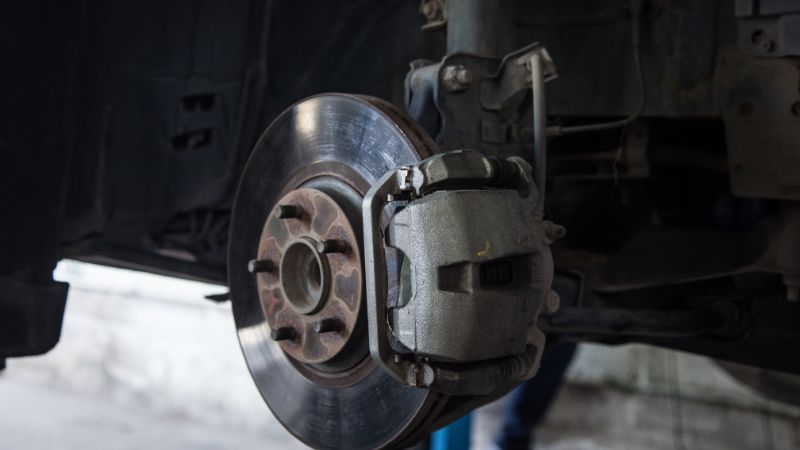
Many focus on spacer body surface treatment while ignoring the matching bolts and nuts. In reality, these fasteners face even harsher corrosion pressure—they’re directly exposed inside the hub, where mud, salt, and brake dust concentrate.
Dacromet is a corrosion protection coating specifically for fasteners, with aluminum flakes, zinc powder, and chromic acid as main components. Its unique advantages:
- No hydrogen embrittlement: Traditional electroplating causes hydrogen embrittlement in high-strength bolts; Dacromet completely avoids this
- Superior corrosion protection: Salt spray testing hits 500-1000 hours, 7-10x traditional galvanizing
- High-temp tolerance: Sustains temperatures above 300°C (brake disc vicinity often exceeds 200°C)
- Good penetration: Penetrates threads and gaps for all-around protection
That’s why premium wheel spacers specifically emphasize “Dacromet bolts”—it’s a critical link in the complete system’s corrosion protection chain.
Bare Aluminum's Real-World Performance
Theoretically, 6061-T6 and 7075-T6 aluminum’s natural oxide layers provide basic protection. In dry, pollution-free environments, bare aluminum can function. But in reality, such ideal conditions barely exist.
From long-term user feedback, bare aluminum wheel spacers rapidly degrade in these environments:
- Coastal regions: Obvious white corrosion products appear in 6 months
- De-icing salt zones: Surface roughness noticeably increases after one winter
- Industrial pollution areas: Acid rain accelerates oxide layer breakdown
More dangerously, aluminum in direct contact with steel (like hubs, bolts) triggers galvanic corrosion. Bare aluminum spacers and steel bolts form a galvanic cell, with aluminum as the anode accelerating corrosion. That’s why professional manufacturers never recommend bare aluminum products.
The only reasonable bare aluminum scenario: indoor show cars or very low-use vehicles in completely dry climates. Even then, most professionals still recommend at least normal anodizing—limited cost increase, but massive safety factor boost.
Choosing Your Ideal Surface Treatment
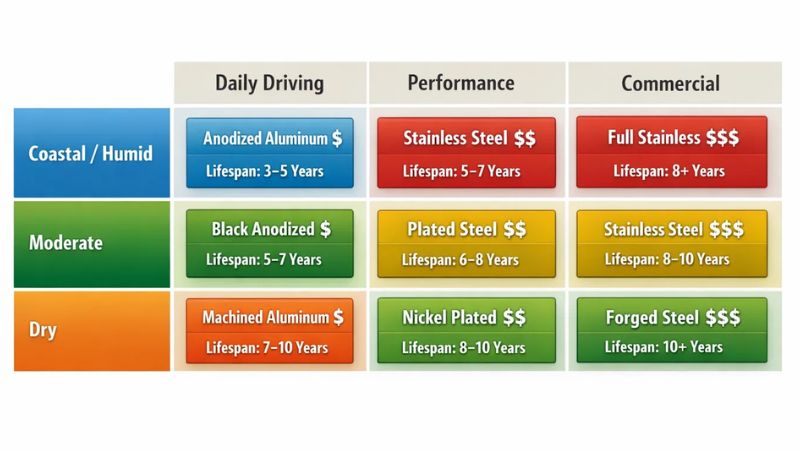
By Climate Environment
In mild, dry inland regions (like the US Southwest, Australian interior), powder coating is the optimal value proposition. Its protective capacity suffices, costs 15-25% less than hard anodizing, and offers richer color choices.
In coastal, high-humidity, or heavy de-icing salt regions, hard anodizing is the safer bet. Though initial investment runs higher, over a 5-8 year service life, its corrosion resistance clearly beats powder coating. From a long-term cost perspective, avoiding premature replacement actually saves money.
Cold regions have another special consideration: at low temps powder coating may become brittle, reducing impact resistance. Anodized layers maintain stable performance at low temperatures. In Canadian and Nordic user groups, hard anodizing penetration runs noticeably higher than in warmer regions—that’s no accident.
By Usage Intensity
Daily commuter cars, traveling 10-15k km annually, tire replacement every 2-3 years. At this usage intensity, normal anodizing or even quality powder coating suffices. Choosing hard anodizing is icing on the cake, not necessity.
Track day regulars, serious off-road enthusiasts, frequently mounting/dismounting tires, constantly facing extreme conditions. In this scenario hard anodizing’s advantages shine: stronger wear resistance means the surface treatment layer withstands more install cycles and impacts without premature failure.
Commercial vehicles and heavy pickups—if using steel spacers, powder coating is the better choice (since steel can’t be anodized). Quality powder coating with regular inspection can guarantee 3-5 year service life.
Cost-Benefit Analysis
Using a 4-piece 20mm wheel spacer set as example, different surface treatments’ pricing and expected lifespan:
| Surface Finish | Additional Cost | Typical Life (Street) | Typical Life (Track) | Notes |
|---|---|---|---|---|
| Basic choice | +$20-30 | 3-4 years | 5-6 years | Basic choice |
| Powder coating | +$30-40 | 4-5 years | 6-8 years | High value |
| Hard anodizing | +$50-70 | 7-10 years | 10+ years | Long-term optimal |
From a total lifecycle cost perspective, hard anodizing costs an extra $50-70 upfront but can last 7-10 years in coastal regions. Meanwhile bare aluminum or normal anodizing might need replacement in 2-4 years, with cumulative costs actually running higher—not even counting labor and downtime during replacement.
That’s why professional racing teams and heavy users universally choose hard anodizing: they’re calculating total cost, not single purchase price.
Quality Identification and Daily Maintenance
How to Identify Real vs Fake Hard Anodizing
Some market products claim “hard anodizing” but are actually just normal anodizing or even paint. Identification methods:
- Hardness test: True hard anodizing—scrape hard with a key, only leaves light marks; normal anodizing or coatings show obvious scratches
- Color uniformity: Hard anodizing color penetrates the oxide layer, so even edge chamfers show uniform black; paint or poor treatments reveal base color at corners
- Weight change: Anodizing slightly increases weight (the oxide layer itself has mass), while coatings add more noticeable weight
Daily Maintenance Recommendations
Even hard anodized wheel spacers benefit from inspection every 6 months or 10,000 km:
Clean: Use neutral cleanser and soft brush to remove brake dust and salt residue
Inspect: Focus on bolt holes and contact surfaces for abnormal wear or corrosion signs
Torque: Re-torque bolts to spec (typically 80-140 Nm)
Protect: Never apply grease to bolt threads or spacer-to-hub friction surfaces—grease reduces friction coefficient, causing abnormal bolt preload and even spontaneous bolt loosening. Only apply minimal anti-seize to the spacer’s center bore hub-centric ring to prevent aluminum-steel galling
Powder coating maintenance focuses on avoiding coating damage. If you find coating delamination or deep scratches, repair or replace promptly—exposed aluminum base corrodes rapidly.
Surface Treatment Is Performance Assurance, Not Decoration
Choosing wheel spacer surface treatment essentially balances three factors: environmental harshness, expected service life, and budget constraints.
For users in coastal, high-humidity, or heavy de-icing salt regions, hard anodizing is the long-term optimal solution—though spending an extra $50-70 upfront, 7-10 years of stable performance proves this investment’s value.
For daily users in dry inland regions, quality powder coating delivers excellent value—adequate protection, moderate cost, and richer color choices.
As for bare aluminum spacers, no matter how good the material, they’re not a smart choice in real-world use. Saving $20-30 versus potential safety risks and frequent replacement costs simply isn’t worth it.
Final reminder: surface treatment quality is a key indicator of manufacturer professionalism. Legitimate wheel spacer factories clearly label surface treatment processes, provide corresponding test reports (like salt spray test duration), and offer quality warranties. If this information’s missing, no matter how tempting the price, proceed with caution.