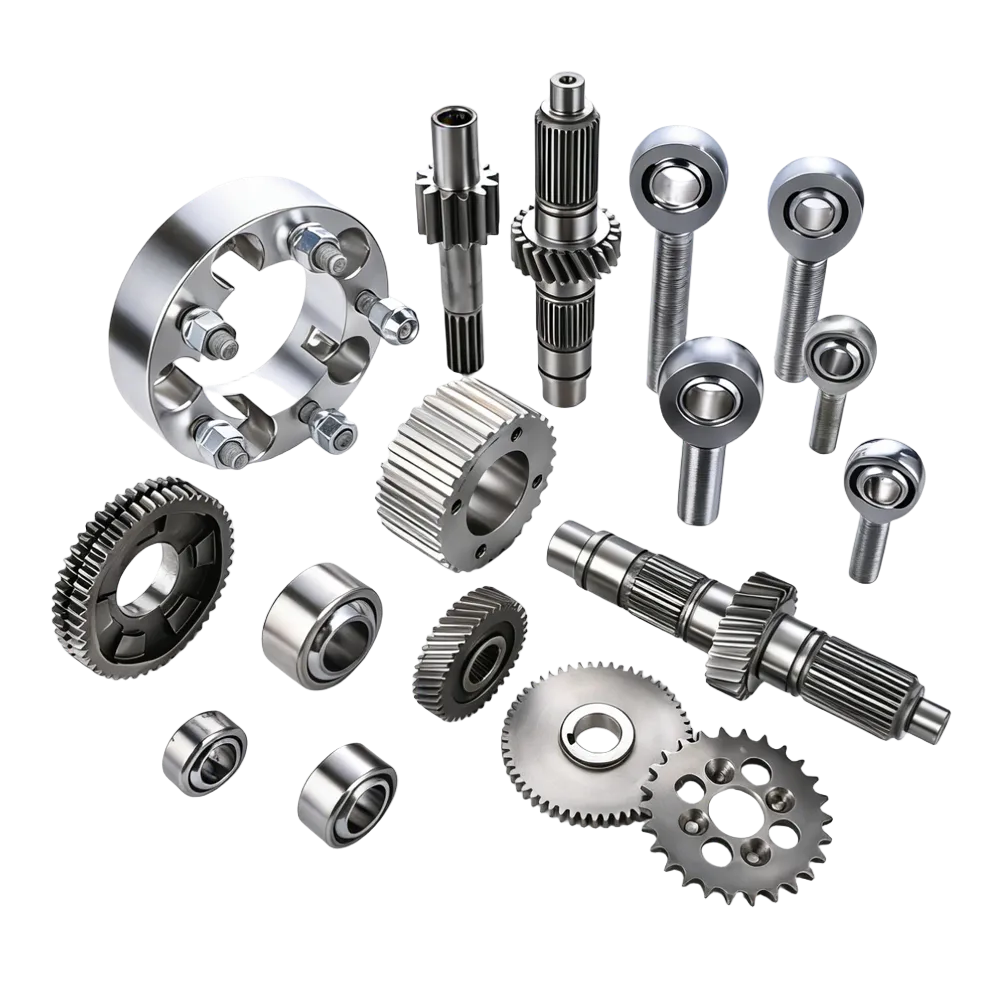
Sway bar links don't have a fixed mileage interval — there's no "every 30,000 miles" rule. Replace one when it shows a specific symptom (noise, play, a torn boot, or visible leaking grease) or when your vehicle's ride height has changed and the link's geometry no longer matches. If it's quiet, tight, and the boot is intact, there's no reason to replace it early.
Symptoms That Mean It's Time
| Symptom | What it looks/sounds like | What it tells you |
|---|---|---|
| Clunking or knocking | Metallic noise over bumps or at low-speed turns, especially on rough roads | The most common first sign — usually excess play in the end joint |
| Torn or missing boot | Rubber dust boot cracked, split, or gone at either end | Dirt and water are getting into the joint, which accelerates wear from here on |
| Grease leaking | Visible lubricant at the joint | Often follows a torn boot — the joint is losing its lubrication |
| Play when checked by hand | Movement when you grab the link and push/pull, or pry-test it | A direct, physical confirmation of wear — not just an inferred symptom |
| Increased body roll | Noticeably more lean in turns than the vehicle normally has | Sign of significant wear, possibly a link that has partially separated |
If none of these are present — boot intact, joint tight, no noise — there's no maintenance case for replacing it early just because of age or mileage.
Two Triggers People Miss
You lowered or lifted the vehicle. Changing ride height changes the angle the sway bar link sits at relative to the suspension, even if the stock link isn't worn or damaged at all. In that case the fix isn't a new stock-length link — it's an adjustable link, sized to restore the correct geometry for the new ride height. This is a geometry problem, not a wear problem, and it's easy to overlook if you're only checking for the symptoms above.
You're already replacing an adjacent part. When a strut or control arm the link is connected to gets replaced, many shops replace the link at the same time — not because it's necessarily worn, but because the mounting hardware is often rusted or seized after years in place, and there's real risk of damaging the link trying to remove it intact. Replacing it while everything's already apart is often more practical than risking a second job later.
Do Both Sides Need Replacing Together?
Replacing both links is practical when both show wear or have similar mileage and exposure, but it is not a universal service requirement. Inspect the opposite-side link and follow the vehicle manufacturer’s service guidance.
About Mileage Numbers You'll See Online
Forum reports are vehicle- and use-specific, not factory maintenance schedules. Follow your vehicle’s own maintenance plan for mileage-based replacement guidance, if one is provided, and inspect the links for wear when servicing the suspension.
Related reading: Can You Drive with a Bad or Broken Sway Bar Link? covers whether it's safe to drive right now once you've spotted these symptoms. For how urgent it is once a link is already confirmed bad, and how long a worn link typically lasts before it fails, see the hub's dedicated urgency and lifespan articles.