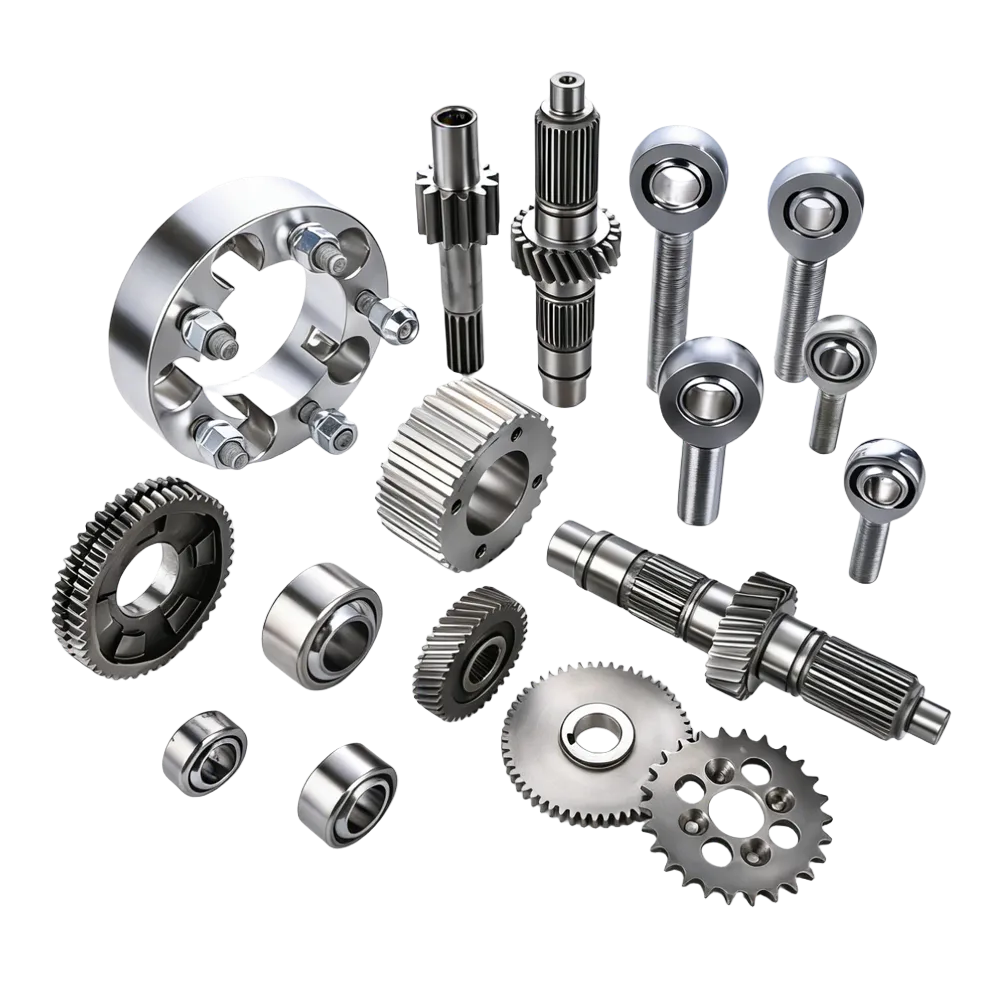

A bushing is a cylindrical sleeve installed between two parts that move against each other — a shaft and a housing, or a bolt and a bracket — to reduce friction, absorb vibration, and take the wear that would otherwise happen directly between the two more expensive parts. It’s a type of plain bearing: it works by sliding contact, not by rolling elements like a ball bearing. Bushings show up almost everywhere mechanical parts pivot or slide against each other, from car suspensions to pumps to hinges.
Why a Bushing Exists in the First Place
Without a bushing, two moving metal parts wear directly against each other — every rotation or slide grinds material away from both surfaces. A bushing solves this by being the part that wears instead. It’s a deliberately sacrificial component: cheaper and easier to replace than the shaft or housing it protects. When a bushing wears out, you replace the bushing — not the control arm, the pump shaft, or the machine frame it’s installed in.
How It Works: Sliding, Not Rolling
The mechanism is simple. A shaft (or bolt) passes through the bushing’s bore, and the bushing’s inner surface is what the shaft actually contacts and moves against. That’s the core distinction from a ball or roller bearing, which uses rolling elements between two races instead of direct sliding contact. Sliding contact generally means more friction than rolling contact, but it also means a simpler part — no internal races, cages, or balls to fail — and better tolerance for shock loads, contamination, and tight packaging. (For the full mechanical comparison, see Bushing vs. Bearing: What’s the Real Difference?.)
Common Materials
What a bushing is made of depends entirely on what job it needs to do:
- Rubber or polyurethane — used where the goal is vibration isolation and noise damping, not just friction reduction. This is the type found in car suspension control arms, sway bar mounts, and engine mounts. It flexes and twists rather than sliding in the traditional sense.
- Bronze, brass, or steel — used in industrial machinery where the priority is load capacity and wear resistance under a rotating or sliding shaft. Often oil-impregnated (sintered) so the bushing self-lubricates as it heats up.
- PTFE, nylon, or composite plastics — used where low friction without added lubrication matters, or where corrosion resistance is the priority.
None of these materials is universally “better” — the right one depends on load, speed, environment, and whether the job calls for rigid wear resistance or flexible vibration damping.
Where You’ll Find One
Two broad categories cover most of what people mean when they search this term:
- Automotive/suspension bushings — rubber or polyurethane, bonded between metal sleeves, at control arm pivots, sway bar mounts, shock absorber eyes, subframe mounts, and similar locations. (See Types of Automotive Bushings by Mounting Location for the full breakdown.)
- Industrial/mechanical bushings — metal or plastic sleeves supporting a rotating or sliding shaft in pumps, motors, hinges, and general machinery.
A Word of Caution: “Bushing” Means Different Things in Different Fields
The mechanical sleeve described above is what most automotive and industrial searches mean by “bushing” — but the word is also used for two unrelated things worth knowing about so you don’t end up reading the wrong article: an electrical bushing is an insulating sleeve that lets a conductor pass safely through a grounded metal enclosure, and a plumbing bushing is a pipe fitting that adapts between two different pipe diameters. Neither has anything mechanically in common with the anti-friction sleeve this article covers beyond the shared name. (If you searched for the plumbing meaning, see What Is a Bushing in Plumbing?.)
Related reading: Bushing vs. Bearing: What’s the Real Difference? · What Is a Bushing, What Does It Do, and Why Is It Called That? · Types of Automotive Bushings by Mounting Location · What Is a Bushing in Plumbing?