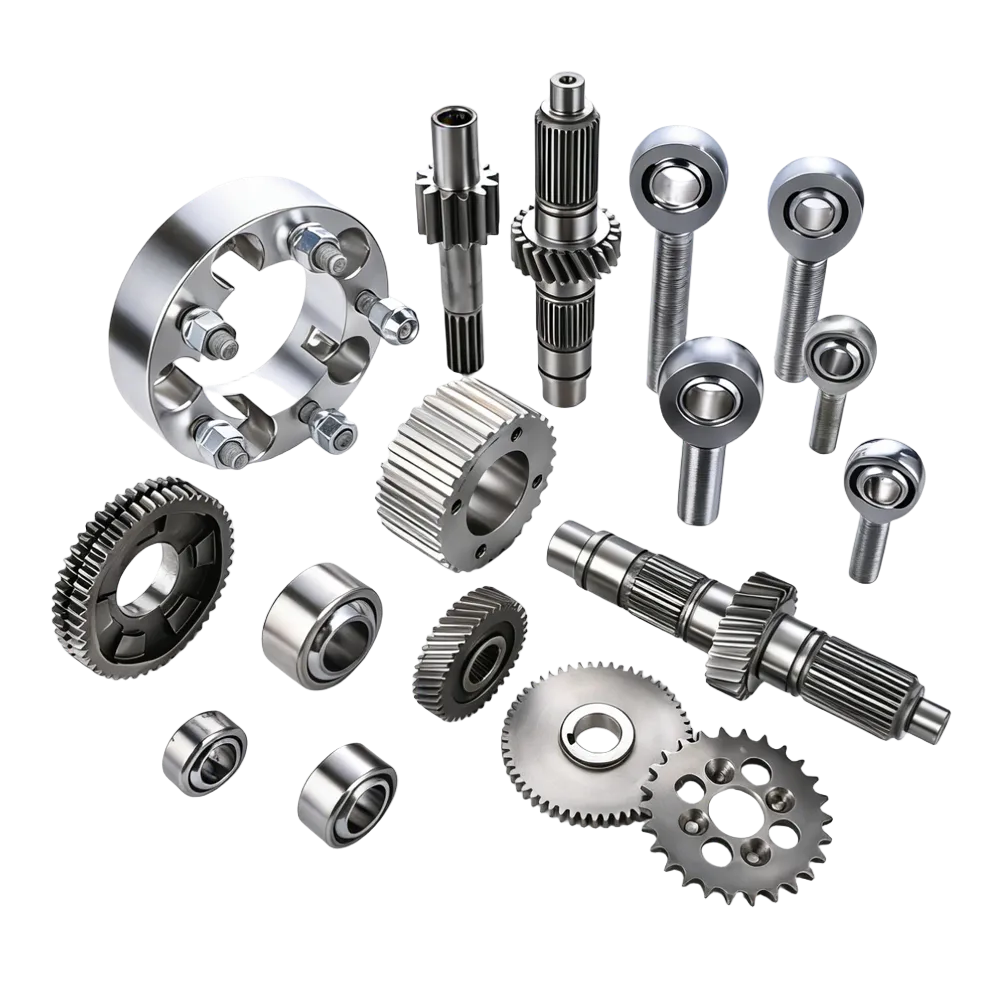

They're not the same thing, and the safety answer depends more on how you use them than on which one you pick. A wheel spacer is a separate part bolted between your existing hub and wheel; an offset wheel achieves the identical physical result — pushing the tire farther out from the vehicle's centerline — by building that offset into the wheel's own casting or forging, with no extra part in between. For a given amount of outward movement, the two approaches load your suspension and wheel bearings identically. Where they actually differ is failure points, cost, and how forgiving they are of a poor-quality build.
The Core Difference
| Factor | Wheel Spacers | Offset Wheels |
|---|---|---|
| How it works | Extra part inserted between hub and wheel | Offset built into the wheel casting/forging itself |
| Failure points | More — an added mounting interface with its own fasteners to maintain | Fewer — one integrated component, mounts like a factory wheel |
| Bearing/suspension load for the same offset change | Identical to offset wheels | Identical to spacers |
| Typical cost (set of 4) | ~$100–300 | ~$400–1,600+ (wheels alone; more with tires, mounting, balancing, TPMS) |
| Reversibility | Fully reversible, remove any time | Effectively permanent — you own a second wheel set |
| Best suited for | Small-to-moderate, budget-conscious, or temporary fitment changes | Larger stance changes, long-term builds, aggressive or towing use |
Why "More Failure Points" Is the Real Safety Argument — Not Bearing Wear
The most common objection to spacers is that they're harder on wheel bearings than offset wheels. Mechanically, that's not quite right. Moving a wheel 25 mm farther from the hub creates the same leverage on the suspension and bearings whether that 25 mm comes from a spacer or from a wheel with 25 mm less positive offset — the physics doesn't care which component is doing the pushing. What actually differs is execution risk: a spacer adds a second mounting interface (hub-to-spacer, then spacer-to-wheel) with its own fasteners that need correct torque and, on some designs, periodic re-checking. An offset wheel bolts on exactly like a factory wheel — one interface, one set of lug hardware, nothing extra to maintain.
So the real safety gap isn't "spacers stress your bearings and offset wheels don't." It's that a spacer is one more thing that has to be installed correctly, and the aftermarket spacer market includes a lot of cheap, non-hub-centric units that rely on the studs alone to center the wheel — which is where the mixed reputation actually comes from.
When a Spacer Is the Right Call
- You like your current wheels and only need a modest, well-defined amount of extra clearance — a brake kit that barely touches the spokes, a coilover that grazes the wheel, a stance that's a few millimeters short of flush.
- The change is small: thin spacers (5–15 mm) solving a specific clearance problem carry much less risk than large ones chasing a dramatic stance change.
- You want to keep the option to return to stock, sell the vehicle without a second wheel set, or test a fitment before committing.
- Budget matters — a quality hub-centric spacer set costs a fraction of a full wheel-and-tire package.
When Offset Wheels Are the Better Long-Term Solution
- You're planning a major offset or stance change, not a minor tweak — at that point you're choosing between a large spacer (more leverage, more fender-clearance risk) and a wheel engineered for the fitment you want.
- The vehicle sees aggressive driving, regular towing, or track use, where fewer mounting interfaces and less hardware to maintain matters more.
- You want control over width, offset, diameter, and backspacing together — a spacer can only push a fixed wheel outward; it can't change the wheel's own dimensions.
- You're already replacing wheels for another reason (style, tire size) — at that point, buying the correct offset costs little extra over buying the wrong one and adding a spacer.
If You Do Go With Spacers
The risk with spacers concentrates almost entirely in cheap, non-hub-centric parts and incorrect installation — not in the concept of a spacer itself. Use hub-centric spacers matched to your vehicle's hub bore, torque to the spacer manufacturer's spec, and re-check torque after the first 50–100 miles. For the mechanics of stud clearance, thread locker, and thickness selection, see the related guides below rather than treating spacer installation as a "bolt it on and forget it" job.
Related reading: Wheel Spacers: Pros and Cons · How to Choose Wheel Spacer Thickness