
The 7-Point Measurement Checklist
To ensure your replacement rod end matches perfectly, don’t use a tape measure. In a world where 0.005″ causes a “clunk,” you need a digital caliper.
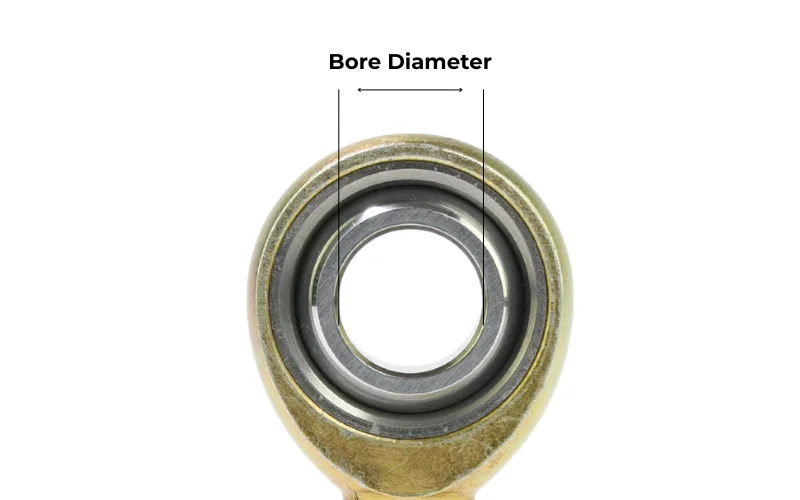
- Bore Diameter (B): Measure the inside of the ball. Check it at both 0° and 90° angles. If the measurements differ, the bore is “out-of-round” from wear and the joint must be replaced.

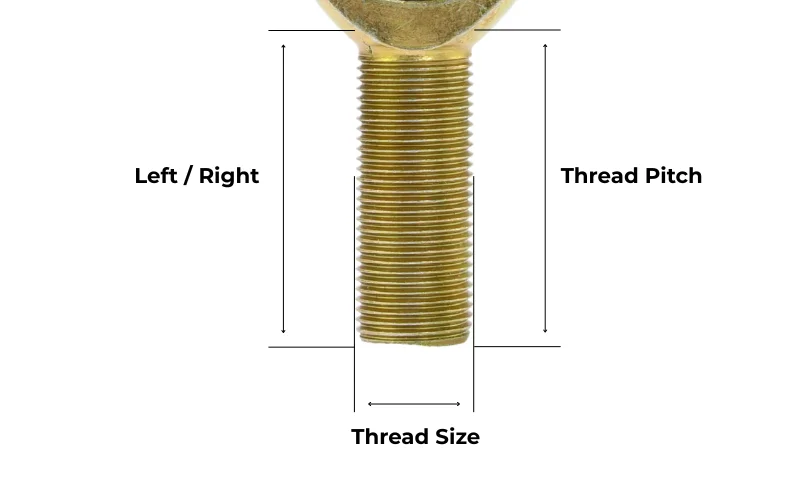
Heim joint bore diameter - Thread Size & Pitch (T): Measure the outside diameter of the shank. Use a thread pitch gauge to confirm the TPI (threads per inch) for SAE or the distance between peaks for Metric. Never guess—a 3/8″-24 and an M10x1.25 look identical to the naked eye but are not interchangeable.
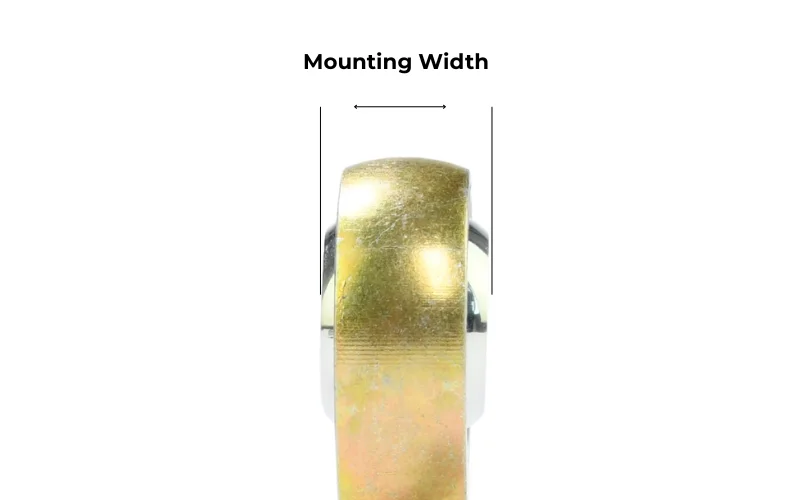
Heim joint thread size and pitch - Ball Width (W): Measure the width across the parallel flats of the center ball. This is your “mounting width” and determines your bracket spacing.
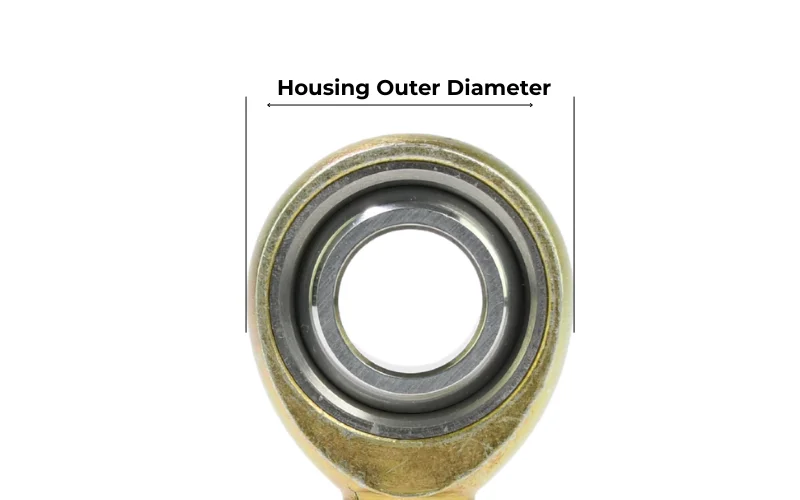
Heim joint mounting width - Housing Outer Diameter (OD): Measure the widest part of the circular housing. This ensures the joint won’t hit the back of a “C-bracket” or a link tube.
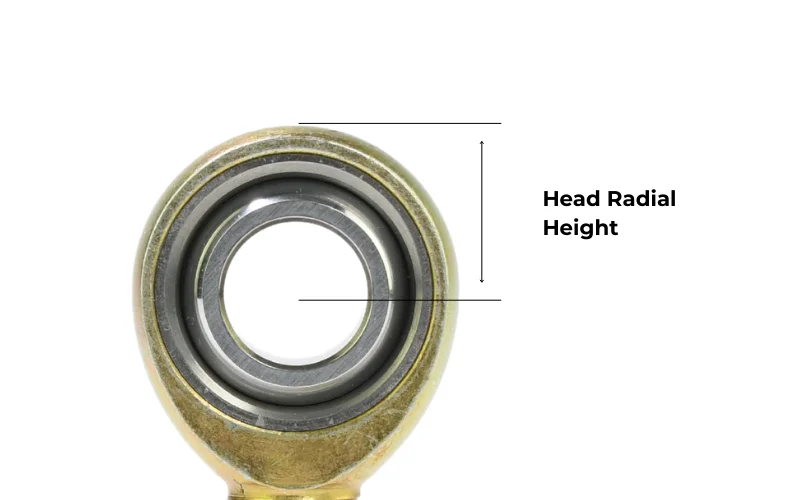
Heim joint ousing outer diameter - Head Radial Height: Measure from the center of the bore to the very top edge of the housing. This is your “clearance radius.”
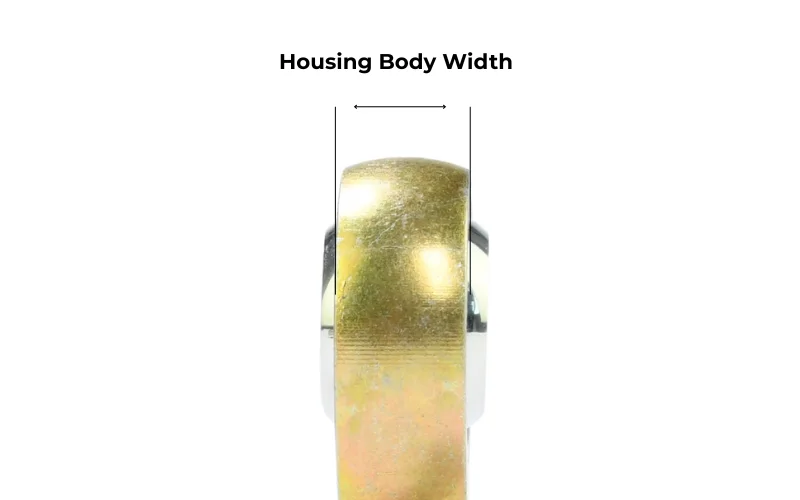
Heim joint head radial height - Housing Body Width: Measure the thickness of the steel housing itself (the ring around the ball). This ensures the joint fits into the slot of your mounting bracket without hitting the sides.
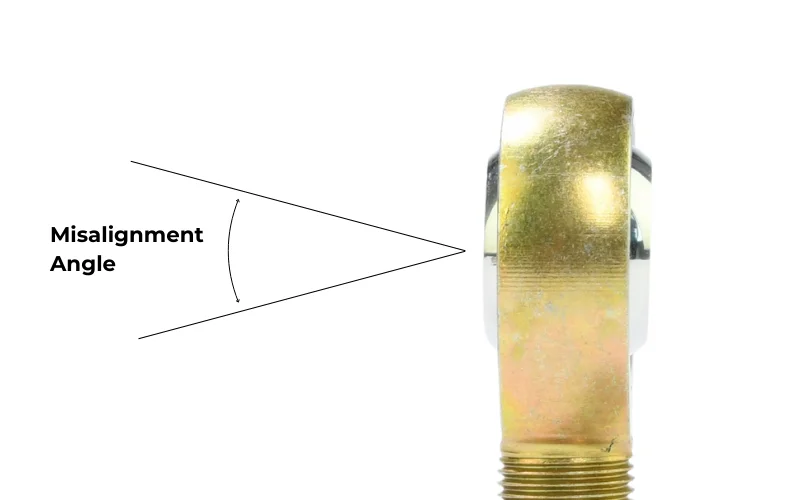
Heim joint housing body width - Misalignment Angle: Rotate the ball to its physical limit and measure the degree of tilt. If your suspension needs 20° but the joint only offers 12°, it will bind and snap.
Heim joint misalignment angle
Field Tips for Builders
- The 1.5x Rule: When adjusting link length, never leave less than 1.5 times the shank diameter of thread engagement inside the tube. If you can see daylight through the threads, the joint is unscrewed too far.
- Check for “Neck” ID: For LH (Left-Hand) threads, look for the identification groove on the hex or shank.
- The “Snug-Fit” Test: A mounting bolt should slide through the bore with light finger pressure. If it rattles, you have the wrong bolt; if you have to hammer it in, the bore is likely deformed.
Related reading: Heim joint size chart: metric and inch specifications · How to read a heim joint spec sheet · Load ratings explained: static radial vs. axial capacity