Both ATV and UTV belong to the category of all-terrain vehicles. However, despite their similar names, there are some clear differences between the two in terms of structure, control, and safety.
What is an ATV?

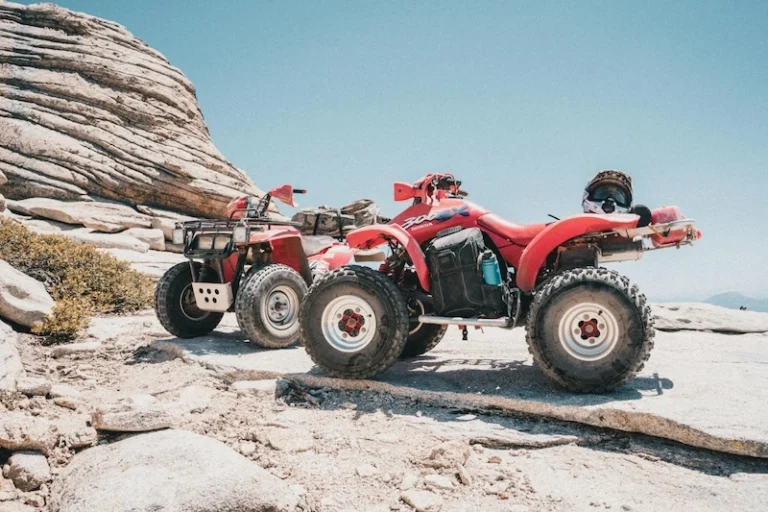
The full name of ATV is All-Terrain Vehicle, often referred to as a “four-wheeler” or “quad bike.”
Appearance & Structure: ATVs generally have an open design without a canopy. They are available in both two-wheel drive and four-wheel drive versions, making them practical and versatile for off-road use.
Control System: ATVs use motorcycle-style handlebars for steering, and many of their components are similar to those of motorcycles. That’s why people sometimes call them “four-wheeled motorcycles.”
Safety: ATVs usually do not come with a roll cage or advanced protective systems, which makes their safety level relatively lower compared to UTVs.
What is a UTV?

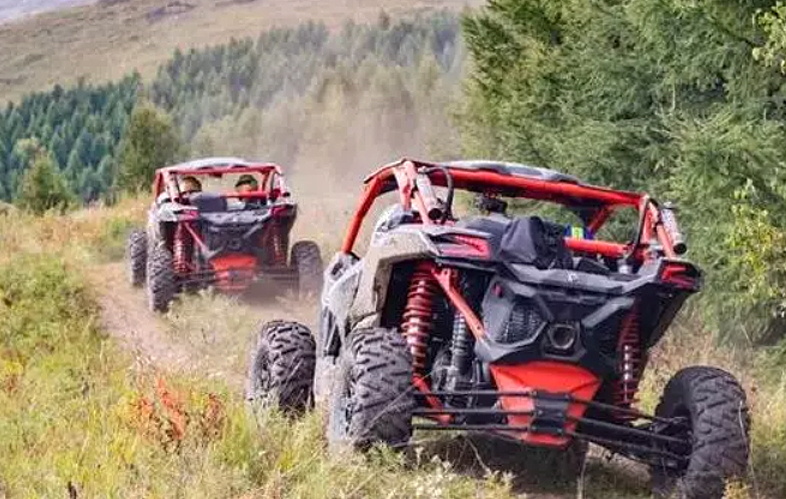
The full name of UTV is Utility Vehicle. It was developed based on the ATV but has a more automobile-like design.
Appearance & Structure: UTVs look and feel closer to cars. They are larger, often with side-by-side seating for two or more passengers.
Control System: Unlike ATVs, UTVs are operated using a steering wheel, accelerator, and brake pedals, which makes the driving experience more like operating a small off-road vehicle.
Safety: UTVs are equipped with roll cages, seat belts, and other protective features, offering significantly higher safety than ATVs.
Key Differences Between ATV and UTV
To summarize:
ATV
- Handlebar control
- Open structure without roll cage
- Compact, agile, but lower safety protection
UTV
- Steering wheel and pedal control
- Equipped with roll cage and seat belts
- Feels more like an off-road car and offers better protection
In short, if you want agility and a more motorcycle-like experience, an ATV is a good choice. But if you prioritize safety, comfort, and utility, then a UTV is the upgraded option.