
You see it all the time on off-road forums: someone installs a cheap wheel spacer, and barely 3,000 miles later, cracks start showing up. Or worse—highway speeds, sudden alarming noise, and when they pull over to check, the spacer’s already severely deformed. These horror stories share one common thread: wrong material choice. For what looks like a simple bolt-on part, material selection actually makes or breaks the balance between safety, durability, and value.
The Material Landscape
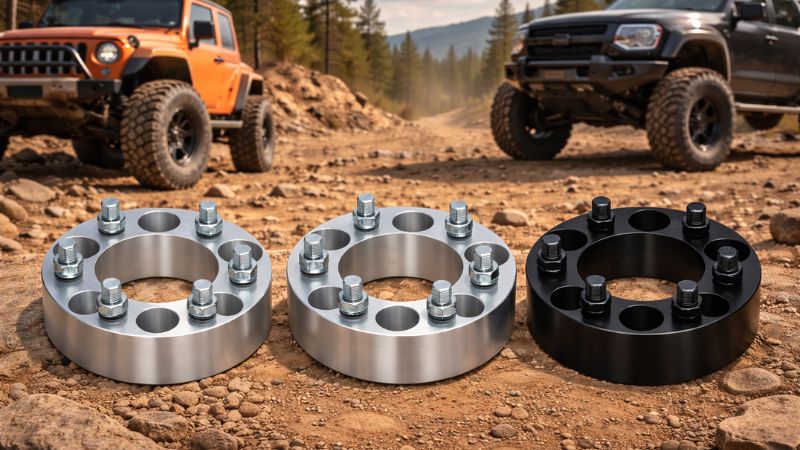
The wheel spacer market works with four main materials: steel, 6061 aluminum, 6061-T6 aluminum, and 7075-T6 aluminum. From what I’ve seen across forums and talking with aftermarket shops, different materials suit completely different use cases, and the price spread is massive—from budget cast aluminum running maybe $20-30 a piece to premium 7075-T6 forged units pushing past $100 each.
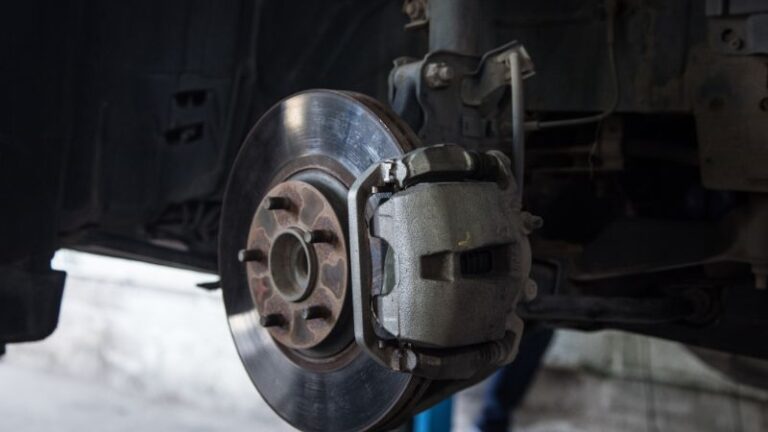
Here’s why material matters so much: From a mechanical design standpoint, your wheel hub is actually held to the flange by friction—generated from bolt preload. If the spacer material lacks rigidity and deforms under load, or if you’re using the wrong bolt grade (you need Grade 10.9 or 12.9 high-strength bolts), that preload bleeds off. The hub loosens, abnormal shear forces kick in, and at that point you’re looking at a potentially catastrophic failure. Material strength, bolt grade, and proper installation torque—these are the three pillars keeping everything safe.
In the real world, north of 70% of users go with aluminum alloys, mainly for the weight savings and corrosion resistance. But here’s the thing: “aluminum alloy” is a catch-all term hiding massive performance differences between grades. That’s where selection gets critical.
Steel vs. Aluminum
Steel’s advantages are pretty straightforward: high strength, high rigidity. That comes from the elastic modulus—steel sits around 200 GPa versus aluminum’s 70 GPa. In wheel spacer applications, that rigidity determines how much the flange surface microdeforms under heavy loads, which is critical for keeping bolt preload tight. But there’s an obvious tradeoff—steel weighs 2.5 times more than aluminum. For performance cars or off-road rigs chasing weight reduction, that difference hits your unsprung mass hard, affecting handling and suspension response.
On the corrosion front, the gap widens even more. Aluminum naturally forms an oxide layer that protects the metal underneath. But here’s something critical: when aluminum spacers contact steel brake disc hubs in saltwater environments, you get galvanic corrosion. That’s why quality spacers need hard anodizing—not just for looks, but for insulation and actual corrosion protection. Steel, on the other hand, relies entirely on surface coatings or electroplating. Once that coating gets compromised, rust spreads fast. This is especially brutal in regions with heavy rainfall or road salt.
Interesting observation: in cold climates, aluminum spacers actually outperform steel. The engineering data backs this up—aluminum alloy strength increases at low temps, while steel goes the other way. That’s why aluminum dominates the Canadian and Nordic markets.
Cost-wise, steel spacers are typically 15-25% cheaper than basic aluminum alloys, but when factoring in more frequent inspection and replacement cycles, long-term costs may not be lower. Based on market feedback, unless dealing with heavy commercial vehicles or special applications, most users prefer aluminum.
Three Tiers of Aluminum Alloy
6061 vs 6061-T6
Basic 6061 aluminum dates back to 1935—originally for construction and civilian stuff. The mechanical properties are pretty mediocre: ultimate tensile strength only hits 18,000 psi, yield strength 8,000 psi, Brinell hardness 33. With specs like that, wheel spacers can barely handle light city commuting.
After T6 heat treatment (solution heat treatment plus artificial aging), the same alloy transforms completely:
| Performance Metric | 6061 | 6061-T6 | Improvement |
|---|---|---|---|
| Ultimate Tensile Strength | 18,000 psi | 42,000-45,000 psi | 131.5 |
| Yield Strength | 8,000 psi | 35,000-40,000 psi | 334 |
| Brinell Hardness | 33 | 93 | 182% |
That’s why legit manufacturers never touch untreated 6061. The T6 process reorganizes the crystal structure at the molecular level, dramatically boosting strength, toughness, and corrosion resistance. Cost only goes up maybe 10-15%, but you’re getting a completely different material in terms of performance.
6061-T6 vs 7075-T6
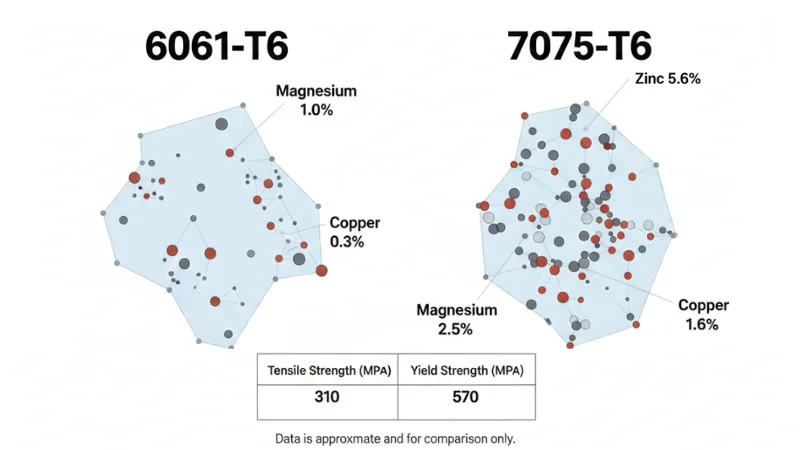
7075-T6 is aerospace-grade aluminum—originally engineered for military aircraft. The key difference from 6061-T6 is in the alloy composition: 7075 uses zinc as the main alloying element, with higher magnesium and copper content too. This formula pushes hardness close to steel while keeping aluminum’s weight advantage. When you look at specific strength (strength-to-weight ratio), 7075-T6 replacing steel makes complete scientific sense.
According to material database comparisons, 7075-T6 achieves ultimate tensile strength of 83,000 psi (572 MPa) and yield strength of 73,000 psi (503 MPa) —84% and 83% higher than 6061-T6 respectively. More importantly is fatigue strength—7075-T6’s crack resistance under repeated stress cycles is significantly stronger, crucial for off-road vehicles and track cars frequently subjected to impact loads.
But 7075-T6 comes with tradeoffs and hidden risks. First, price: you’re paying 40-60% more than 6061-T6 for the same specs. Second, machining difficulty—that high hardness eats CNC tools faster, driving up manufacturing costs. Market pricing tells the story: a 6061-T6 set typically runs $150-200, while 7075-T6 sits in the $250-350 range.
And here’s something most people don’t realize: 7075-T6 is more sensitive to stress corrosion cracking (SCC) than 6061-T6. In brutal high-salinity environments—think coastal areas or heavy de-icing salt zones—7075 can develop subtle intergranular corrosion if you’re not pulling them off and inspecting regularly. This doesn’t make 7075-T6 unreliable, but it does mean you need to stay on top of maintenance in those conditions.
So is the premium worth it? Based on tracking various builds long-term, if you’re running competition, drifting, or serious off-road abuse, 7075-T6 pays for itself. It takes bigger hits without deforming and lasts longer. But for daily street driving? 6061-T6 is more than adequate.
Manufacturing Process
Even if you nail the material grade, manufacturing process still makes or breaks final quality. You’ve got two main routes: casting and forging (billet).
Casting dumps molten aluminum into molds to cool and set—cheap, but with fatal flaws. Put a cast part under a microscope and you’ll see pores and inclusions everywhere. Those microscopic defects turn into crack initiation points wherever stress concentrates. There’s an unwritten rule in the industry: never use cast aluminum for safety-critical parts. Period.
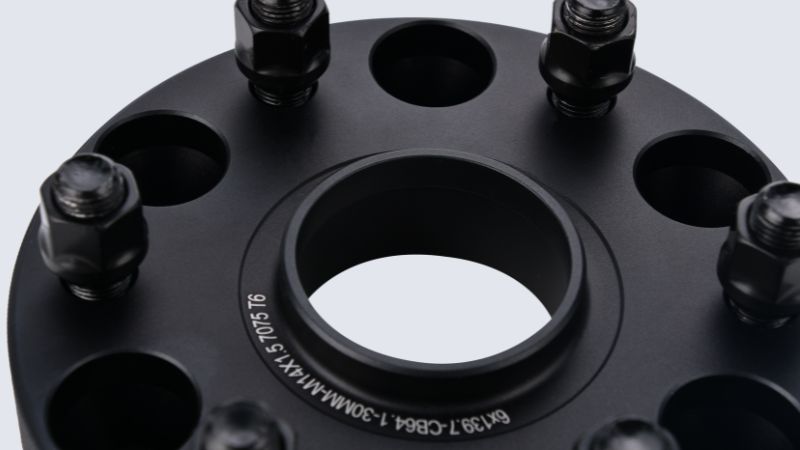
Forging—or CNC machining from solid aluminum billet—is a completely different game. Mechanical pressure reorganizes the metal grain structure, making forged parts way more uniform in density with virtually no internal defects. CNC finishing locks in dimensional precision too. For wheel spacers, we’re talking center bore, PCD (bolt circle diameter), and flatness tolerances within ±0.05mm. Miss that and you’re looking at wheel runout and uneven stress distribution.
And here’s a critical design detail that often gets overlooked: Your spacer needs hub-centric rings that match your vehicle, not just lug-centric positioning. I don’t care how good the material is—if you’re running lug-centric design, dynamic balance and stress distribution at speed will bite you. This should be non-negotiable when you’re shopping.
How do you spot forged parts? Beyond reading the product specs, look at the surface: forged parts show clean machining marks with uniform edge chamfers. Cast parts look rougher, often with subtle porosity or surface flaws. Price tells the story too—if you see a 4-piece set under $100, it’s almost guaranteed not forged.
Core Material Selection Principles
- Prioritize forged or CNC-machined billet aluminum
- Material grade must be clearly marked (6061-T6 or 7075-T6)
- Avoid all cast parts and unspecified “aluminum alloy”
- Suspiciously low prices (<$25/piece) always hide problems
Scenario-Based Selection
Daily Street Driving
If the vehicle is primarily for commuting and weekend short trips, 6061-T6 is the optimal value proposition. Its strength adequately handles all paved road conditions, and corrosion resistance ensures 5-8 years of worry-free use. Mainstream brands like BONOSS and Eibach’s 6061-T6 products have excellent reputations in this scenario.
Performance Driving and Track Days
For enthusiasts frequently attending track days or aggressive driving, 7075-T6’s extra strength isn’t luxury—it’s necessity. Under sustained high-G lateral acceleration and thermal loads, 6061-T6 may develop minor permanent deformation (though invisible to the naked eye), which accumulates and affects wheel alignment. 7075-T6 offers higher tolerance in this regard.
From track user feedback, the most noticeable improvement after choosing 7075-T6 isn’t performance gains, but long-term stability—under equivalent usage intensity, 7075-T6 inspection intervals can extend to 1.5-2 times those of 6061-T6.
Off-Roading and Heavy Modifications
Off-road vehicles face the most complex conditions: rock impacts, mud twisting, water crossings and corrosion. Material selection in this scenario requires comprehensive consideration: for light off-roading (trail exploration), 6061-T6 with regular inspection suffices; for competition-level rock crawling or desert rallying, 7075-T6 is the safer choice.
An interesting phenomenon: some heavy pickup and commercial vehicle users actually prefer steel spacers. The reason is these vehicles have high curb weight (2.5-3.5 tons), are less sensitive to weight reduction, but require spacers to bear extremely high static loads. In such extreme conditions, steel’s high hardness becomes an advantage.
Budget-Constrained Reality
If budget is tight, prioritize ensuring material grade (forged 6061-T6) rather than blindly pursuing 7075-T6. A reliable 6061-T6 spacer set ($150-200) is far safer than dubious so-called “7075-T6” products ($100). The market has many products claiming 7075-T6 at suspiciously low prices—the actual material of these products is questionable.
Quality Traps and Identification Techniques
After investigating dozens of manufacturers and user feedback, the following product categories warrant caution:
- “Universal” Aluminum Spacers These products don’t specify exact grades, only listing “aluminum alloy” or “aviation-grade aluminum.” From teardown analyses, some products use recycled aluminum or low-grade alloys with inadequate hardness and toughness.
- Abnormally Priced Products Legitimate forged 6061-T6 spacer manufacturing costs approximately $30-40/piece (including materials, CNC machining, heat treatment, quality inspection). If retail price is below $25/piece, it’s either cast or using adulterated materials. 7075-T6, with higher material and processing costs, should normally retail at $60-80/piece or above.
- Missing Certification Marks Legitimate manufacturers provide material test reports (such as ASTM standard certification), production batch numbers, and quality certificates. Without these, you’re gambling with trust.
Professional wheel spacer customization services typically proactively provide material traceability documentation and third-party testing reports—this is the foundation of quality assurance.
Choosing Right Material For Wheel Spacers
Choosing wheel spacer material essentially balances three factors: safety, performance requirements, and budget constraints.
If you can only remember one principle, it’s this: Never cut corners on safety-critical components. A substandard spacer set might only save $50-100, but the risks it brings cannot be measured in monetary terms.
For most users, forged 6061-T6 is the most balanced choice—it provides ample strength reserves, excellent corrosion resistance, and reasonable pricing. Only when definitively needing to handle extreme conditions is 7075-T6 investment worthwhile. As for steel spacers, unless for heavy vehicles or special industrial applications, they’re no longer the mainstream choice.
With the right material, combined with correct installation torque (typically 83-140 Nm, depending on bolt specifications) and regular inspections (recommended every 10,000 km or six months), wheel spacers can become a safe and reliable modification choice. For users needing professional wheel spacer customization services, choosing manufacturers with material traceability capabilities and quality assurance systems is the first step toward being responsible for yourself and your passengers’ safety.