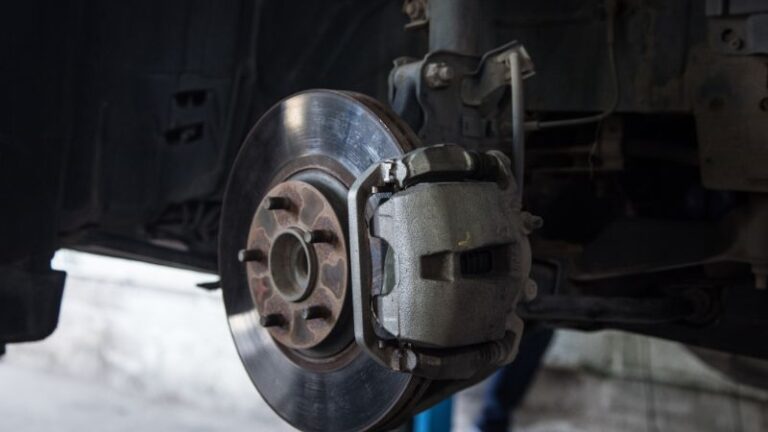

Browse any off-road modification community and you’ll notice something: an ordinary-looking vehicle gets modded, and suddenly the wheels sit noticeably further out from the body. The whole stance widens. The presence? Night and day. Most people assume it’s bigger tires or a suspension upgrade, but more often than not, the real secret is a small, unassuming part—the wheel spacer.
It’s not complicated. It’s not expensive. But this component has a real impact on how your vehicle handles, looks, and performs day-to-day.
Simple Concept, Real Results
Here’s the whole working principle in one sentence: a wheel spacer sits between the hub and the wheel, using its thickness to push the wheel outward.
You’ll find spacers ranging from 5mm all the way to 50mm in thickness. Which one you need depends entirely on what problem you’re solving. But no matter the thickness, they’re all doing the same thing: widening the total distance between your left and right wheels—your track width.
Track width is a key factor in cornering stability. Wider track = less weight transfer to the outside wheels during turns = lower rollover risk and better grip. Essentially, wheel spacers make your car “stand wider.” Sounds basic, right? But those few millimeters—or centimeters—make a surprisingly big difference in how the vehicle actually feels on the road.
Hub Centric or Lug Centric?
Wheel spacers come in two core types, and the difference between them directly affects high-speed stability and comfort.
Hub Centric: The spacer’s center bore matches the hub’s centering lip with precision—we’re talking extremely tight tolerances. Your vehicle’s weight transfers to the hub primarily through this center bore. The bolts? They’re just there to hold everything in place, not to bear the main load. It’s the same principle as OEM wheel mounting: even load distribution across the contact surface.
Lug Centric: Here, the center bore is a bit oversized compared to the hub lip. Centering relies entirely on the bolts. In theory, tighten them properly and you’re good. In practice? There’s a tiny gap at the center that can cause subtle vibration at highway speeds or during aggressive cornering.
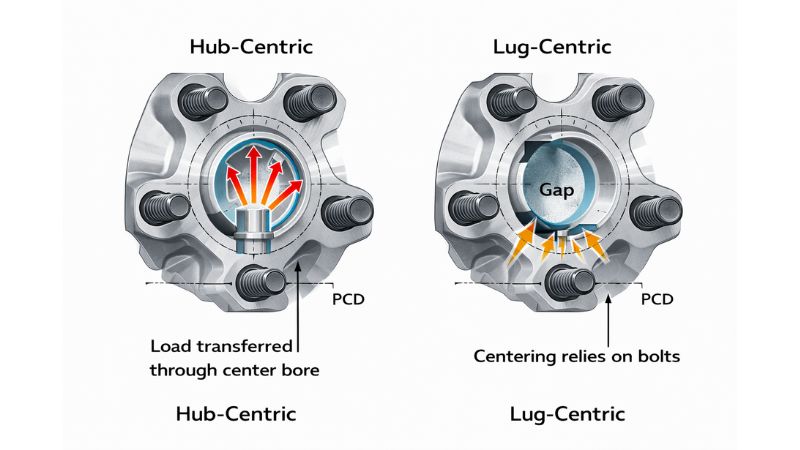
According to technical analysis from the mechanical design field on hub centering, Hub Centric achieves uniform load distribution through precise center positioning, effectively reducing extra stress on bolts and wheel bearings. In professional modification and racing applications, Hub Centric has become the default choice.
Where Spacers Actually Matter
Plenty of people dismiss wheel spacers as purely cosmetic. But in several real-world scenarios, they’re actually solving legitimate problems.
Off-Road and Rally: Off-road builds often need bigger, wider tires for better grip and ground clearance. Problem is, those tires rub the inner fender when you turn the wheel. Spacers push the tire outward just enough to clear. In Rock Crawler and Pre-runner builds, this isn’t optional—it’s pretty much standard practice.
Track Performance Driving: At the track, wider track width translates directly to better cornering stability and more lateral grip. Racing setups often add spacers on top of suspension upgrades to quickly widen the vehicle’s handling envelope. This is especially effective on cars that came from the factory with narrow track widths.
Brake System Upgrades: Upgraded to bigger rotors and calipers? There’s a good chance your OEM wheels don’t have the barrel clearance. A properly sized spacer pushes the wheel out just enough to fit the new brakes. It’s a common use case, just not one that gets talked about much on its own.
Common Mistakes to Avoid
Used properly, wheel spacers are perfectly safe. But there are a few common pitfalls you should know about upfront.
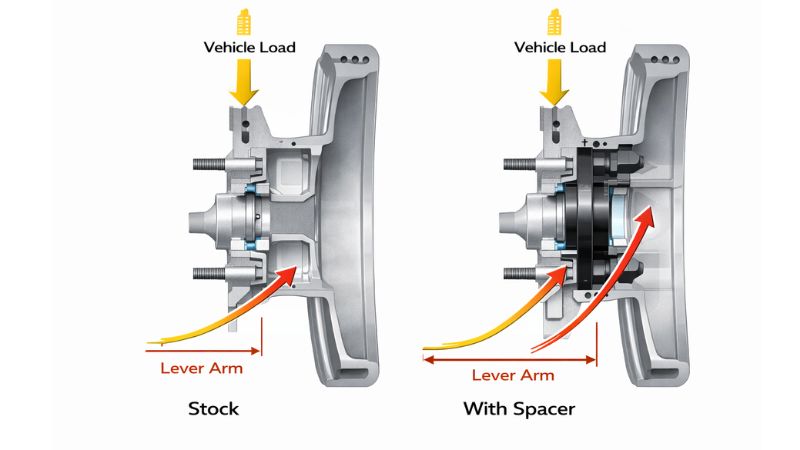
Wheel Bearing Life Will Shorten: When the tire moves outward, it increases the moment arm acting on the wheel bearing—basic lever physics. The thicker your spacer, the more pronounced this gets. For daily driving, if you’re going thicker than 20-25mm, expect shorter bearing life than stock. Just something to factor into your maintenance schedule.
Steering Feel Will Change: Pushing the tire centerline outward alters the scrub radius—that’s the horizontal offset between where your steering axis intersects the ground and where your tire contacts it. Under 15mm, you probably won’t notice much. Beyond that, low-speed steering will feel a bit different. More critically, a larger scrub radius amplifies steering “pull” when one side hits a pothole or—worst case—if you blow a tire. That’s a safety consideration, not just a feel thing.
Don’t Cheap Out on Bolts: Spacer bolts handle real load. According to industry installation guidelines, use Grade 10.9 or 12.9 high-strength bolts—not standard hardware store stuff. This isn’t the place to save fifteen bucks. Install with a torque wrench to spec, and after your first 50-100 km of driving, re-torque them. That re-check is critical for long-term safety.
Never Stack Spacers: Don’t even think about stacking two spacers to get more thickness. Each layer multiplies the lever effect and bolt stress. Safety risk goes through the roof. Need more thickness? Buy a thicker spacer.
How to Choose the Right Ones
Picking wheel spacers really comes down to matching a few critical specs to your vehicle:
- Center Bore Diameter: This must match your hub precisely. Non-negotiable.
- Bolt Pattern (PCD): Has to match your wheel. Pretty straightforward.
- Thickness: Depends what you’re after. Off-road clearance? Usually 10-20mm. Track widening? 15-25mm. Daily aesthetic tweaking? 5-10mm does the trick.
- Material: 6061-T6 aluminum is the go-to for most applications—lightweight, corrosion-resistant, easy to machine. For racing or heavy-duty work, 7075-T6 offers higher strength. Critical point: Make sure it’s Forged. Cheap Cast aluminum might look the same on paper, but it’s prone to internal porosity and can literally crack under load over time.
- Type: Go Hub Centric if you can. We’ve covered why.
If you want custom spacers machined to exact vehicle specs, SYZ Machine offers professional custom wheel spacer services. Everything’s CNC-machined to tight tolerances—material selection, dimensions, the whole package.